All species › Even-toed ungulates › Deer › White-tailed deer
White-tailed deer | Odocoileus virginianus
Witstaarthert | Cariacú
The white-tailed deer (Odocoileus virginianus) is the most numerous deer of North and Central America. In the guide area it is an introduced species. The largest European population lives in Finland, where five animals from Minnesota were released in 1934; their descendants numbered about 109,000 animals in 2020. A small population has lived in the Czech Republic since the nineteenth century.
Tracks
The slot is two-toed, heart-shaped and pointed and resembles that of the fallow deer. The droppings are dark, elongated pellets in small heaps. In the rut the buck frays young trees and makes scrapes: patches pawed bare under an overhanging branch, on which he urinates and to which he adds scent from his glands. The alarm signal is a loud blowing through the nose, often repeated, together with the stamping of a foreleg.
Identification
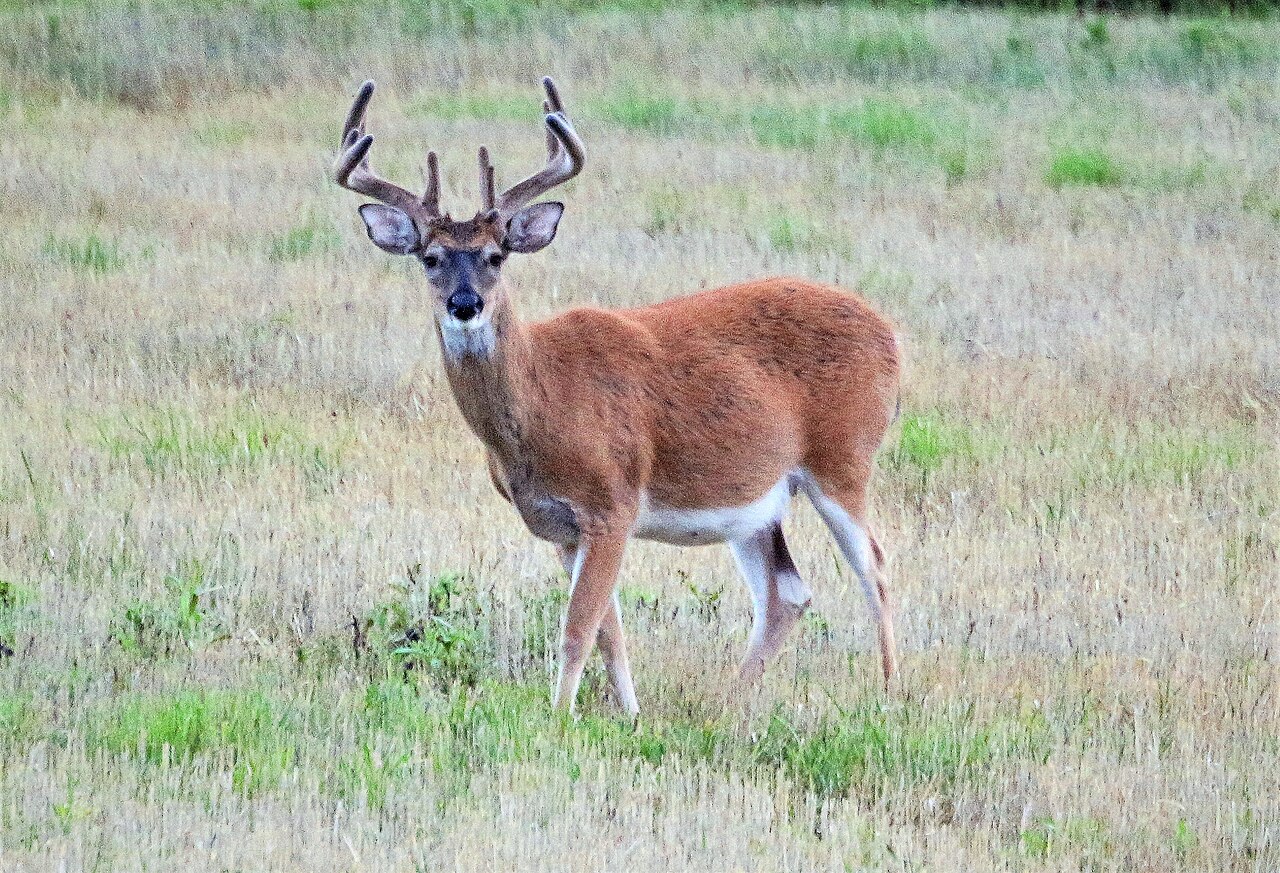
A medium-sized, slender deer with a body length of 160 to 220 cm, a shoulder height of 80 to 100 cm and a weight of 57 to 137 kg; bucks are heavier than does. The coat is reddish-brown in summer and grey-brown in winter. The throat, a ring around the eye and a band behind the nose are white. The tail is 10 to 28 cm long, broad, brown above and bright white underneath; in flight it is raised and waved, showing a white flag. The buck's antlers have a main beam curving forwards, with unbranched tines rising straight up from it. The fawns are spotted; the spots disappear during their first summer.
Similar species
The roe deer is smaller, has no visible tail and a white rump patch. The fallow deer is spotted, has a black tail above a white rump patch with a black border and, in the buck, palmate antlers. A red deer hind is larger and heavier and has a pale rump patch with a short tail. The sika deer has a short white tail within a white, black-bordered rump patch and white spots in summer. A fleeing white-tailed deer is recognised by its raised white tail.
Habitat
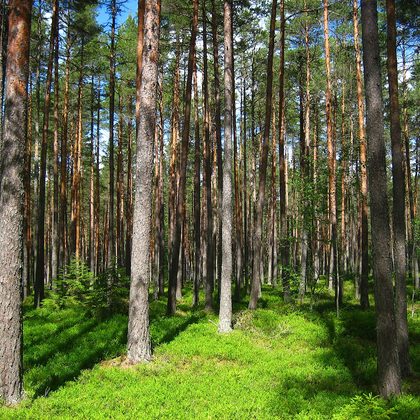
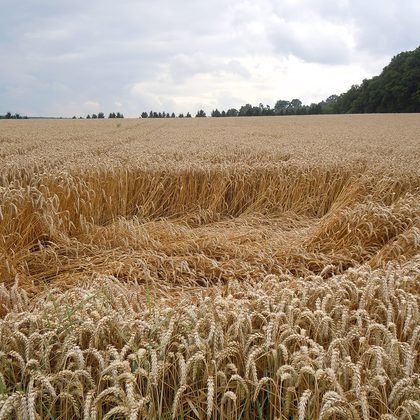
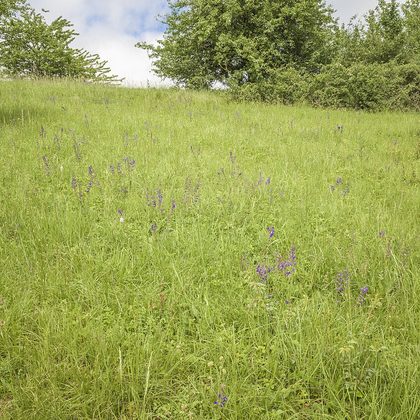
Mixed, broadleaved and coniferous woodland interspersed with fields, meadows and wood edges. In Finland the species lives mainly in the farmland of the south and south-west, where woodland and fields alternate, and in winter around feeding sites.
Where the animal is most at home, classified with EUNIS — the European standard for habitats.



Distribution
The natural range extends from southern Canada to northern South America. In Finland eight animals were caught near Virginia (Minnesota) in 1934, five of which survived the crossing; they were released at the Laukko estate near Tampere. A second shipment in 1948 did not survive the following winter according to some sources. The white-tailed deer has spread over almost all of southern Finland and is expanding into Sweden and the south of Russian Karelia. In the Czech Republic a small population has lived since the nineteenth century around Dobříš and in the Brdy.
- Established introduction
- dark = core range, pale = thinly spread
Way of life
The white-tailed deer is active mainly at dusk and at night. It eats leaves, twigs and buds of shrubs and trees, herbs, grasses and crops. The rut falls from October to December. After a gestation of about 198 days fawns are born in spring: usually one to young does, afterwards usually two, sometimes three or four. For the first weeks the fawns lie hidden in the vegetation and are visited by the mother only for suckling. The antlers are cast between January and March, regrow in April and May and are cleaned of velvet by August or September.
Where and when to look
In south-western Finland white-tailed deer are often seen in small groups at dusk on fields and meadows along wood edges. Drive slowly along country roads and watch for the white tail of fleeing animals. In winter hunters' feeding sites are places where many animals gather; ask for permission before entering private land.
Conservation status
Least Concern (LC, 2016). In Finland the white-tailed deer is an important game species: in 2018, 36,191 culling permits were issued. In the ten years up to 2018 numbers doubled. The species causes a large number of road accidents, almost 5,200 in 2017, and browsing damage to crops and gardens.
Scientific name
Odocoileus virginianus | (E. A. W. von Zimmermann, 1780)
E. A. W. von Zimmermann described the species in 1780 as Dama Virginiana; because it was later moved to another genus, the author and year stand in brackets. Odocoileus is a slip of Rafinesque's pen: he meant Odontocoelus, from Greek odous, 'tooth', and koilos, 'hollow', after a hollow fossil tooth from a cave. The misspelling has stood ever since. virginianus means 'of Virginia', the North American colony from which von Zimmermann described the animal. The specimen the first description was based on came from USA, Virginia.