All species › Caryophyllales › Sundew family › Drosera adelae
Drosera adelae
The lance-leaved sundew is one of the three so-called 'sisters of Queensland': sundews that grow not in open bog or heath but in the deep shade of tropical rainforest. Drosera adelae is the best known of the three and the only one with some fame beyond enthusiasts. It is endemic to north-eastern Queensland, where it grows along creeks and on wet rocks by waterfalls.
Identification
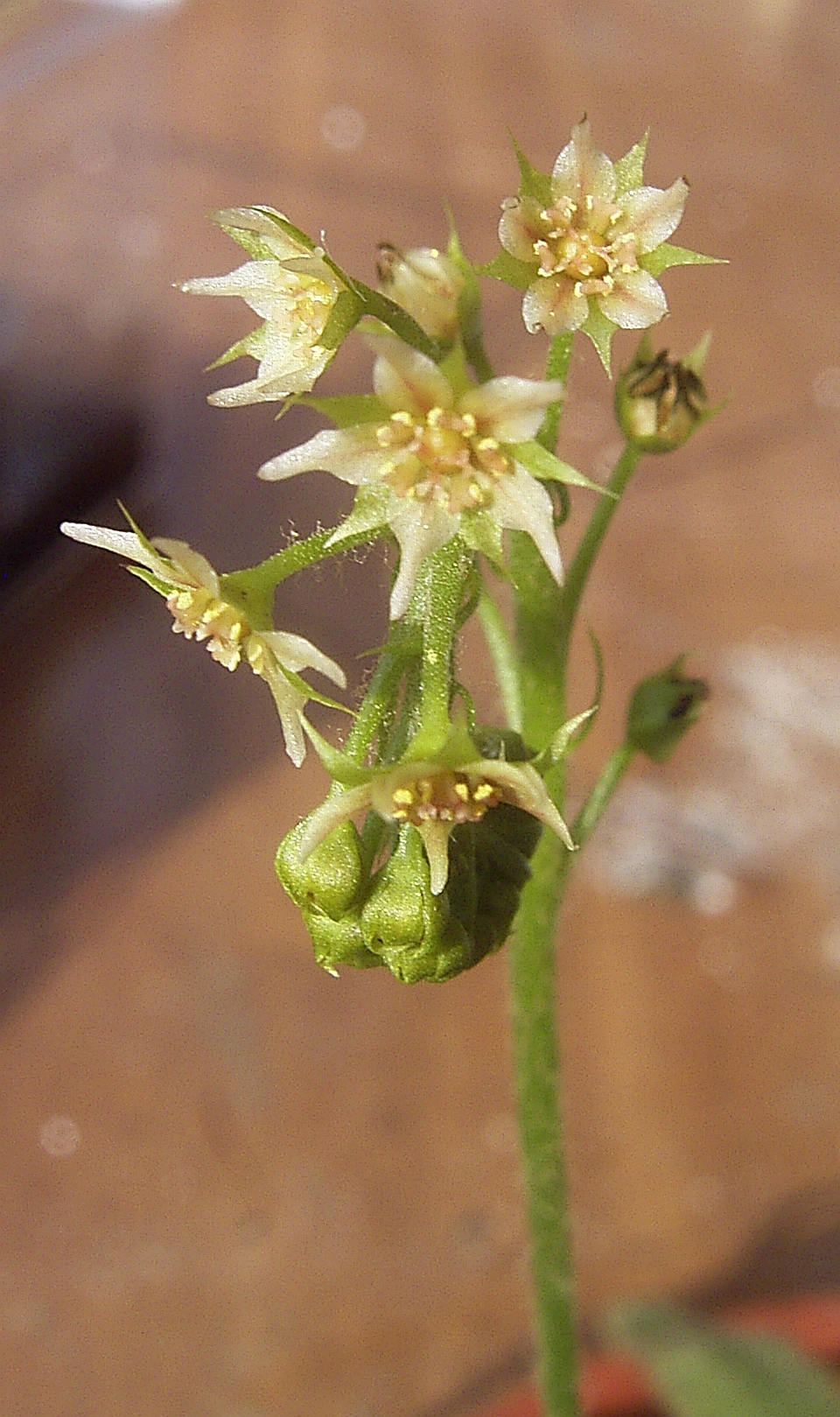
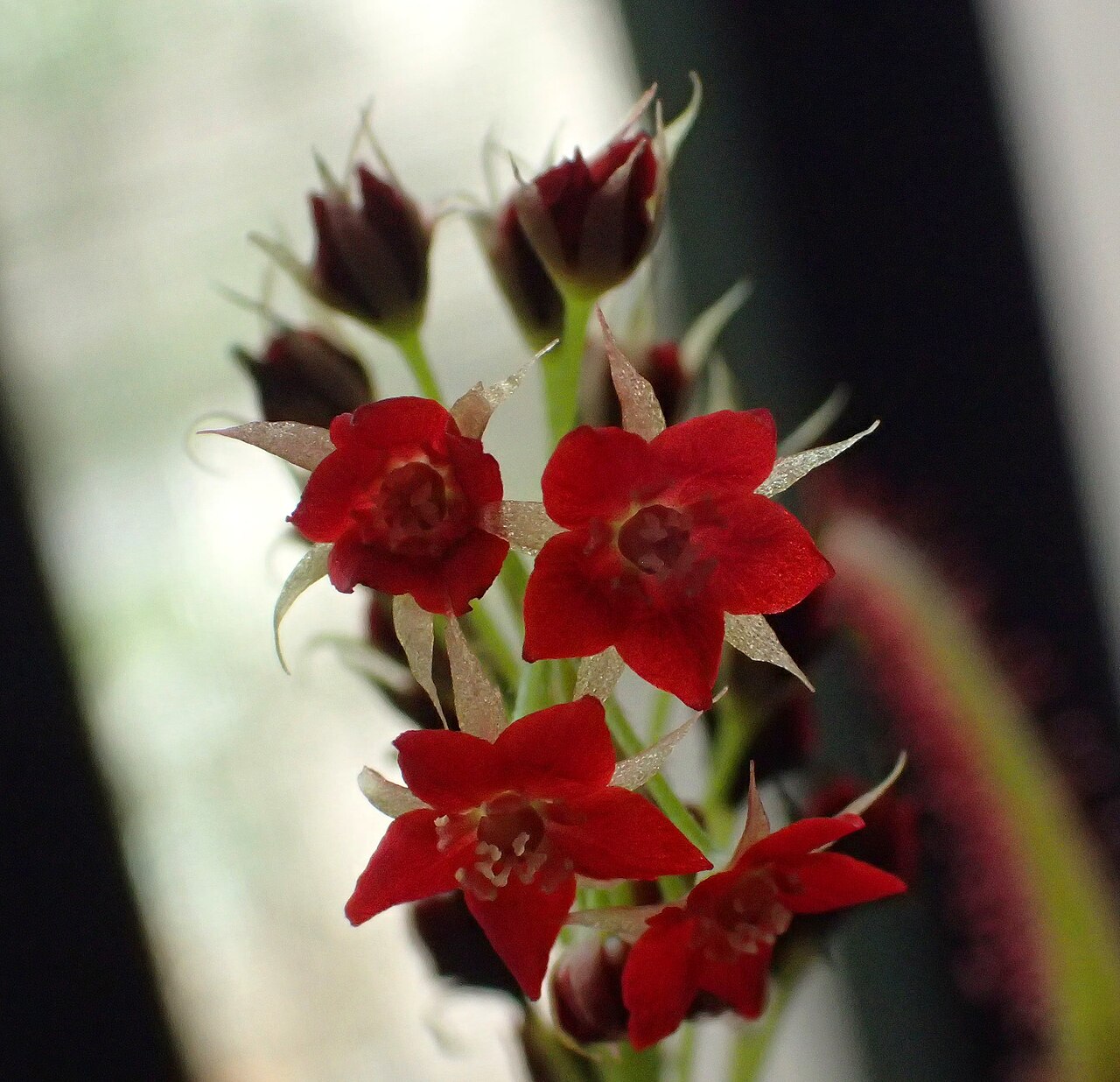
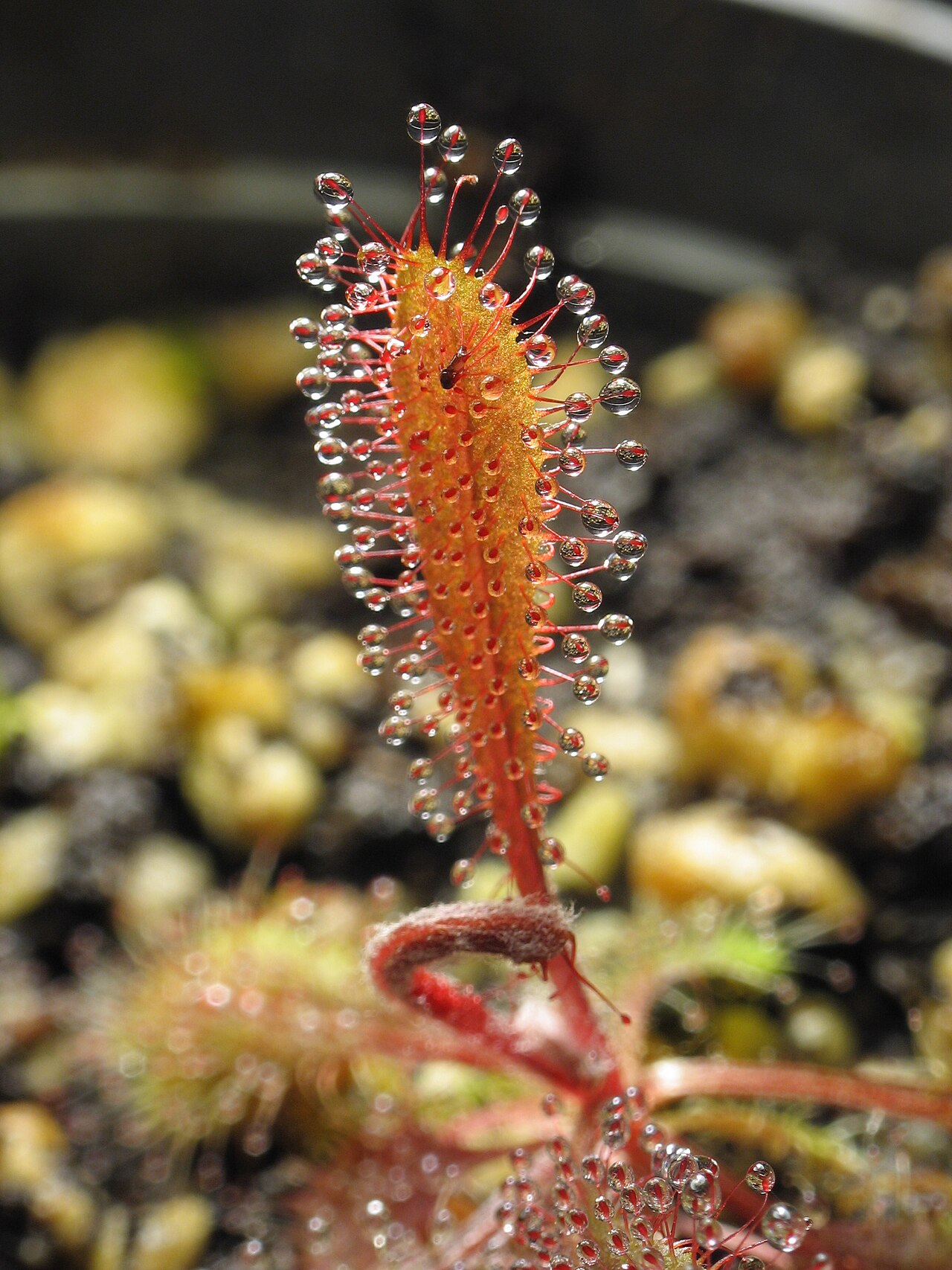
A rosette of narrow, lanceolate to sword-shaped leaves 10 to 25 cm long and only 7 to 10 mm wide, tapering gradually into a short petiole. The leaves are light green to bronze, with a clear midrib, and carry short tentacles along almost their whole length. Because the plant multiplies from its roots, rosettes rarely stand alone: they usually form dense clumps. The inflorescences reach 35 cm, are one-sided and carry small star-shaped flowers that are red, reddish orange or sometimes cream — an unusual colour in the genus.
Similar species
Its closest relatives are the other species of section Prolifera. Drosera schizandra has broad, ovate to obovate leaves often with a notched tip, and grows in even darker, damper places. Drosera prolifera has round blades on long stalks and flowering stems that form plantlets at the tip. The recently described Drosera buubugujin from Cape York has longer, slimmer leaves and grows further north. Outside this group no sundew in Queensland rainforest has such long, narrow leaves.
The trap and how it works
An active flypaper trap, but a slow one. The tentacles are short and move noticeably more slowly than in most other sundews, and the leaf itself barely curls. The catch therefore relies mainly on the mucilage: small gnats and other insects flying in the humid, still understorey stick to the broad leaf surface and are digested there by the glands.
Habitat and ecology
Densely shaded rainforest margins, on sandy soil along creek banks and on wet rocks and boulders in the spray zone of waterfalls (B3, R1). The sites have high humidity all year and little direct sunlight. Unlike most sundews this is therefore not a plant of open, sunny ground; in full sun the leaves scorch.
Distribution and elevation
Endemic to north-eastern Queensland, in the Wet Tropics around Rockingham Bay and on Hinchinbrook Island. The range is small and largely confined to rainforest in protected areas. Altitudinal limits are not published in the sources consulted; the elevation field is left empty.
- Recorded (one-degree cells)
Forms and variation
No varieties are recognised. The diploid chromosome number is 2n = 30; 2n = 28 has also been counted in some cultivated plants. Within the section, D. adelae forms with D. prolifera, D. schizandra and D. buubugujin a small, isolated group of rainforest species, all of which reproduce vegetatively and differ strongly from one another in leaf shape. Colour differences in leaf and flower mainly follow the local light level.
Where and when to see it
The plant is best seen along walking tracks that follow creek valleys in the rainforest, on the banks and on wet rocks by small waterfalls. Look in the shade, not in the sun: at first sight the clumps resemble ordinary green weeds, and only up close do the glistening tentacles show. Flowering falls in the drier half of the year, June to November. Keep to the tracks; wet rocks are slippery and the clumps are easily pulled loose.
Conservation status
Globally the species is assessed as Least Concern (LC) on the IUCN Red List; it is not listed in CITES. Under Queensland's Nature Conservation Act it is classed as rare. Its limited range makes it vulnerable to local disturbance such as changes in drainage, but most sites lie in protected rainforest within the Wet Tropics World Heritage Area. There is no need to collect from the wild: the species is common in cultivation and multiplies readily.
Scientific name
Drosera adelae | Mueller, 1864
Described by Ferdinand von Mueller, in "Fragmenta Phytographiae Australiae", volume 4, no. 30, p. 154 (November 1864). Rockingham Bay / Hinchinbrook Island area, Queensland, Australia — rainforest, shaded creek banks and wet rocks near waterfalls. No precise coordinates or elevation known. From the Latin genitive "adelae" ("of Adela/Adele") — almost certainly named after a woman called Adela or Adele, consistent with Mueller's well-documented habit of naming plants after friends and colleagues (as with Macadamia, after John Macadam). Her identity, however, could not be established with certainty.
World Checklist of Vascular Plants (WCVP), via Plants of the World Online (POWO), Royal Botanic Gardens, Kew.