All species › Caryophyllales › Sundew family › Drosera citrina
Drosera citrina
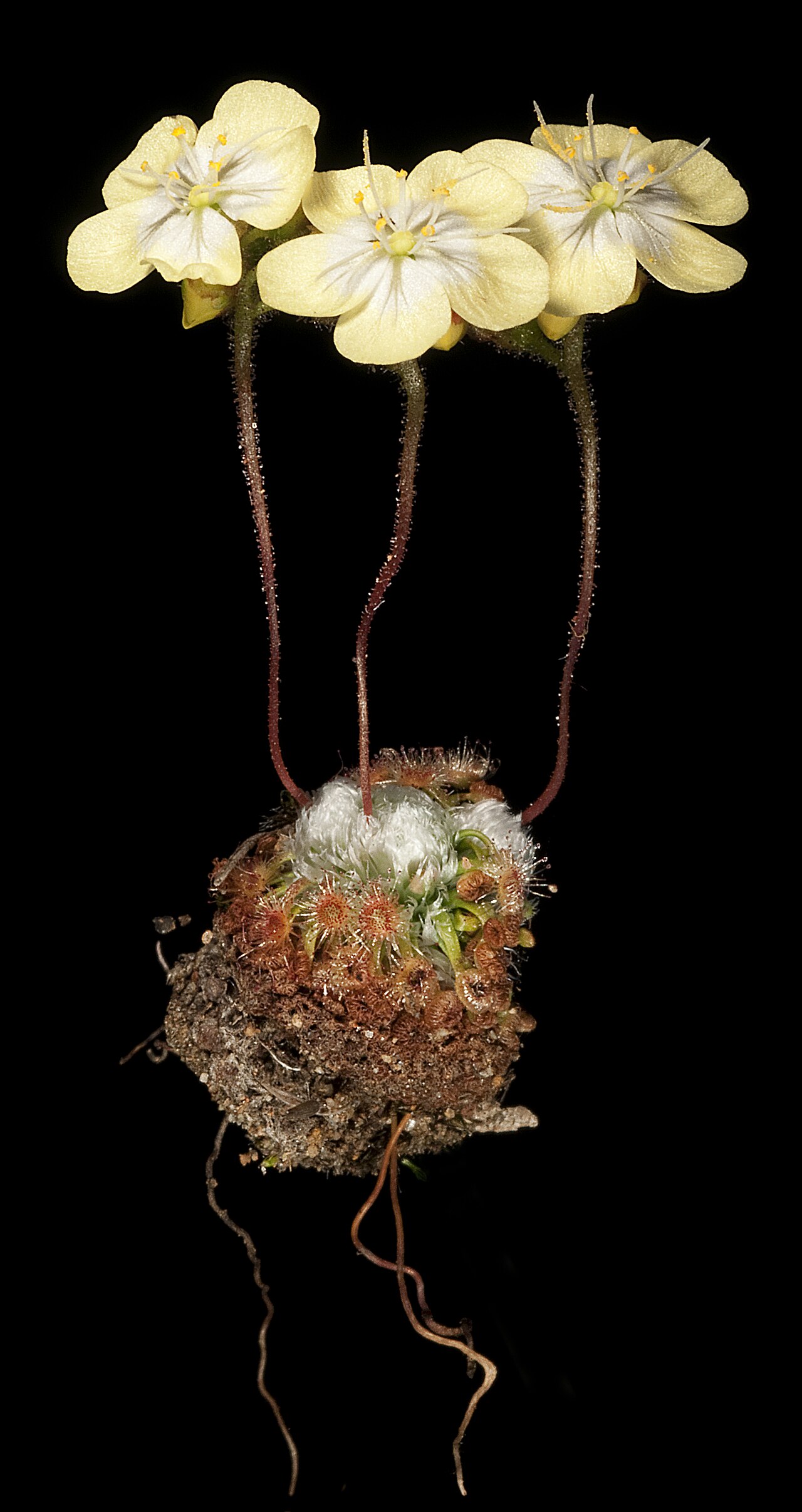
Yellow flowers are an exception among sundews, and Drosera citrina carries them in its name: 'lemon-coloured'. Allen Lowrie and Sherwin Carlquist described this pygmy sundew in 1992 from the yellow sandplains north of Perth, a landscape whose kwongan heath is among the most species-rich in the south-west.
Identification
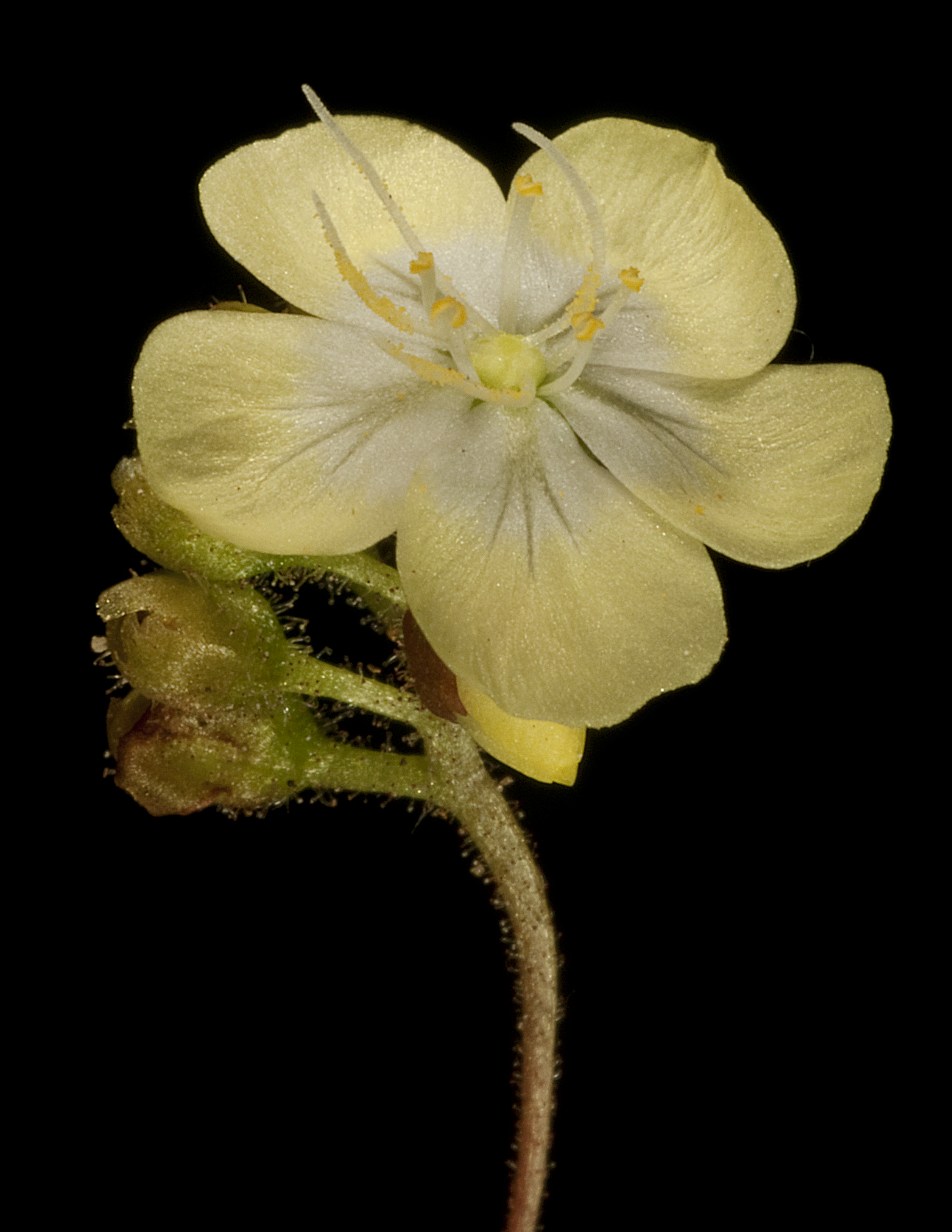
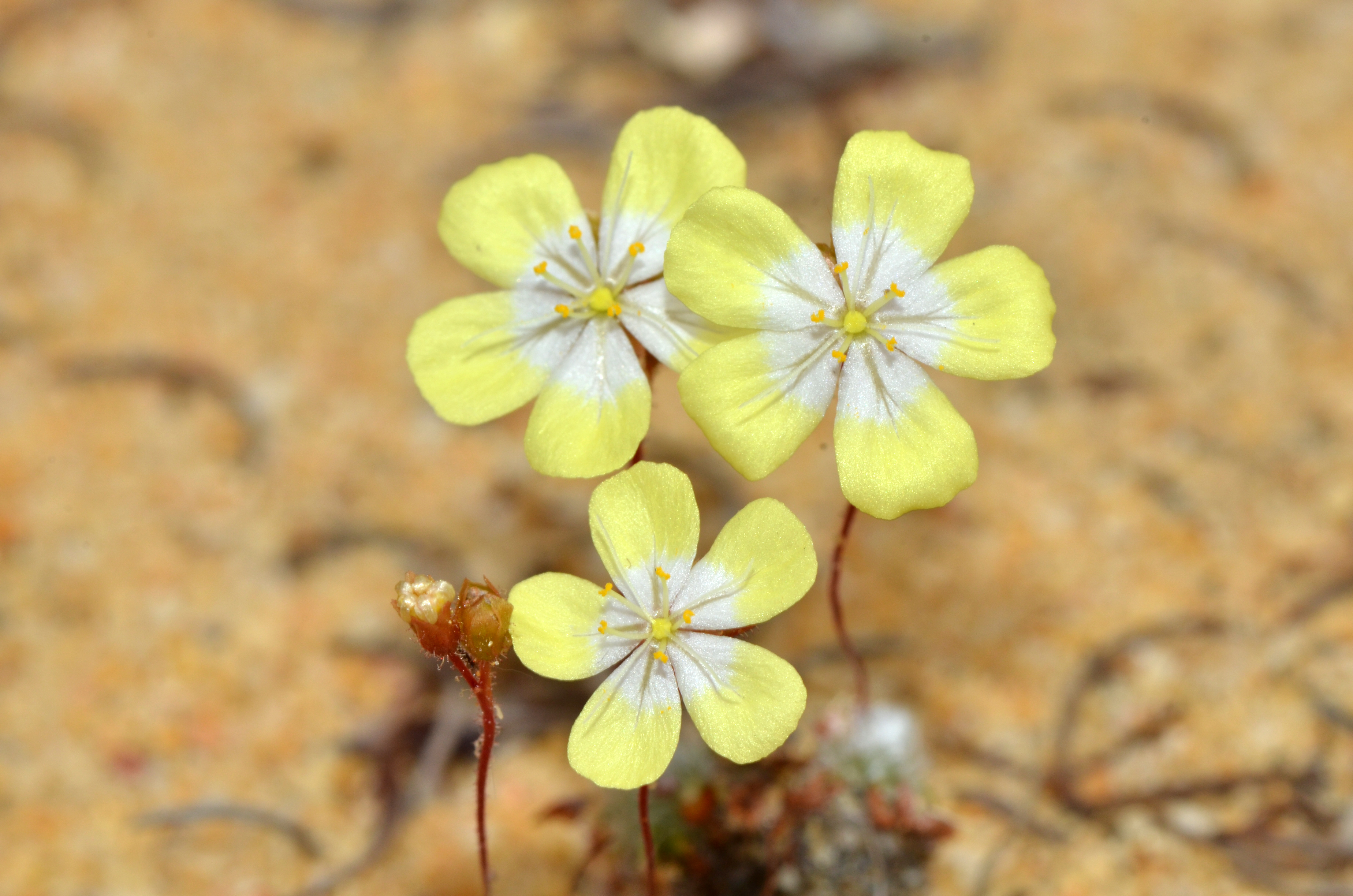
A perennial, fibrous-rooted pygmy sundew with a small rosette, up to 4 cm tall. At its heart stands the cone of silvery stipules found in all pygmy sundews. The flowers are lemon yellow to greenish yellow, rarely white, and appear in October. Precise leaf and flower measurements were not available in the accessible sources.
Similar species
Yellow-flowered species are scarce among pygmy sundews, which makes identification easier. The closest relative is Drosera nivea, originally described as a variety of D. citrina, which flowers white. Drosera coalara, described by Lowrie and Conran in 2014, is treated in some overviews as a synonym of D. citrina; anyone finding a yellow-flowered pygmy sundew in this area should therefore bear both names in mind.
The trap and how it works
An active flypaper trap. The small leaves bear stalked glands with droplets of glue in which springtails, mites, ants and small flies become stuck. The tentacles bend towards the prey and secrete digestive enzymes. On the poor yellow sand this by-catch is an important source of nitrogen.
Habitat and ecology
Yellow sand (FloraBase), in the open kwongan heath of the sandplains (D1, B5). The sand is moist enough in winter for growth and flowering; in the hot summer the plant withdraws into its bud of stipules.
Distribution and elevation
Endemic to the south-west of Western Australia. FloraBase lists the Geraldton Sandplains and Swan Coastal Plain bioregions, with records in the shires of Dandaragan, Gingin and Moora, north of Perth.
- Recorded (one-degree cells)
Forms and variation
The former variety D. citrina var. nivea is now treated as a species in its own right, Drosera nivea. Conversely, two later names, D. chrysochila and D. coalara, are placed under D. citrina in some sources. Like all pygmy sundews the species also reproduces by gemmae, which makes it popular in cultivation.
Where and when to see it
October is the month. Search the open patches of heath on the yellow sand of the sandplains north of Perth, in sunny weather around midday when the yellow flowers are open. A yellow flower less than a centimetre across above a rosette a few centimetres wide is easier to find than the rosette itself.
Conservation status
Assessed as Least Concern (LC) on the IUCN Red List (2020) and listed as not threatened in Western Australia. Not in CITES. The sandplains north of Perth are under pressure from clearing, sand extraction and expanding settlement, but there are large protected heathland areas in the region. The taxonomic boundaries with D. coalara and D. chrysochila are uncertain.
Scientific name
Drosera citrina | Lowrie & Carlquist, 1992
Described by Lowrie & Carlquist in 1992, in Phytologia, volume 73, no. 2, p. 99. The precise type locality could not be established. The species occurs in Western Australia. From the Latin citrina ("lemon-coloured") — refers to the colour of the flowers.
World Checklist of Vascular Plants (WCVP), via Plants of the World Online (POWO), Royal Botanic Gardens, Kew.