All species › Caryophyllales › Sundew family › Drosera nitidula
Drosera nitidula
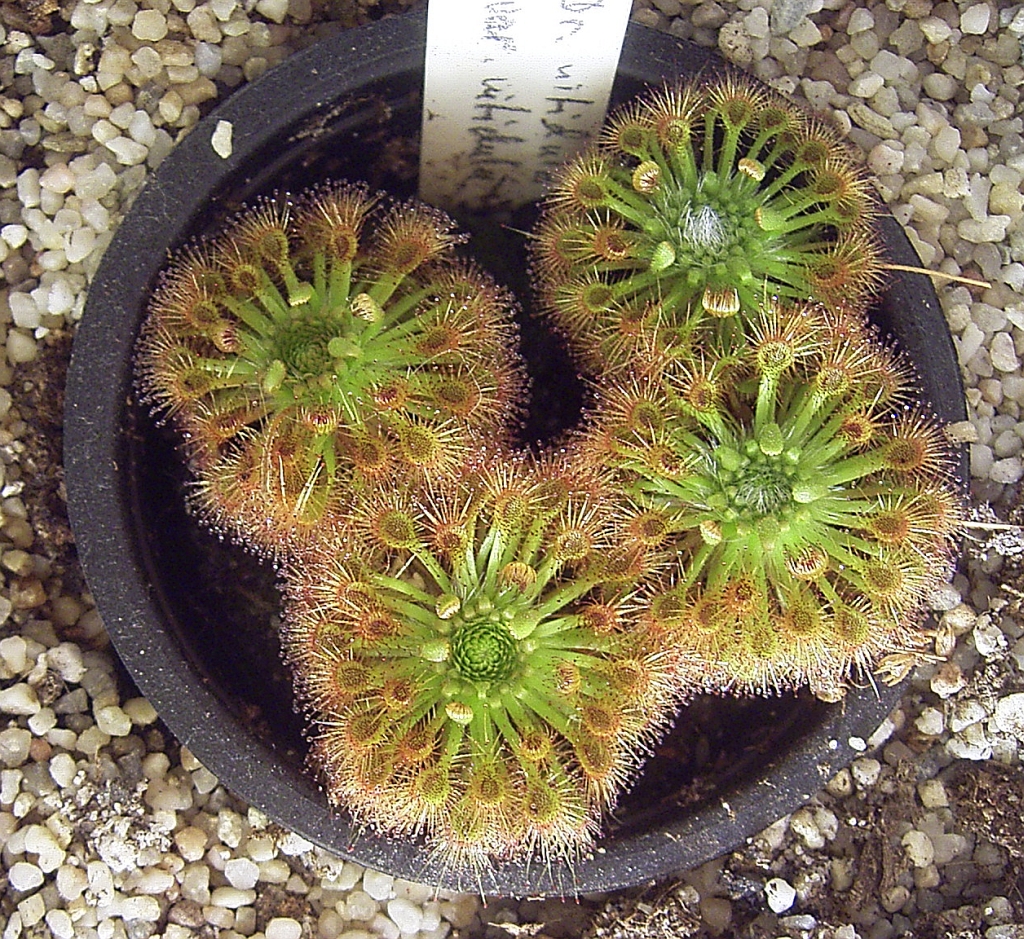
One of the classic pygmy sundews, described as early as 1848 by Jules Émile Planchon and so one of the first species of this group to be named. The name nitidula means 'somewhat shining'. For a long time the species was broadly conceived, with several subspecies; most of these have since been split off as species in their own right.

Identification
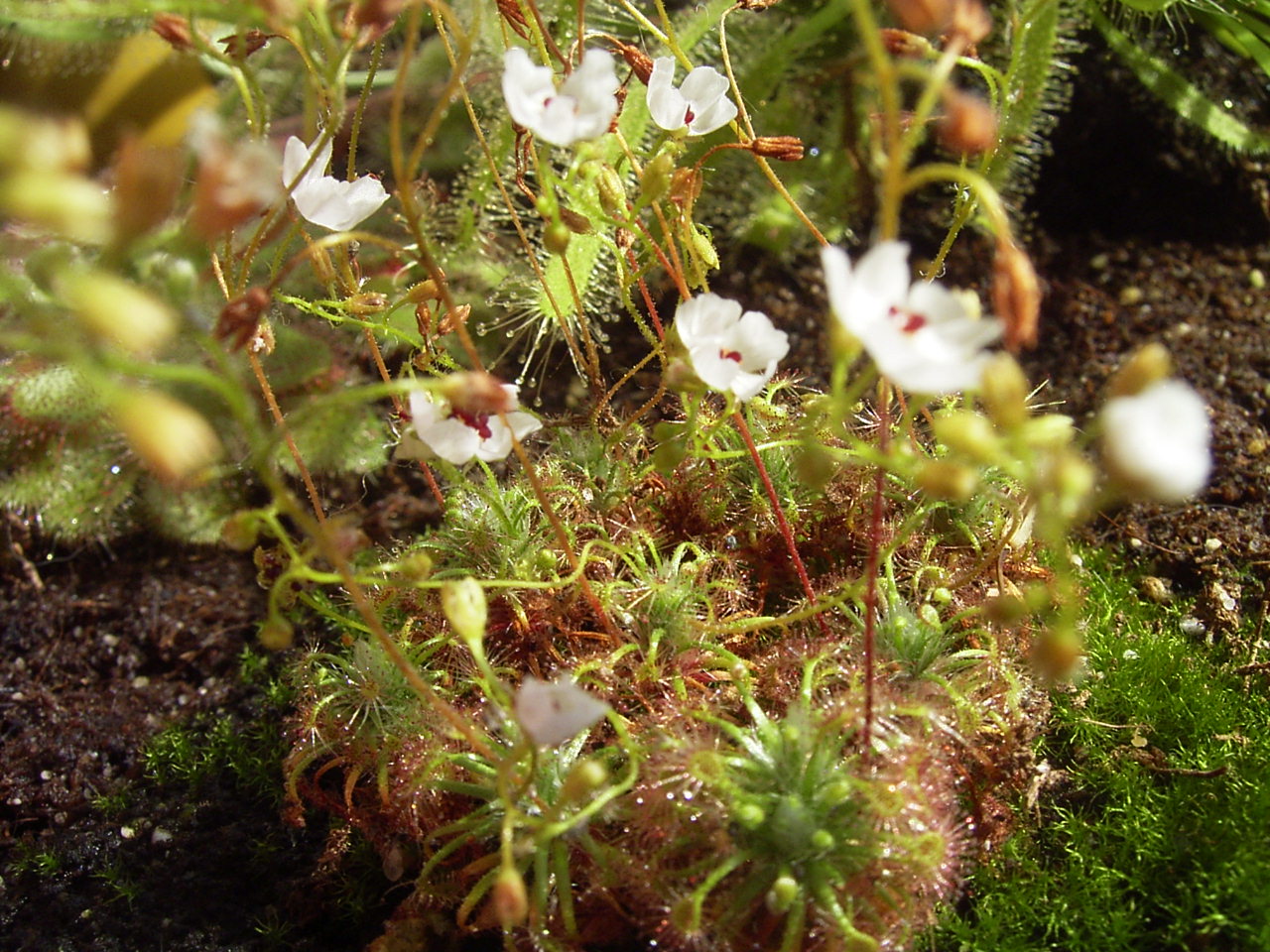
A small, fibrous-rooted, perennial rosette with the tuft of stipules at its heart that marks all pygmy sundews. At the end of the growing season the plant forms gemmae. We could not check measurements, flower colour or flowering time in any accessible source; those fields are left empty.
Similar species
Because D. nitidula used to be broadly conceived, the species split from it closely resemble it. In current classification these include Drosera omissa, D. leucostigma and D. allantostigma, which were described as subspecies of D. nitidula or included in it; the differences lie mainly in the shape and colour of the stigmas. Older records under the name D. nitidula may therefore refer to one of these species.
The trap and how it works
An active flypaper trap in miniature. The leaf blades carry stalked glands with a sticky droplet; the long marginal tentacles catch the prey and bend it to the centre of the leaf, where shorter glands take over digestion. The prey consists of springtails, mites and the smallest flies.
Habitat and ecology
We were unable to consult a published habitat description. The codes follow the picture of related pygmy sundews, which grow on sandy soils in and around seasonally wet hollows and in open heath (W7, D1, B5), and are provisional. Like all pygmy sundews the plant grows in the wet winter and rests in summer.
Distribution and elevation
Endemic to south-west Australia. We could not verify a more precise description of the range after the separation of the former subspecies.
- Recorded (quarter-degree cells)
Forms and variation
In the current concept no subspecies are recognised; the former subspecies are accepted as species. The species is one of the pygmy sundews that cross easily with relatives in cultivation. Whether this also happens in the wild we could not establish.
Where and when to see it
Pygmy sundews flower in the south-west Australian spring and open their flowers only in sunshine. Take a hand lens: in this species and its former subspecies the shape and colour of the stigmas is the key character, and without those details no name can be given.
Conservation status
On the global IUCN Red List the species is listed as Least Concern (LC). It is not listed in CITES. Uncertainty: apart from name, author, section and status we could verify little in a source; the delimitation against the split-off species is based on the author citations in the names and should be checked in Lowrie (2013).
Scientific name
Drosera nitidula | Planchon, 1848
Drosera nitidula was described in 1848 by Jules Émile Planchon, in Annales des Sciences Naturelles, Botanique, 3rd series, volume 9, p. 285. The holotype (Kew, K000215051, Herbarium Hookerianum) originates from the Swan River in Western Australia and was collected by James Drummond. The precise collection date could not be established. The name is a diminutive of Latin "nitidus" ("shining, glossy"), meaning roughly "somewhat shining" or "glossy" — referring to the glossy appearance of the small leaf rosettes.
World Checklist of Vascular Plants (WCVP), via Plants of the World Online (POWO), Royal Botanic Gardens, Kew.