All species › Caryophyllales › Sundew family › Drosera tubaestylis
Drosera tubaestylis
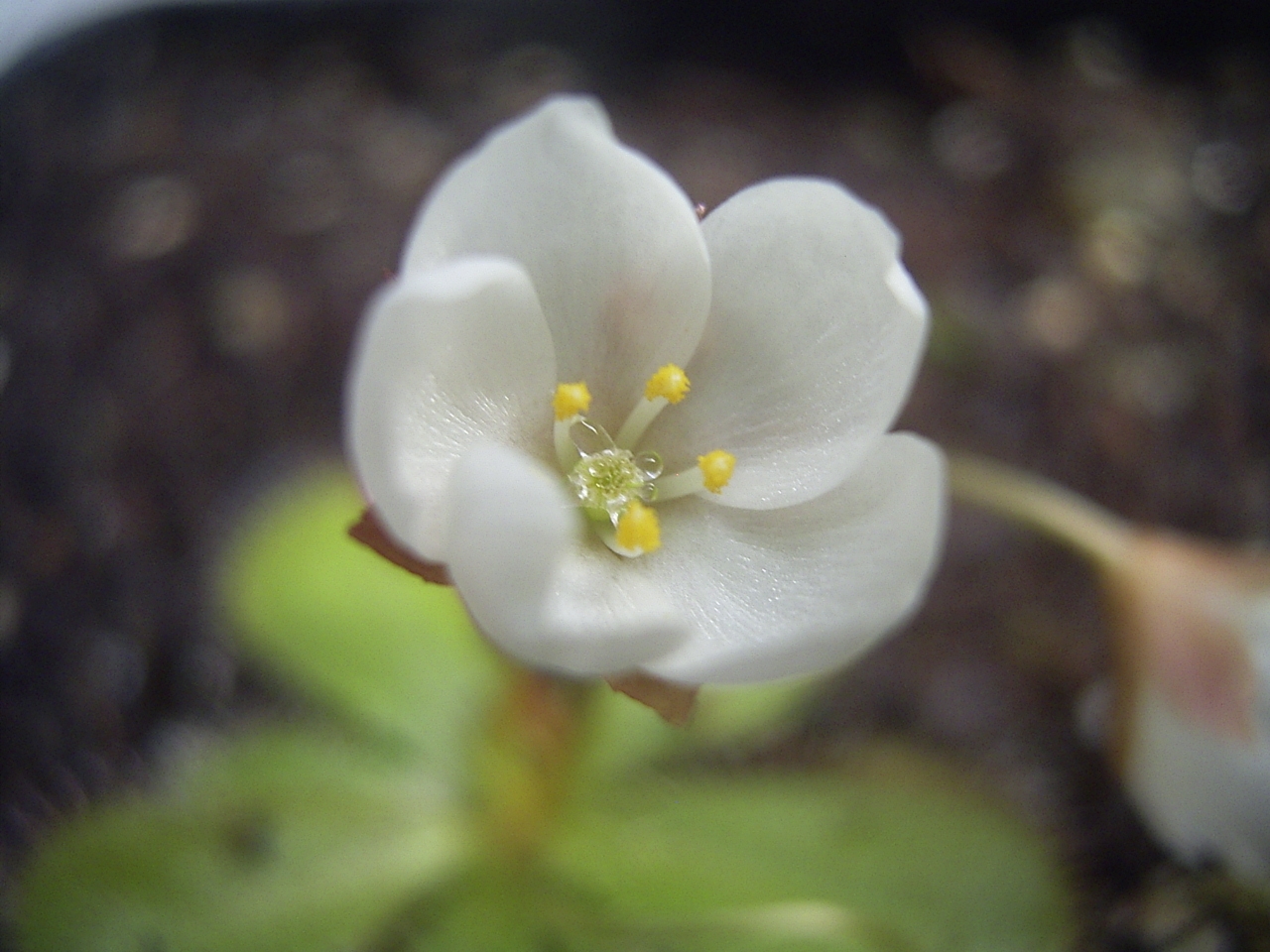
A small tuberous rosetted sundew of the swamp margins near Perth, which owes its name to a detail visible only with a lens: trumpet-shaped style tips at the heart of the flower. Drosera tubaestylis — 'with a trumpet style' — was described in 1992 and is related to the better-known D. bulbosa.
Identification
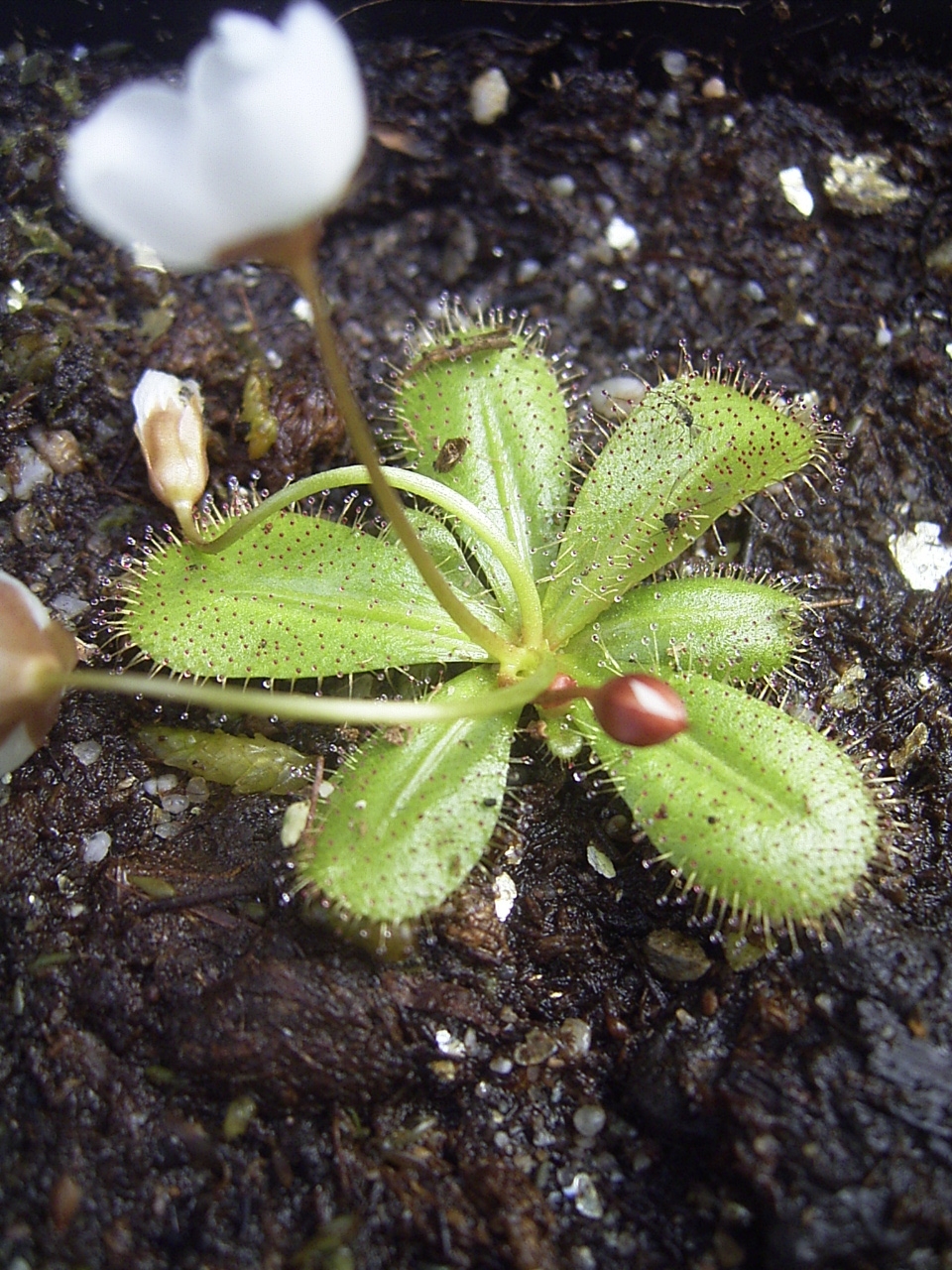
A flat rosette 2 to 3 cm across that reappears each wet season from an underground tuber. The diagnostic character lies in the flower: the style tips are widened into a trumpet shape. Flower colour, flowering time and exact leaf and flower measurements are not given in the sources consulted; those fields are left empty.
Similar species
Its closest relative is Drosera bulbosa, also a tuberous rosette plant of south-west Australia. The trumpet-shaped style tips of D. tubaestylis are the decisive difference; seeing them needs a flowering plant and a lens. Note also the similar name Drosera tubistylis, a different, separately accepted name — do not confuse them.
The trap and how it works
An active flypaper trap held close to the ground. The rosette leaves lie flat on the soil and carry stalked glands with a sticky droplet on the upper surface and along the margin. Whatever crawls over the ground or lands briefly — ants, springtails, small beetles and midges — becomes entangled, after which the tentacles slowly bend inwards and the glands secrete digestive enzymes. Nitrogen, phosphorus and minerals from the prey are absorbed through the same leaf surface. Because the plant is in leaf for only a few months each year, that food goes straight into the tuber, which has to carry the plant through the next dry summer.
Habitat and ecology
Fine sandy clay on the margins of swamps (W7, W4). These margins are saturated in winter and dry out in summer; the plant survives as a tuber.
Distribution and elevation
Endemic to Western Australia, in an area around Perth. No closer delimitation is given in the sources consulted. Altitudinal limits are not published.
- Recorded (quarter-degree cells)
Forms and variation
Allen Lowrie and N.G. Marchant described the species in 1992. No subspecies or varieties are recognised. It belongs to the tuberous rosetted sundews of subgenus Ergaleium.
Where and when to see it
Search swamp margins around Perth in the wet season. To recognise the species with certainty you need a flowering plant and a lens for the styles — do not pick flowers, look on the spot. Many swamp margins around Perth lie in urban areas and are heavily used; keep to paths.
Conservation status
Assessed as Least Concern (LC) on the IUCN Red List; not listed in CITES. The sources consulted name no specific threats. Swamp margins on the coastal plain near Perth are under pressure from urban expansion, falling groundwater and weeds.
Scientific name
Drosera tubaestylis | Marchant & Lowrie, 1992
Drosera tubaestylis was described in 1992 by Neville Gordon Marchant and Allen Lowrie, published in Kew Bulletin, volume 47(2), page 321. The holotype was collected on 26 May 1984 by A. Lowrie, at a locality "2.5 km E of Murray Bend, Ravenswood" in Western Australia, in an area near Perth with sandy clay soils at swamp margins. The name tubaestylis is a compound of the Latin "tuba" (trumpet) and "stylis" (style, the female floral organ), referring to the trumpet-shaped style apices of this species — a descriptive name based on a morphological feature.
World Checklist of Vascular Plants (WCVP), via Plants of the World Online (POWO), Royal Botanic Gardens, Kew.