All species › Waterfowl › Ducks, geese and swans › Baikal teal
Baikal teal
Sibirionetta formosa | Siberische taling | Cerceta del Baikal
An East Siberian teal with the most finely drawn head of any duck on the European list. Any bird found here starts a conversation about provenance rather than plumage, because the species sits in almost every wildfowl collection in the country.

Voice
The drake gives a deep, hollow clucking wot-wot-wot, the sound behind the German name Gluckente; the female a low, short quack. Outside displaying parties the species is quiet, and a lone bird among Teal will rarely say anything at all.
No freely licensed recording is available for this species yet.
Identification
The drake has a cream, teardrop-shaped cheek patch outlined in black, a broad green band running from the eye into the nape, and a black line dropping from the base of the bill straight down through the cheek. Long drooping scapulars are striped chestnut, black and cream; the pink breast is finely spotted and is cut off from the grey flank by a narrow vertical white bar, with a second bar before the black stern. The female is plain brown but shows a round, sharply defined white spot at the bill base, a pale supercilium and often a pale curl behind the eye.
Confusion species
Females and eclipse drakes are muddled with Teal and Garganey. On Garganey Spatula querquedula the pale loral spot sits in a strongly striped face with two pale lines across the cheek; on Baikal Teal the spot is round, white and cleanly cut against an otherwise plain cheek. The second line of enquiry is provenance: check for rings, clipped primaries, unusual tameness and the company the bird keeps, since many British birds go back on escapes from collections.
Habitat
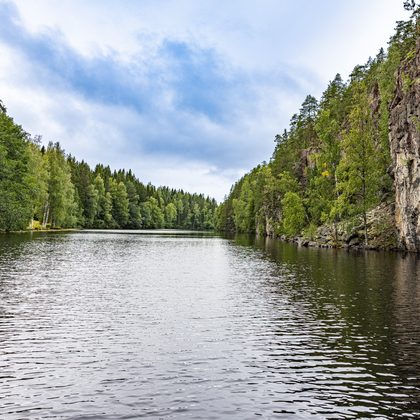
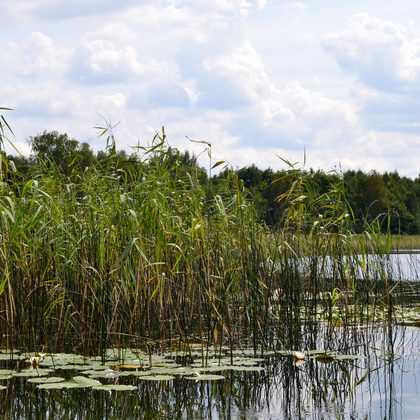
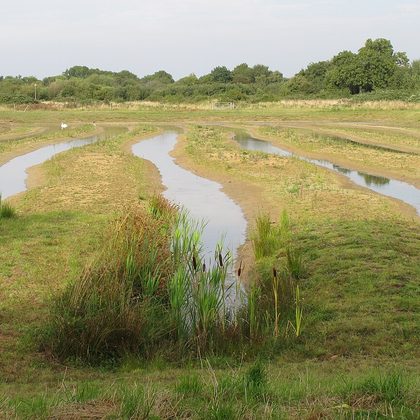
In Europe the bird turns up on shallow freshwater pools, reservoirs and flooded grassland, nearly always among feeding Teal and Wigeon. It works the reed edge and muddy margins and dabbles in a few inches of water.
Where the bird is most at home, classified with EUNIS — the European standard for habitats.
Range and movements
Breeds in the taiga and forest tundra of eastern Siberia and winters in Korea, Japan and eastern China, where flocks run into the hundreds of thousands. In Europe it is a very rare vagrant, and many claims founder on the question of whether the bird is wild. Britain's first accepted record, a bird from Essex in January 1906, was only admitted after stable isotope work on its feathers gave hydrogen values low enough to point to Siberia.
- Breeding (summer)
- Winter
- Passage
- dark = core range, pale = thinly spread
Where and when to look
From December to February work through large Teal flocks on fresh water, scope on the head of each bird in turn. A drake gives itself away the moment it lifts its head: look for the black line running down through the cream cheek. Note legs, primaries and behaviour for every candidate, because that is exactly what the records committee will ask for.
Conservation status
Listed as of least concern after winter numbers in East Asia recovered; South Korea alone holds several hundred thousand birds on a handful of rivers and reservoirs. That concentration is the risk, since reclamation and drainage of East Asian wintering wetlands, disturbance and poaching can hit a large share of the population at once.