All species › Waterfowl › Ducks, geese and swans › Bufflehead
Bufflehead
Bucephala albeola | Buffelkopeend | Porrón albeola
A pocket-sized diving duck, barely forty centimetres long, with a head that looks two sizes too big for the body. The drake is white and black with a huge white wedge across the back of the head and a face that flares green and purple in good light. In Britain and Ireland it is a genuine rarity, and one that always arrives with a question attached.

Voice
Silent for practical purposes, certainly away from the breeding grounds. Displaying drakes give a low rolling chrrr and a squeaky whistle, females a hoarse krek as they flush. Vagrants in Britain and Ireland are solitary and say nothing at all.
No freely licensed recording is available for this species yet.
Identification
The drake is brilliant white on breast and flanks with a black back, and a large puffed head carrying a broad white panel from behind the eye into the nape; the rest of the head glosses green and purple. The bill is short and blue-grey. Female and first-winter birds are grey-brown with a dark head and a single small, elongated white streak on the cheek behind the eye. Both sexes dive almost continuously with a short forward spring, and flush low and fast showing a white wing panel: nearly the whole inner wing on the drake, a small white rectangle on the female.
Confusion species
An adult drake is unmistakable. The traps lie elsewhere. Females and first-winters are regularly reported as Smew: Smew is larger, with a chestnut cap running below the eye and a sharply cut white cheek, while Bufflehead has a uniformly dark head with one small white streak behind the eye. Female Goldeneye also catches people out, but is far bulkier, with an entirely brown head and a white collar. The second question is provenance: the species is kept in European wildfowl collections, so check every bird for leg rings, worn or cut primaries, tameness and the company of other exotics. A wary bird diving with Goldeneye or Tufted Duck out on open water is a very different proposition from a lone bird on a town pond.
Habitat
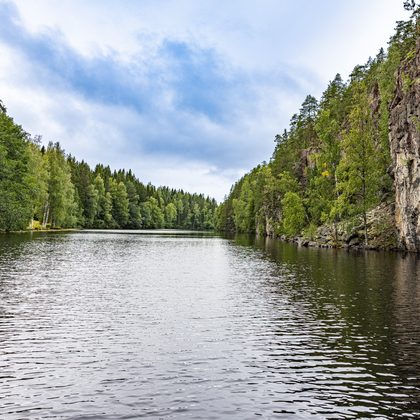
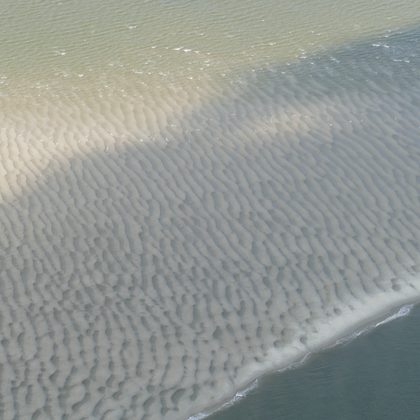
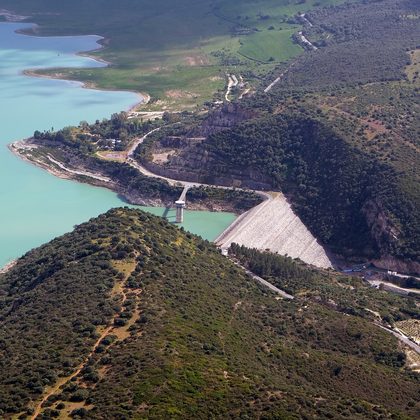
Shallow, sheltered water: coastal bays and inlets, harbours, lochs, lakes and reservoirs. It wants open water clear of vegetation where it can dive undisturbed, usually not far out and often close to a wall or a shore. Birds reaching Britain and Ireland turn up on lochs, reservoirs and sheltered sea inlets, frequently in the company of Goldeneye, Tufted Duck or Scaup.
Where the bird is most at home, classified with EUNIS — the European standard for habitats.
Range and movements
Breeds in tree holes beside forest lakes across Alaska and Canada and winters right across the United States. Records in Britain and Ireland run to a few dozen accepted birds, from Orkney and the Hebrides to Cornwall, with the British list opening on a bird in the Isles of Scilly in 1920. Spain has just two accepted records, at Traba lagoon in Galicia in the winter of 1992/93 and in Santander Bay in 1997/98. Because Bufflehead is held in collections, a share of European reports goes back to escaped birds, and records committees weigh date, location and behaviour carefully before accepting one.
- Winter
- dark = core range, pale = thinly spread
Where and when to look
Work large, quiet waters that already hold Goldeneye between November and April: Irish and Scottish lochs, English reservoirs, sheltered bays. Size does the work for you, since beside a Tufted Duck the bird looks almost absurdly small and the bulbous head shows the moment it surfaces. Expect short views, because it spends at least half its time under. Photograph the legs and the open wing if you can, so the provenance question can be settled afterwards.
Conservation status
The world population is stable to slightly increasing and the species is not threatened. The long-term pressures are the loss of old hole-bearing trees around boreal forest lakes, since the duck depends almost entirely on cavities excavated by woodpeckers, together with pollution and disturbance in the wintering range. Hunting takes a modest share in North America.