All species › Swifts › Swifts › Chimney swift
Chimney swift
Chaetura pelagica | Schoorsteengierzwaluw | Vencejo de chimenea
The Chimney Swift is a small North American swift shaped like a flying cigar: a stubby dark body that seems to end without a tail, carried on narrow, evenly bowed wings. It reaches Europe only when a fast Atlantic weather system carries autumn migrants off course, and it then turns up within a few days of that storm making landfall.

Voice
A dry, fast, chattering twitter, chip-chip-chippering, running into a hard insect-like rattle when several birds fly together, and given on the wing while feeding. Vagrants are often silent, but birds that stay over one village for a day or two do call, and the sound is thinner, drier and much less drawn out than the piercing srreee of a Common Swift.
Recording: Jonathon Jongsma — CC BY-SA 3.0 · Wikimedia Commons
Identification
Tiny by swift standards: a third shorter than a Common Swift and with a wingspan barely two thirds as wide, so a bird seen alongside anything familiar looks startlingly small. The body is thickset and cigar-shaped and the rear end is blunt and looks almost tail-less; the short square tail carries bare feather shafts that are never visible in the field. The plumage is sooty grey-brown, palest and greyest on the throat and upper breast, and the rump averages a shade paler than the mantle, which in low autumn sun can show as a dull band. The wings are narrow, evenly bowed and set well forward, and the flight is the giveaway: rapid, fluttering, shallow beats, almost bat-like, broken by short flat glides, quite unlike the deep scything strokes of a Common Swift.
Confusion species
Common Swift is the bird it is measured against, and is far larger and longer-bodied, uniform sooty brown, with stiff, scythe-shaped wings and a short forked tail that a Chimney Swift never shows; the blunt, tail-less rear end is the most reliable feature at range. Pallid Swift is browner, with a stronger head and throat pattern and broader-based wings, but is again a much larger bird with a forked tail. Alpine Swift is far bigger and has a white belly. Little Swift comes closest in size and is also square-tailed, but has a broad white rump patch, blunter wings and a fluttering, less driving flight. House Martin is clean white below with a white rump, and Sand Martin is brown above and white below with a breast band, so both are ruled out the moment the underparts are seen. In practice the combination of small size, dull pale throat, tail-less silhouette and flickering wingbeats settles it.
Habitat
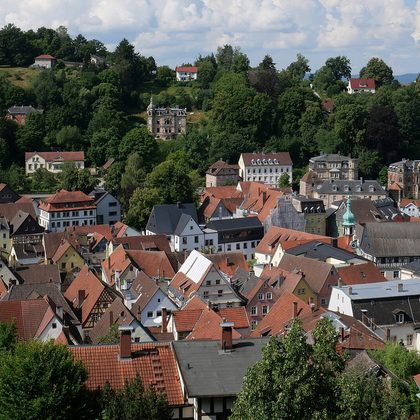
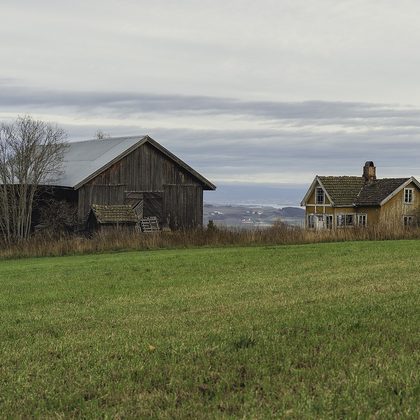
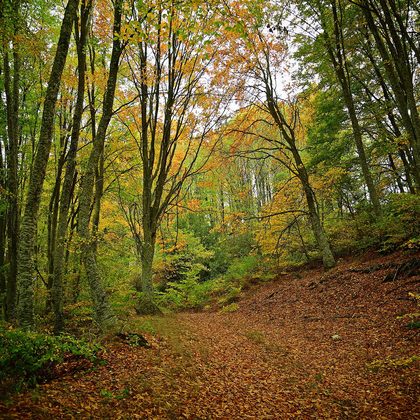
At home in eastern North America it is a bird of towns and villages, feeding over streets, parks, rivers and lakes and over open deciduous woodland, and nesting and roosting inside chimneys, air shafts and hollow trees, where it clings upright to the vertical wall rather than perching. Birds that reach Europe keep to the same kind of airspace in the wrong place: they feed over coastal villages, harbours, reservoirs and sheltered valleys on headlands and islands, usually low down out of the wind, and at dusk several have gone to roost in the chimneys of the very houses they were found above.
Where the bird is most at home, classified with EUNIS — the European standard for habitats.

Range and movements
Breeds across the eastern United States and the southern edge of eastern Canada and winters in the upper Amazon basin, so a bird in Europe has overshot an entire ocean. Britain holds some twenty accepted records involving a few more individuals, nearly all in Cornwall, the Isles of Scilly and along the east and north coasts, with obvious clusters in October 1999 and late October and early November 2005. In Ireland the first was on Cape Clear in October 1999, and County Cork alone accounts for eight records of about a dozen birds. Spain has a small series, with birds in Galicia and Andalusia in 1999 and, during the 2005 arrival, on Tenerife, Lanzarote and Fuerteventura. The Netherlands has no accepted record; a Frisian claim from July 2008 was not accepted.
Where and when to look
The last week of October and the first week of November are the dates that matter, and the weather does the work: watch after a fast Atlantic depression, often the remnant of a hurricane, has run straight across the ocean and made landfall in the south-west. Look over villages, harbours and sheltered reservoirs on headlands and islands rather than out to sea, because the birds hug the lee. Any swift at all in November deserves a second look, and the rear end is what to judge first: if the bird ends bluntly, with no fork and hardly any tail, and flutters rather than scythes, it is not a Common Swift.
Conservation status
The IUCN category is Vulnerable. North American numbers have fallen steeply over the past half century and the loss of nest and roost sites is the clearest reason: open brick chimneys are capped, lined with smooth flue liners or demolished, and the large hollow trees the species used before chimneys were available are scarce in managed forest. The decline of flying insects adds to the pressure. Purpose-built swift towers and leaving suitable chimneys open and unlined are the standard remedies, although they reach only a small part of the population.