All species › Passerines › Nuthatches › Eurasian nuthatch
Eurasian nuthatch | Sitta europaea
Boomklever | Trepador azul
No other bird of European woodland walks head-first down a tree trunk, and that single habit identifies the Nuthatch at any distance. Blue-grey above, buff below, with a sharp black stripe through the eye and a ringing whistle that fills mature woodland from January onwards. In Britain it has been spreading steadily north for half a century; in Ireland it has still not arrived.

Voice
Loud, clear and far-carrying — usually heard two rides away before it is seen. The common call is a strong dwip, normally doubled, running into a rattling series when the bird is excited. In alarm it gives a drawn-out, grating tsirrrr, and between times a thin tsit. The song, from January into April and at its peak in February and March, is a long run of clear whistles: slow and plaintive pew-pew-pew, or fast and trilling wee-wee-wee-wee, like water glugging from a bottle. Everything it says has the same full, whistled quality, and in winter woodland that quality is usually the first sign a Nuthatch is present.
Recording: Sonothèque ADVL — CC0 · xeno-canto
Identification
Squat and short-tailed, with a big head, a thick neck and a long, straight, dagger-like bill: a woodpecker in miniature, but without a stiff supporting tail. Upperparts are plain blue-grey, chin, throat and cheeks white, and a crisp black stripe runs from the base of the bill through the eye and onto the side of the neck. British and western European birds (race caesia) are warm orange-buff below, deepening to chestnut on the flanks. Northern birds of the nominate race, from Scandinavia and Russia, are white below with rufous confined to the flanks and vent. The male has deeper chestnut flanks and undertail than the female, which looks paler and buffer — a subtle difference, convincing only when a pair sits side by side. The tail is short and square-cut, with white spots in the outer feathers that flash as the bird flies off. Legs are short and heavy with strikingly large claws; juveniles are duller and shorter-billed.
Confusion species
Treecreepers also climb trunks, but always upwards and never down: they work up in short mouse-like runs, propped on a stiff, pointed tail, and are mottled brown rather than blue-grey, with a fine curved bill instead of a straight spike. A bird descending a trunk head-first, using no tail for support, is never a treecreeper. Great spotted woodpecker is far larger and boldly pied, with big white shoulder patches and vivid red under the tail, and hitches upwards with its tail against the bark; its sharp kik can suggest a Nuthatch at distance, but it is shorter, drier and lacks the whistled tone. Western rock nuthatch, in the Balkans and Greece, is paler, lacks the buff underparts and lives on cliffs rather than trees.
Habitat
Mature broadleaved and mixed woodland with heavy trunks and rough bark, above all oak and beech; also parkland, old avenues, cemeteries, large gardens and villages with tall trees. In southern Europe it moves into montane pine forest as well. Woodland age is decisive: a plantation only becomes usable after some thirty years and is not properly suitable until fifty. The nest goes into an old woodpecker hole or a natural cavity, and here the family trademark appears: if the entrance is too wide the female plasters it with wet mud and clay until only a Nuthatch will pass. Cracks in the cavity wall, and sometimes the whole interior, are plastered too. Nest boxes are taken readily, and the hole is narrowed just the same. Outside the breeding season the bird wedges seeds and nuts behind flakes of bark and hides the store under a scrap of lichen or moss.
Where the bird is most at home, classified with EUNIS — the European standard for habitats.
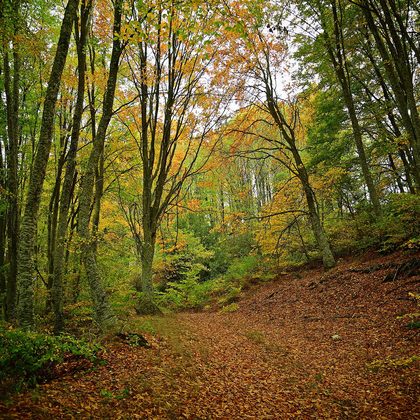
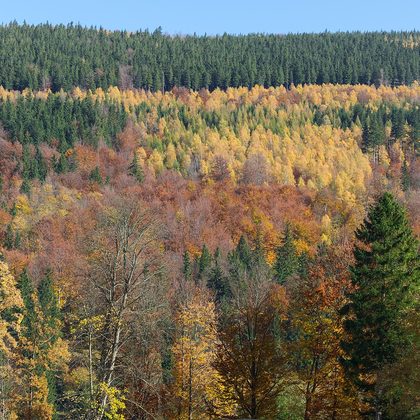
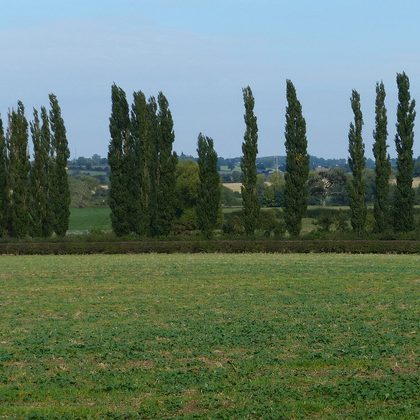
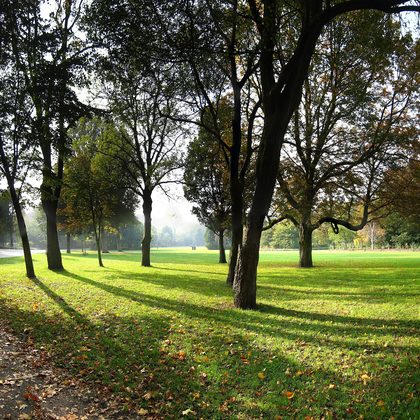
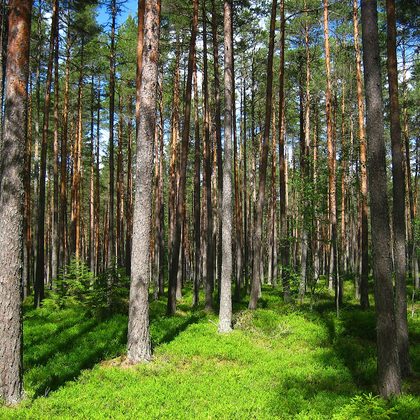
Range and movements
From Ireland and Portugal east across temperate Eurasia to Japan and Taiwan, absent only from Iceland, the far north and the treeless steppe. In Britain it is a sedentary bird of England and Wales that has pushed north across the border since the 1970s and now breeds widely in southern Scotland, with around 250,000 territories in 2016 and a strong long-term increase; it remains absent as a breeding bird from Ireland. Individual birds rarely move more than a few kilometres in their lives, which is why the spread has been slow and front-like rather than sudden. On the Continent it is common from France to Poland and reaches the tree line in Fennoscandia; in Iberia it holds the northern half and the mountain massifs further south.
- Resident
- Breeding (summer)
- Winter
- Passage
- dark = core range, pale = thinly spread
Where and when to look
On a still morning between mid-January and early April, walk mature oak or beech woodland and listen before you look. The whistled runs carry hundreds of metres; go to the sound, then search high in the canopy for a small, dumpy bird working head-down along a thick limb. That image — descending without using the tail — is the identification. If you would rather stay put, a peanut feeder in a garden with old trees will often produce a Nuthatch from October: it comes in fast, takes one item and leaves to wedge it somewhere in bark. In April a woodpecker hole freshly smeared with mud round the rim betrays an occupied nest.
Conservation status
Not globally threatened and stable to increasing across Europe. In Britain the population has grown strongly since the 1970s and the range has expanded north and west, helped by maturing woodland, more standing dead timber and garden feeding. The picture on the Continent is much the same. Where numbers fall, the cause is usually the same one: the felling of old, cavity-rich trees in parks and avenues and the removal of dead wood in which woodpeckers cut the holes. No woodpecker holes, no Nuthatches.