All species › Waders, gulls and terns › Sandpipers and snipes › Greater yellowlegs
Greater yellowlegs
Tringa melanoleuca | Grote geelpootruiter | Archibebe patigualdo grande
The larger of the two North American yellowlegs and by far the rarer in Europe. Think of a Greenshank with searing yellow legs, but it is the long, faintly upturned bill and the ringing three-note call that actually carry the identification.

Voice
The best character at range. The flight call is a loud, clear, penetrating tew-tew-tew, usually of three notes and occasionally four, the last a shade lower; it carries several hundred metres and sounds fuller and harder than Greenshank. Birds call on flushing, in alarm and while circling. Counting the notes — three against two — will get you to the right yellowlegs more often than any structural character.
Recording: Niels Krabbe — CC BY-SA 4.0 · Wikimedia Commons
Identification
Greenshank-sized at 29–33 cm, thick-necked and long-legged, with bright orange-yellow legs at every age. The bill is long, around one and a half times the head, thick at the base, slightly upturned, grey-green at the root and blunt and dark at the tip. Upperparts grey-brown notched with white; in breeding plumage the head and neck are heavily streaked black and the flanks carry bold black chevrons. In flight it shows a white rump, a finely barred tail and no wing bar, and the back stays grey — there is no white wedge running up it as on Greenshank.
Confusion species
Lesser Yellowlegs is the only real problem, and size helps only when there is something to compare with. Decide on the bill: on Greater it is clearly longer than the head, thick-based, often grey at the root and gently upswept; on Lesser it is about head length, needle-fine, uniformly dark and dead straight. The call finishes the job — Greater gives a loud, ringing tew-tew-tew that drops slightly in pitch of three or four notes, Lesser a softer, flatter tu or tu-tu of one or two. From Greenshank, the leg colour and the absence of the white back wedge; from Redshank, the dark bill base and the lack of a white trailing edge to the wing.
Habitat
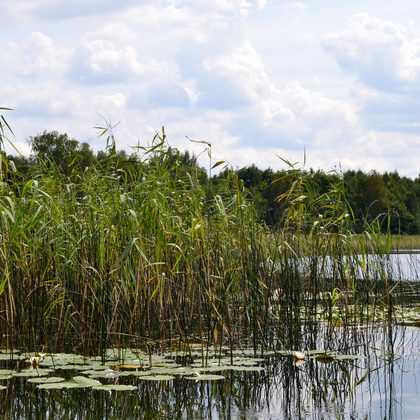
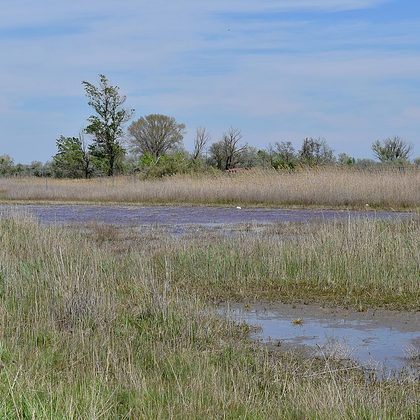
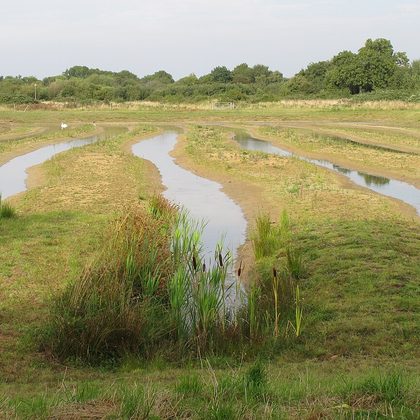
Shallow fresh and brackish pools with muddy or soft margins: coastal borrow pits, clay pits, saltmarsh pans, sewage lagoons, flooded fields and shallow-flooded grassland. It wades deeper than most shanks and hunts actively for small fish and shrimps, at times sweeping the bill sideways through the water. It breeds in open muskeg with dwarf birch and scattered spruce across the North American taiga.
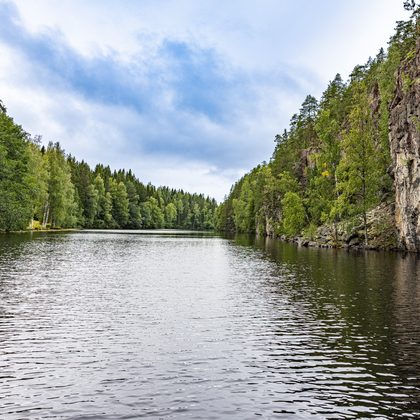
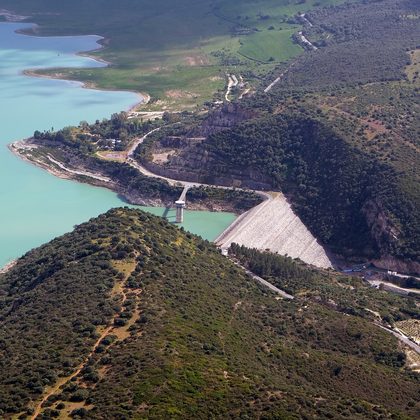
Where the bird is most at home, classified with EUNIS — the European standard for habitats.
Range and movements
Breeds in a narrow boreal band from southern Alaska to Newfoundland and winters from the southern United States to Tierra del Fuego. In Europe it is a true rarity: a few tens of records for Britain and Ireland, a handful for the Netherlands and scattered occurrences elsewhere, mostly in late summer and autumn. Birds that make landfall are often faithful to a single pool and may stay for weeks or even winter.
Where and when to look
Go at once when one is found, because this species tends to settle on a single lagoon or pit and feed there for days. Give the bill time: wait for a strict side-on view and measure bill against head. If a peregrine puts everything up, listen rather than look, since the three-note call tells you all you need.
Conservation status
Least Concern, with a world population in the low hundreds of thousands. It nests thinly across inaccessible muskeg, so trends are poorly known; migration counts suggest stable to slightly declining numbers. The clearest pressures are on the wintering grounds, in the drainage of coastal marshes and the loss of shallow saltpans and lagoons.