All species › Passerines › Leaf warblers › Iberian chiffchaff
Iberian chiffchaff | Phylloscopus ibericus
Iberische tjiftjaf | Mosquitero ibérico
Iberian Chiffchaff is the chiffchaff of the humid west of the Iberian Peninsula, and has been treated as a separate species since 1997. Plumage and measurements overlap almost completely with Common Chiffchaff; the song does not, and it is different enough that an attentive listener places it inside two phrases. Records in north-west Europe are rising fast, and singing males now turn up annually from Cornwall to Denmark.

Voice
This is where it all sits. The song comes in three parts run together in one breath, without Chiffchaff's bouncing alternation of high and low: a few loose, even chip-chip-chip notes, then a faster, slightly lower run of short notes che-che-che-che, and finally a couple of descending, drawn-out whistles, chee-weeoo chee-weeoo. That closing flourish is the whole character: where Chiffchaff keeps swapping between two pitches and stops when it feels like it, Iberian accelerates and sinks away into a distinctly lower, wistful ending. A phrase lasts two to three seconds and is repeated after a short pause. The call is equally decisive and in autumn often all you get: a soft, descending, plaintive seeoo or pew with a Bullfinch quality — the exact opposite of Chiffchaff's upslurred hweet. Song runs from late February into June and peaks in April and the first half of May.
No freely licensed recording is available for this species yet.
Identification
A chiffchaff with a little more colour and a little more contrast. The upperparts are fresher and greyer-green, the underparts whiter and cleaner, with a golden wash on the breast sides and flanks that often reads as a faint band across the upper breast. The supercilium is better defined than in Chiffchaff and bright yellow in front of the eye, paler behind it; the cheek is paler, so the face looks more open and runs smoothly into the white throat. The bill looks longer and finer, with pale extending further along the lower mandible. The legs are duller brown than the blackish-brown of Chiffchaff, though the overlap is total. Primary projection slightly longer, tail-dipping less emphatic. Not one of these characters decides a bird on its own.
Confusion species
Common Chiffchaff is the only genuine confusion species — see its own species page, where the same difference is set out from the other side. On looks every character shades into the other and settles nothing; the voice settles everything. Willow Warbler is slimmer and yellower with pale legs and a longer primary projection, and its falling phrase resembles nothing in the Iberian's cheerful run. Do not forget the trap that causes most errors in northern Europe: Scandinavian Chiffchaffs of the form abietinus are grey-green and pale and look more like Iberian Chiffchaff than southern Common Chiffchaffs do. A bird with mixed song, half Chiffchaff and half Iberian, should be left unnamed: in the narrow contact zone in northern Spain and the western Pyrenees some of those birds are genuine crosses.
Habitat
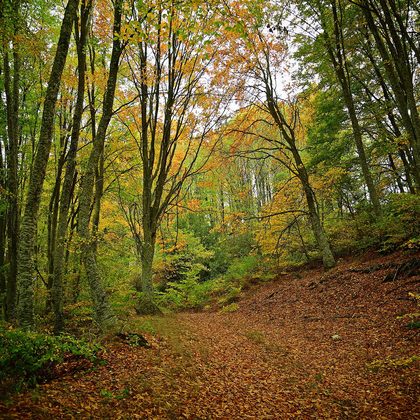
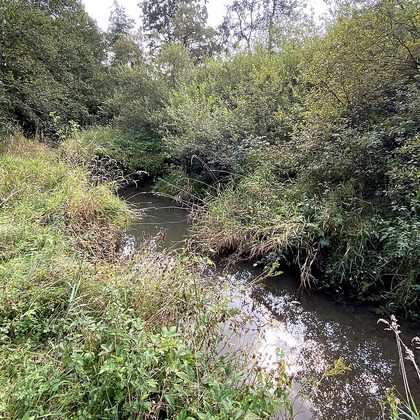
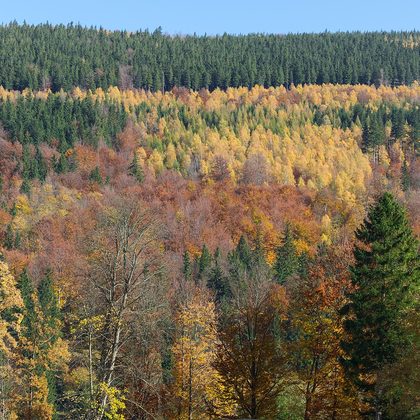
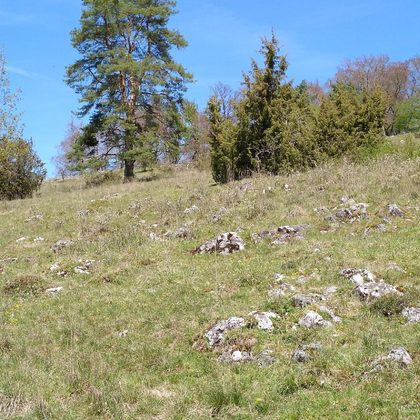
Damp broadleaved woodland with a dense shrub layer, and above all streamside woodland: alder, ash and willow along running water, surrounded by oak, sweet chestnut, beech and old gardens. Also mixed woodland and pine with a rich understorey, and tall scrub on humid slopes. The split from Common Chiffchaff is climatic rather than structural: where it is wet and green, in the north and west of the peninsula, this is the breeding chiffchaff; in the dry interior it is absent. In the mountains it reaches about 1,600 metres.
Where the bird is most at home, classified with EUNIS — the European standard for habitats.
Range and movements
Breeds in Portugal, western and northern Spain and the western Pyrenees, with a spur into south-west France and a small population in northern Morocco and Algeria. The Spanish breeding population runs to several hundred thousand pairs. It winters in West Africa south of the Sahara, with a few birds lingering in the south of the peninsula. In north-west Europe it has gone from rarity to fixture: the Netherlands has eighty-two accepted records to the end of 2025, seventy-two of them since 2000, almost all singing males in April, May and June, and the species was dropped from the Dutch rarities list from 2026. A first Dutch breeding record followed in 2023.
- Breeding (summer)
- Passage
- dark = core range, pale = thinly spread
Where and when to look
The second half of April, along a stream in damp oak woodland in Galicia, northern Portugal, Extremadura or the Basque Country, between sunrise and nine. Walk the valley bottom and listen for the ending; once you have the descending chee-weeoo you are done, and only then is it worth looking at the plumage. Record the sound even when it seems obvious — for a bird outside the breeding range a recording is the only thing that convinces. In Britain and the Low Countries, any May chiffchaff that sounds wrong is worth five minutes: most northern records were found by people who stopped at a phrase that did not fit.
Conservation status
Not threatened; the species is numerous in the humid west of the peninsula and numbers appear stable. The range is also shifting north, with more singing birds each year in France, Belgium, the Netherlands and Britain and the first breeding attempts outside Iberia. The pressures are the drying out of stream-valley woodland in northern Portugal and Galicia, large-scale eucalyptus and pine planting at the expense of native broadleaves, and summer fires that increasingly reach the humid western woods.