All species › Woodpeckers and allies › Woodpeckers › Iberian green woodpecker
Iberian green woodpecker | Picus sharpei
Iberische groene specht | Pito ibérico
The woodpecker of almost the whole Iberian peninsula, where it replaces European Green Woodpecker. Treated as a separate species since 2011, it differs above all in its grey, all but maskless face.

Voice
A loud laugh like that of European Green Woodpecker, but faster, sharper and a shade higher: kyu-kyu-kyu-kyu, falling in pitch and fading at the end. Heard all year, loudest from February to May. It drums little, and then briefly and softly; in flight a hard kyuk.
No freely licensed recording is available for this species yet.
Identification
Large and heavily built, olive green above with a contrasting yellow-green rump and off-white, unmarked underparts. The crown is red back to the nape, but the face is grey: around the pale eye there is at most a dusky ring, never a black mask. The male's moustache is wholly red with a hair-thin black edge, the female's dark grey. The undertail coverts are all but unbarred. Flight heavy and deeply undulating.
Confusion species
European Green Woodpecker overlaps only in the Pyrenees and the extreme north-east; it frames the pale eye in black, shows the male's red moustache inside a broad black surround, and has clearly barred undertail coverts. In the narrow contact zone intermediate birds occur that cannot always be named. Within the peninsula itself there is no other large green woodpecker to confuse it with.
Habitat
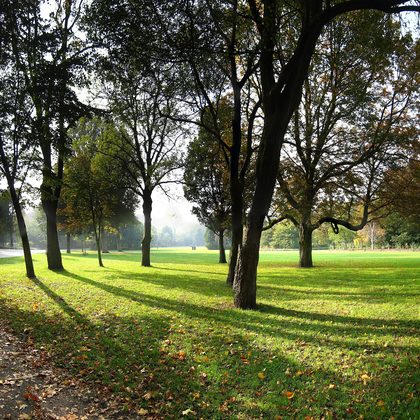
Every wooded and half-open landscape of the peninsula: dehesa with scattered holm and cork oaks, thinned pine woods, oak and chestnut forest, riverside gallery woodland, and parks and large gardens right into the city. It always needs short turf, bare ground or ant hills within reach and mature trees to excavate. From sea level well up into the mountains.
Where the bird is most at home, classified with EUNIS — the European standard for habitats.
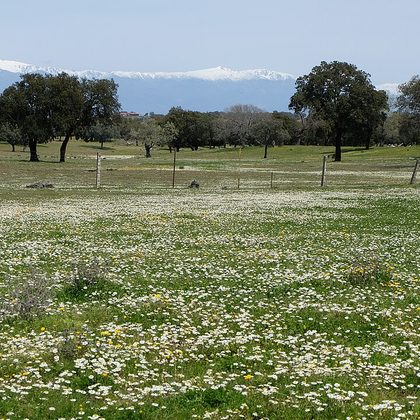
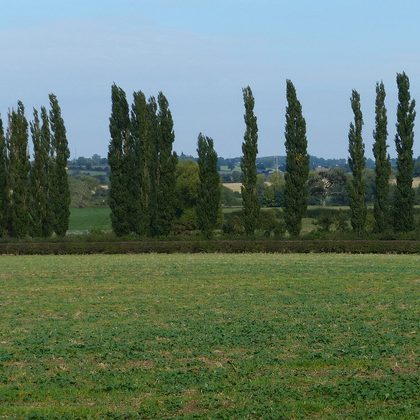
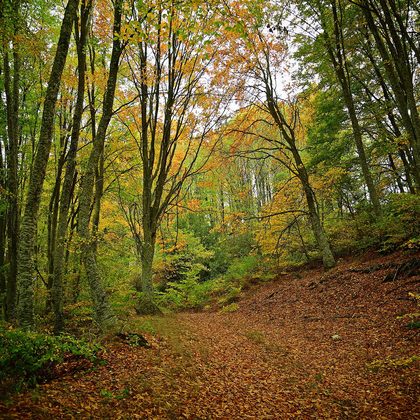
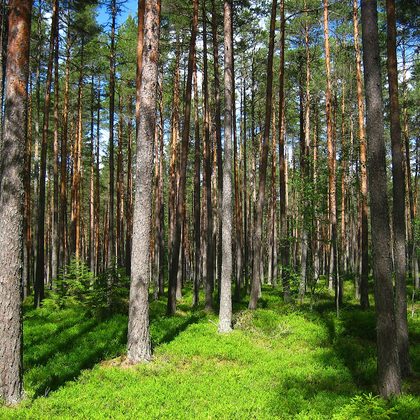
Range and movements
Almost the whole Iberian peninsula from Portugal to Catalonia, plus a narrow band of southern France from the Aude to the Pyrénées-Atlantiques. Absent from the Balearics and the Canaries. It occurs nowhere in Britain or Ireland; birders from these islands meet it on trips to Spain and Portugal, where it is the commonest woodpecker of all. Resident.
- Resident
- Winter
- Passage
- dark = core range, pale = thinly spread
Where and when to look
On any Iberian trip this is one of the easier woodpeckers: walk a dehesa or an open pine wood at first light in March or April and follow the laugh to the tree. In the parks of Madrid and Lisbon it feeds calmly on mown grass. Check the cheek on every bird, and look twice in the Pyrenees, where the European bird reaches the same valleys.
Conservation status
Common and widespread, with no serious threats. In the most treeless districts it is declining as veteran trees go and dehesa is turned to arable, while afforestation and scrubbing-up abandoned farmland give it ground elsewhere. Clearing old and dead trees from parks and dehesas costs it nest holes locally.