All species › Waders, gulls and terns › Sandpipers and snipes › Long-toed stint
Long-toed stint
Calidris subminuta | Taigastrandloper | Correlimos dedilargo
One of the rarest small calidrids in western Europe, and one you only find by grinding through every flock of stints. Long-toed Stint stands tall on yellow legs, stretches its neck like a miniature Wood Sandpiper, and carries a middle toe longer than its own bill. Four British records in half a century tell you what the odds are.

Voice
The flight call is a soft rippling prrp or churr, low and short, often registering only after the bird has gone. It lacks the dry rattling hardness of Temminck's Stint, tirrrr, and sounds fuller and lower than the sharp stit of Little Stint. A flushing bird may also give a run of clicking tik-tik-tik notes. Sound recordings have contributed to more than one accepted Western Palearctic record, so carry a recorder.
No freely licensed recording is available for this species yet.
Identification
A very small wader, on the scale of Little Stint, but built quite differently: tall on the leg thanks to a long tibia, with an upright, extended neck and a small head. The legs are yellow to greenish-yellow and the toes strikingly long, so that the feet project beyond the tail in flight. The bill is fine, slightly drooped at the tip, and usually shows a pale base to the lower mandible. The dark crown runs down to the base of the bill, so the white supercilia do not meet above it. The upperparts are fringed warm rufous with white mantle braces, and the finely streaked breast is cut off cleanly against a white belly. The wingtips reach the tail tip, with the tertials cloaking the primaries.
Confusion species
Two species, two quite different problems. Against Temminck's Stint it is straightforward: that bird is plain grey-brown with no supercilium and no mantle braces, has clearly shorter legs, creeps horizontally over the mud like a mouse, shows white outer tail feathers and has a tail that projects beyond the wingtips. Long-toed Stint stands upright, is warmly marked and shows a sharp supercilium. Against Least Sandpiper the work is much harder, because that species shares the yellow legs and the warm tones. Four points carry the case. On Long-toed the dark crown reaches the bill, so the supercilia stop short of each other, whereas on Least they merge above the bill into a pale forehead. The toes are conspicuously longer and project past the tail in flight. The tibia is longer, giving a taller, longer-necked bird that stands rather than crouches. And the wingtips finish level with the tail rather than slightly beyond it. On a suspected bird, photograph the head-on view and the open wing before anything else.
Habitat
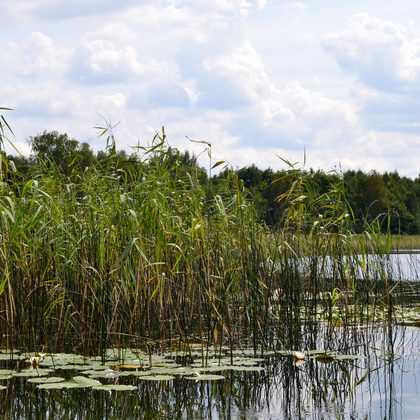
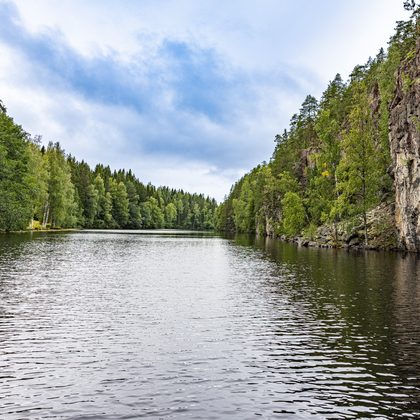
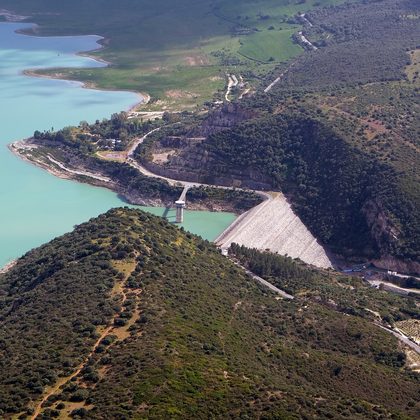
Freshwater margins: muddy pool edges, drying clay pits, settling lagoons, rice fields and flooded reserves. It largely avoids salt water and open tidal flats, and the odds are best some distance inland, in vegetated shallows where the bird has cover to slip into. It breeds in wet sedge marshes and peat basins in the zone where tundra grades into taiga, which is where the Dutch name comes from.
Where the bird is most at home, classified with EUNIS — the European standard for habitats.

Range and movements
Breeds across Siberia from the Ob basin east to Chukotka, Kamchatka, the Kurils and the Commander Islands, and winters from India and South-East Asia to Australia. In the Western Palearctic it is a major rarity. Britain has four records: a Cornwall bird from June 1970 only recognised decades afterwards, the celebrated Saltholme Pool bird in Cleveland from late August to early September 1982 that became a landmark twitch, one in County Cork in June 1996 and one at St Aidan's in West Yorkshire in October 2021. The Netherlands has a single accepted record, at the Vreugderijkerwaard on the IJssel near Zwolle from 22 to 28 October 2009.
Where and when to look
Look inland rather than on the coast, at shallow freshwater pools with bare muddy margins in September and October. Grind through every stint flock and start with posture: a bird standing noticeably tall and craning its neck earns a second look. Then check leg colour, whether the supercilia meet above the bill, and where the wingtips finish relative to the tail. Photograph everything and record any call, because these records are settled afterwards on detail rather than in the field on impression.
Conservation status
Listed as Least Concern. The population is large but poorly counted, because the birds spread across countless small inland wetlands instead of gathering on a handful of tidal flats. That same preference for inland fresh water leaves the species less exposed to the reclamation of intertidal habitat along the East Asian–Australasian flyway, which has hit the mudflat specialists of the same route hard. Loss and drying of inland marshes remain the main concern.