All species › Pigeons and doves › Pigeons and doves › Namaqua dove
Namaqua dove | Oena capensis
Maskerduif | Tortolita rabilarga
The Namaqua dove is the smallest dove in the region and at first glance hardly a dove at all: dainty, sandy and carrying a tail longer than the rest of the bird. The male wears a black mask over face, throat and breast. In the Arava it has been a familiar bird since the 1970s.

Voice
A quiet, low, mournful two-part hoo … hooo, the second note longer and rising slightly. It is so muffled that it is easily lost among other sound, and most birds are seen before they are heard. The male calls from a low branch or a wire, mainly in the early morning. In display he climbs steeply and glides down on stiff wings with the tail spread.
No freely licensed recording is available for this species yet.
Identification
A very small, slender dove with a long, sharply tapering black tail. The male has a black face, throat and breast edged pale, a blue-grey crown and neck, and an orange-yellow bill with a red base. The upperparts are sandy brown with four or five glossy violet-blue spots on the wing; the belly is white. In flight the chestnut primaries flash. The female lacks the mask and is dull grey-brown, but carries the same long tail.
Confusion species
Laughing dove is larger and more rufous, with a speckled neck collar and a much shorter tail, though both flash rufous in the wing. Collared dove is far bigger and paler and shows a black neck bar. The female Namaqua dove is the real problem: go on size — barely larger than a sparrow — on the long black wedge of a tail, and on the white belly.
Habitat
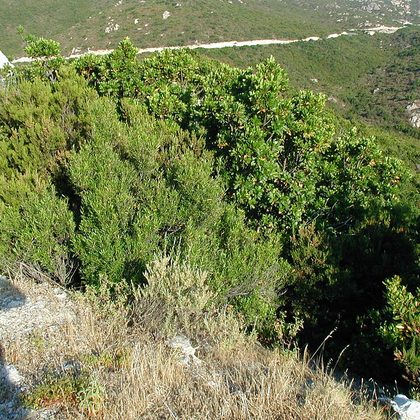
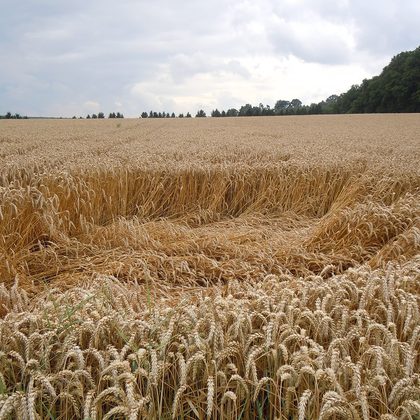
Semi-desert with acacia, dry wadis and thorn scrub, and just as readily the man-made edges of it: irrigated fields, date plantations, gardens and the verges of desert roads. It feeds walking on bare ground and along tracks, picking up minute grass and weed seeds, and comes regularly to drink at a pool or a leaking pipe.
Where the bird is most at home, classified with EUNIS — the European standard for habitats.


Range and movements
A bird of Africa, Madagascar and Arabia by origin. Within the area of this guide it breeds in southern Israel and in Jordan: it settled in the Arava during the 1970s and 1980s and has since reached the Hula plain, the Negev and the coastal strip, with probably several hundred pairs. Further north Syria, Iraq, Turkey and Iran followed; the advance continues and is put down to irrigated farming and milder winters.
- Resident
- Breeding (summer)
- Winter
- Passage
- Migration direction
- dark = core range, pale = thinly spread
Where and when to look
Eilat and the Arava, at any season but most comfortably in March and April. Work the farmland around Yotvata or Neot Smadar, stand at a field edge or a drinking spot and watch the ground: the birds walk low among the stubble and, when flushed, go off fast and low, when the long tail and the rufous wings register at once.
Conservation status
Not threatened, and in this part of the world plainly expanding. It profits from irrigation and from new field edges in the desert and has been pushing north for half a century. Locally the supply of water and seed swings a great deal, so numbers vary from year to year; at the scale of the species that hardly matters.