All species › Waders, gulls and terns › Plovers and lapwings › Oriental plover
Oriental plover
Anarhynchus veredus | Steppeplevier | Chorlito oriental
A large, tall-legged plover of the Mongolian and north Chinese steppe, recorded in Europe only a handful of times. The breeding male shows an almost wholly white head and a rufous breast band with a broad black lower border.

Voice
In flight a loud, clipped chip-chip-chip, harder and drier than the single chip of Caspian Plover. On the breeding grounds it adds a piping klink. European records have involved birds that joined Golden Plovers quietly, so the call usually comes only as they lift.
No freely licensed recording is available for this species yet.
Identification
A big plover with long pale legs, a long neck and a markedly upright stance, so that among Golden Plovers it at once looks too tall. The bill is slim and black, slightly longer and finer than on the sand plovers. Breeding male: head and throat white to pale buff with no dark eye-stripe, a broad rufous breast band and below it a wide black border against the white belly. Females and winter birds are grey-brown with a washed buff breast and a pale face. In flight there is no white wingbar, the underwing coverts and axillaries are uniformly dark brown, and the toes project well beyond the tail.
Confusion species
Caspian Plover is the main confusion species: smaller, shorter-legged, less upright, with a finer bill, yellowish-brown legs and, decisively, a pale underwing with white axillaries and a narrow but visible wingbar. Oriental lacks that bar almost entirely and shows a uniformly dark brown underwing. On the head, Caspian is clearly marked, with white supercilium, dark eye-stripe and grey-brown crown, whereas Oriental has an almost unmarked, gull-white head. Against Greater Sand-Plover and the sand plovers generally, Oriental is longer in the leg and neck, has a slimmer bill without a swollen tip, pale yellowish rather than greenish-grey legs, and no white in the wing or tail sides. Head and bill features can only be used on a well-seen resting bird; the underwing, axillaries and toe projection need the bird to fly, and a vagrant tucked into a Golden Plover flock rarely obliges on demand.
Habitat
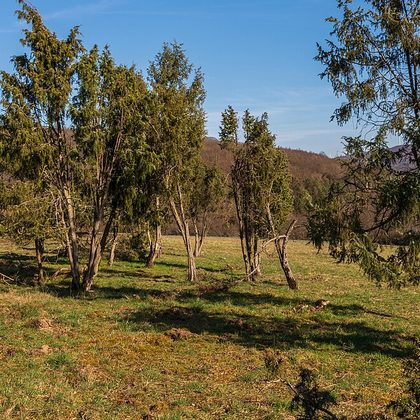
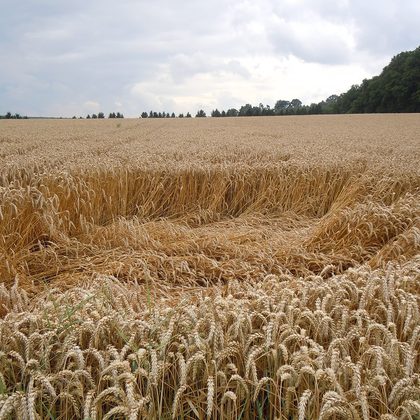
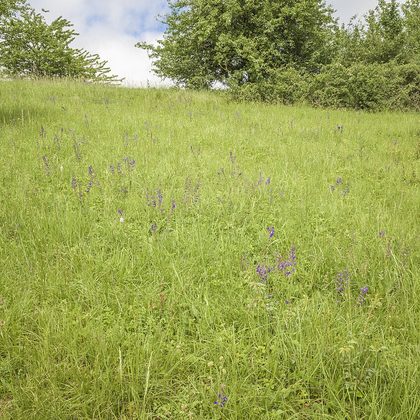
Breeds on dry short-grass steppe, gravel plains and semi-desert in Mongolia and northern China, often tens of kilometres from open water. On migration and in the wintering areas of northern Australia and the Lesser Sundas it uses burnt grassland, dry stock paddocks, airfield verges and freshly harvested fields. The European records fitted that pattern: short grass and bare fields just behind the coast rather than the tideline.
Where the bird is most at home, classified with EUNIS — the European standard for habitats.

Range and movements
Breeds in Mongolia, Inner Mongolia and Manchuria and migrates across eastern Asia to Indonesia and northern Australia. In the Western Palearctic it is exceptionally rare: Finland had the first record in 2003, the Netherlands the second with a bird that spent six hours among Golden Plovers near Veere on 15 August 2020, and Norway and Sweden followed. There is no Spanish record.
Where and when to look
Realistically this is not a bird to plan for in Europe. What does pay is patiently working large Golden Plover flocks on bare fields and saltmarsh in July and August, watching for one bird that stands too tall and looks too white about the head. To see the species reliably, travel to the steppe around Ulaanbaatar or the Gobi fringe in May or June, where displaying males stand on the open plains.
Conservation status
Not globally threatened, although the population is hard to count and numbers at the Australian wintering sites have fallen. The main risks are heavy grazing and drying of the Mongolian steppe and the loss of staging sites along the East Asian flyway. All the plovers involved here, from Oriental to Caspian and Greater Sand-Plover, have since 2023 been placed in the genus Anarhynchus rather than Charadrius; older guides still list this bird as Charadrius veredus.