All species › Waders, gulls and terns › Plovers and lapwings › Snowy plover
Snowy plover
Anarhynchus nivosus | Amerikaanse strandplevier | Chorlitejo níveo
The American counterpart of the Kentish Plover, treated as a separate species since 2011, and about as unlikely a bird as the Western Palearctic list offers. It is included here less because anyone will find one than because every unusual Kentish Plover on an Atlantic island deserves a second look and a sound recording.

Voice
A soft, repeated tu-wheet, used in display, alarm and territorial disputes alike, together with a purring prrrt when breeding and a short single churr in defence of chicks. The whole vocabulary is quiet and easily lost in surf noise, which is exactly why the recorder matters more than the notebook for this species.
No freely licensed recording is available for this species yet.
Identification
A very small, very pale plover of bare sand, with a fine, entirely black bill, dark grey to blackish legs and a broken breast band: two isolated dark patches at the sides of the breast, never joined across. Breeding males show a black forecrown bar, a black patch behind the eye and black breast patches, set against a pale sandy crown with only a limited rusty tone on the rear crown and nape. Females and winter birds have all of this in soft grey-brown. The upperparts are notably pale and sandy, the underparts white, and in flight there is a clear white wingbar and white sides to the tail.
Confusion species
Against Ringed Plover and Little Ringed Plover the question is settled at once by the broken breast band, the very pale upperparts and the black bill with dark legs. Everything else is Kentish Plover, and there the honest answer is that the two are barely separable in the field. They have been treated as separate species only since 2011, and that is a decision about how the group is classified rather than a story about where the birds came from: the published case rests on genetic distance together with small differences in body size, leg length, wing measurements, chick plumage and calls, not on a field mark that carries at fifty metres. In practice a claim would have to be built on the call, on measurements from a trapped bird or on photographs good enough to assess wing formula. The typical call is a repeated tu-wheet, along with a purring prrrt and a single churr, and it is the most workable line of evidence in the field. A silent bird in worn plumage on a beach cannot safely be named.
Habitat
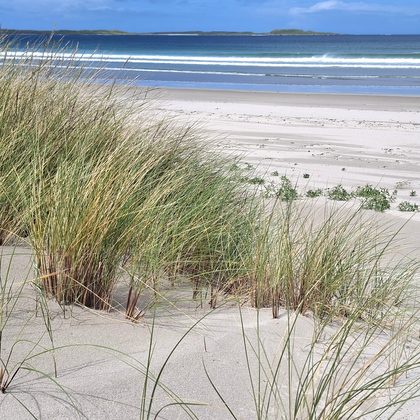
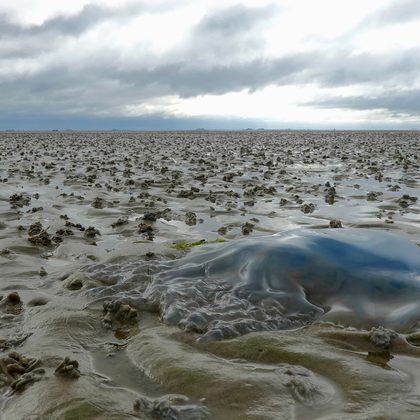
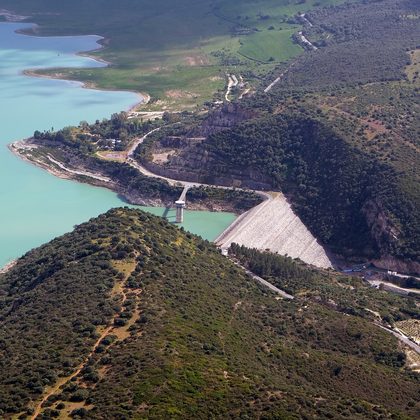
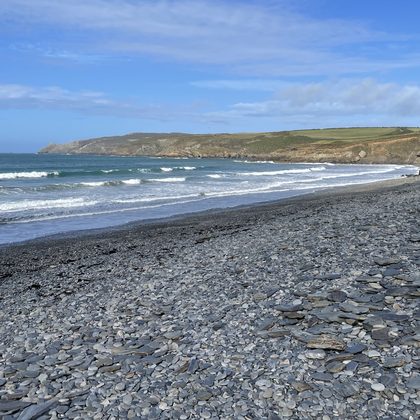
Bare, dry, open ground with little or no vegetation: wide sand beaches above the tideline, shell and gravel spits, dry salt flats, the banks and dried pans of salt works and the shores of alkali lakes. In Europe a bird would be found in the same places as Kentish Plover, and almost certainly among them, on a beach or a saltpan rather than on estuarine mud.
Where the bird is most at home, classified with EUNIS — the European standard for habitats.
Range and movements
Breeds on the Pacific and Gulf coasts of North America, on interior alkali lakes of the Great Basin and Great Plains, in the Caribbean and along the Pacific coast of South America, and it is largely resident or short-distance migratory. There is no established pattern of occurrence in Europe, and the Azores, as the landfall for most western vagrants and a place where Kentish Plover is scarce enough to attract attention, is the most plausible setting for a first.
- Resident
- Breeding (summer)
- Passage
- dark = core range, pale = thinly spread
Where and when to look
This is not a species to go looking for. The realistic approach is to photograph and, above all, record any Kentish Plover on the Azores, Madeira or the Canaries that looks unusually pale or sounds wrong, and to submit the recording. Autumn, when American waders are arriving on the Atlantic islands anyway, offers the best odds.
Conservation status
Near Threatened since 2014, with a world population estimated at 24,000 to 31,000 mature birds and a moderately rapid decline. The pressures are the familiar ones for a beach-nesting plover: recreation on the nesting beaches, invasive beach grasses closing open sand, water extraction drying inland alkali lakes, and heavy predation by crows and introduced foxes.