All species › Waders, gulls and terns › Plovers and lapwings › Greater sand-plover
Greater sand-plover
Anarhynchus leschenaultii | Woestijnplevier | Chorlitejo mongol grande
The largest and heaviest-billed of the sand plovers, and the only one of that group to appear with any regularity on north-west European tidal flats. The Netherlands now has more than twenty accepted records, almost all on the salt coast.

Voice
A soft, rolling tprrr or drrrit, usually in flight and much drier and lower than the clear too-eet of Ringed Plover. Flushed at a high-tide roost it gives a short, hard tik. Vagrants are picked up on call more often than expected, because they lift with the Dunlin flock rather than alone.
No freely licensed recording is available for this species yet.
Identification
A big, long-legged plover with a heavy, straight, black bill that is blunt and slightly swollen at the tip and clearly longer than the distance from the bill base to the rear of the eye. The forehead slopes gently and the crown is flat, giving an angular, front-heavy head. In breeding plumage it shows a narrow rufous breast band without a black lower border, a black mask over eye and ear coverts, a rusty crown and a small white forehead patch. Winter and juvenile birds are grey-brown with a broken brown breast-side patch. Legs long and dull greenish to greyish-green. In flight a broad white wingbar runs across primaries and secondaries, the tail sides are white, the axillaries white and the underwing pale, and toes plus part of the tarsus project beyond the tail.
Confusion species
The main problem is Lesser Sand-Plover, now split into Siberian and Tibetan Sand-Plover. Those are smaller, with a shorter, finer bill about equal in length to the distance from bill base to the rear of the eye, a rounder head with a steeper forehead, shorter and darker grey legs, and in breeding plumage a broader rufous breast band that often carries a black upper border. In flight only the toes clear the tail on the smaller birds, whereas Greater also shows some tarsus. Caspian and Oriental Plover are slimmer and longer-legged, have a thin bill with no swollen tip and yellowish to ochre legs, and lack the broad white wingbar; Oriental additionally has a dark brown underwing where Greater shows white axillaries. Bill length, leg colour and head shape are only reliable on a well-seen resting bird at close range in neutral light; on a mudflat against the sun all that remains is overall size, the upright stance and the toe projection in flight.
Habitat
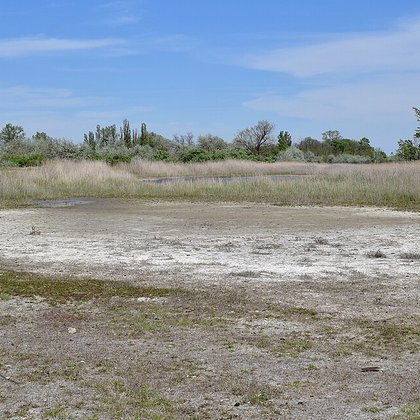
Breeds on dry, bare high steppe, salt flats and gravel desert from Turkey and the Caucasus east through Central Asia, often around salt lakes. Outside the breeding season it is a thoroughly coastal bird of mudflats, sandy beaches, coral platforms and tidal creeks from East Africa to Australia, hunting crabs and worms by sight. In Europe vagrants turn up exactly where a birder would look for them: tidal flats, saltmarsh and sandy beaches, usually among Ringed Plovers and Turnstones.
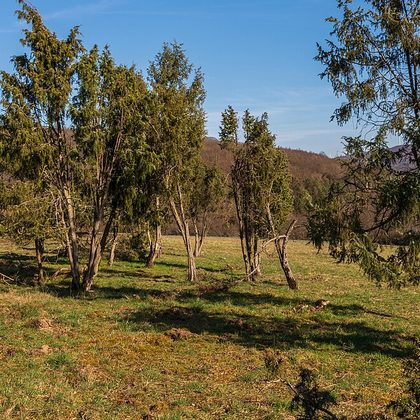
Where the bird is most at home, classified with EUNIS — the European standard for habitats.



Range and movements
Breeds in central Turkey, Armenia, Azerbaijan and the steppes and deserts of Central Asia east to Mongolia, and winters along the coasts of East Africa, Arabia, southern Asia and Australia. To north-west Europe it is a rare but increasing vagrant: the Dutch list now runs past twenty records, most in late summer and a smaller share in spring, with Texel and the Delta as the regular sites. Spain has only two accepted records, both in the Ebro delta, in August 1993 and August 1996.
- Breeding (summer)
- Winter
- Passage
- Migration direction
- dark = core range, pale = thinly spread
Where and when to look
Try a high-tide roost on the Wadden Sea or in the Delta in the last week of July or in August, and scan the Ringed Plover and Turnstone flocks as the tide pushes in. Look for a plover that is just too big, too tall on the leg and too heavy in the bill, and photograph the bill profile before the flock lifts again. To see the species in breeding plumage, go to the salt flats around Tuz Gölü in central Turkey in early May.
Conservation status
Not globally threatened, but the wintering grounds on the Yellow Sea and along Asian coasts are being lost to land reclamation, and on the Turkish and Central Asian breeding grounds salt lakes are drying as water is drawn off for irrigation. For Europe the species is mostly a barometer: records are increasing, which probably says more about observer coverage than about the population. All the plovers involved here, from Greater Sand-Plover to Caspian and Oriental, have since 2023 been placed in the genus Anarhynchus rather than Charadrius; older guides still list this bird as Charadrius leschenaultii.