All species › Passerines › Thrushes › Redwing
Redwing
Turdus iliacus | Koperwiek | Zorzal alirrojo
The Redwing is the smallest of the European thrushes and, for many birders, mainly a voice in the dark: from early October tens of thousands cross the Low Countries at night, moving west from Scandinavia and Russia. By day it feeds in leaf-litter woodland and along berry hedges, almost always with Fieldfares.

Voice
The flight call is the trademark: a thin, reedy, drawn-out tseeep, high and slightly falling at the end, raining down in hundreds from the October night sky from late September into November — for many birders this is the whole acquaintance. Flocks on the ground give a dry chattering chuk-chuk and a harsh grating chuckle. The song, rarely heard here, is a short series of clear descending flute notes, tyuu-tyu-tyuu, followed by a long, soft, squeaky warble.
Recording: Joost van Bruggen — CC BY-SA 4.0 · Wikimedia Commons
Identification
Small and compact, dark olive-brown above. The face settles it: a long creamy supercilium and a pale submoustachial stripe enclose a dark ear-covert patch. Underparts are white with sharp streaks arranged in lines, not round spots. The flanks and the whole underwing are warm rust-red, flashing with every wingbeat as the bird flies up — the character the species is named for. Sexes alike; first-winter birds show pale tips to the greater coverts.
Confusion species
Song Thrush is the standing confusion species. It is larger and warmer brown, lacks the bold supercilium and moustachial stripe, has round drop-shaped spots instead of streaks, and shows a buff-yellow underwing in flight, never rust-red: with flocks passing overhead that underwing colour is the deciding character. Fieldfare is much bigger, with a grey head and rump against a chestnut mantle. Mistle Thrush is paler and longer-tailed, with white tail corners and a greyish-white underwing.
Habitat
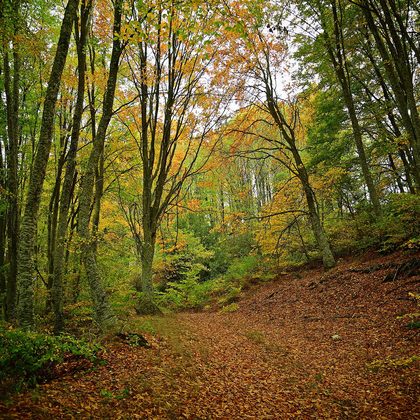
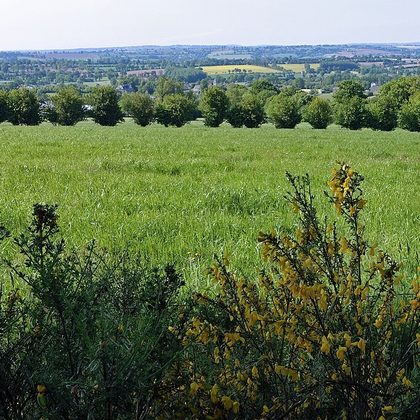
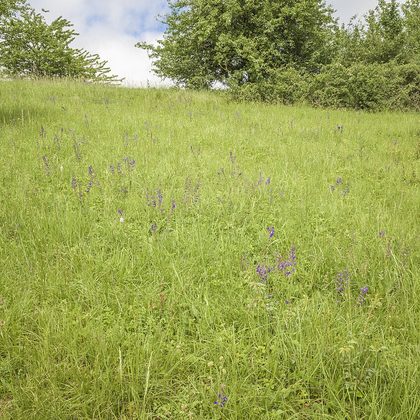
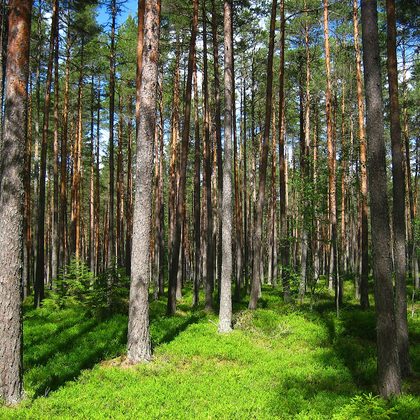
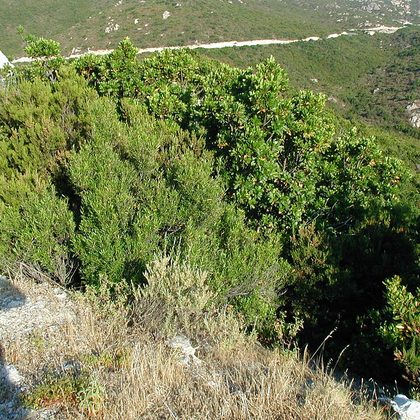
Breeds in birch and conifer forest, swamp woodland and willow scrub up to the tundra edge. Outside the breeding season in woods with a deep litter layer, hedgerows, hawthorn and holly, orchards and damp pasture; in southern Europe in huge numbers in olive groves, dehesas and maquis.
Where the bird is most at home, classified with EUNIS — the European standard for habitats.
Range and movements
Breeds in Iceland, Scandinavia and northern Russia. In the Netherlands a very numerous passage migrant and winter visitor from October to April; breeding is exceptional. Hard frost pushes the flocks on to France and Iberia. In Spain it is a winter visitor, commonest in the humid north and west and everywhere far scarcer than Song Thrush.
- Resident
- Breeding (summer)
- Winter
- Passage
- Migration direction
- dark = core range, pale = thinly spread
Where and when to look
Go outside after dark in the second half of October, on a still evening with some low cloud, and listen upwards: the thin tseeep carries even over a housing estate, and an hour of counting easily yields dozens of birds. By day, scan berry hedges and freshly cut grassland; Redwings sit among the Fieldfares and give themselves away with that rusty flank as soon as they flush.
Conservation status
Unlike most common European songbirds, Redwing is listed globally as Near Threatened. The reason lies in the north: breeding numbers in Finland, Sweden and northern Russia have fallen sharply within a few decades, and wintering numbers in the Netherlands are declining too. Predation, changes in northern birch and conifer forest and a shifting climate are all cited, but the picture is not yet complete.