All species › Owls › Typical owls › Short-eared owl
Short-eared owl
Asio flammeus | Velduil | Búho campestre
The Short-eared Owl is the owl of open country and of daylight: a long, pale bird quartering low over a saltmarsh at dusk, with a flight that suggests a large moth more than a raptor.

Voice
In display over the breeding ground the male gives a deep, muffled, rapid series of boo-boo-boo-boo-boo notes, some ten or so, while circling high and clapping its wings beneath the body — a whip-crack sound that carries far. When disturbed and around the nest it gives a hoarse, barking chef-chef or a rasping kaaaow. Outside the breeding season it is essentially silent, so the winter birds on the saltmarsh are not heard.
Recording: Jamescandless — CC BY-SA 3.0 · Wikimedia Commons
Identification
Long and narrow-winged for an owl, with pale sandy plumage and a strikingly contrasted underwing: white to cream with a sharp black carpal patch and a black wingtip. The upperwing carries a large ochre panel at the base of the primaries that flashes pale in flight. The underparts are pale with a heavily streaked breast that thins out quickly towards the belly — a mark that works at range. The face is pale and the eyes are bright yellow, ringed with black so that the expression looks stern. The ear tufts are very short and usually invisible. The flight is slow, rocking and irregular, on stiff, slightly raised wings with long glides in between; it hunts by day and at dusk, low over the vegetation.
Confusion species
The Long-eared Owl is the comparison, and it turns on colour, contrast and behaviour. Short-eared is paler and sandier, with yellow eyes, a white face with black eye surrounds, a sharply defined black carpal patch and breast streaking that fades away on the belly; Long-eared is warmer rufous and darker, with orange eyes, a rusty face, a less contrasted underwing and streaking that continues over the whole belly, plus long ear tufts. The hunting style differs as much: Short-eared often hunts in daylight and sails on stiff, raised wings, while Long-eared is largely nocturnal and flaps faster and more loosely. From above, Short-eared is more golden with a large pale primary panel, Long-eared plainer brown. At long range over a saltmarsh a Short-eared Owl can also suggest a pale Hen Harrier, but the harrier has a longer, narrower tail, a slimmer head and a more consistent V-shaped wing attitude.
Habitat
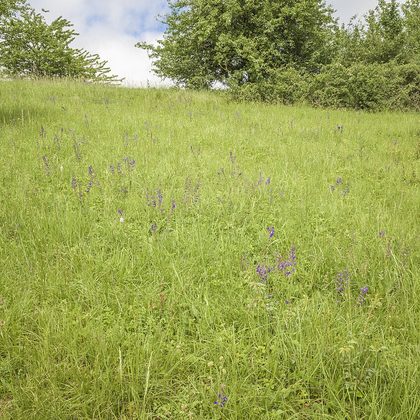
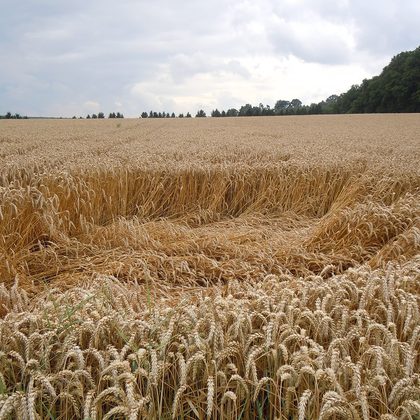
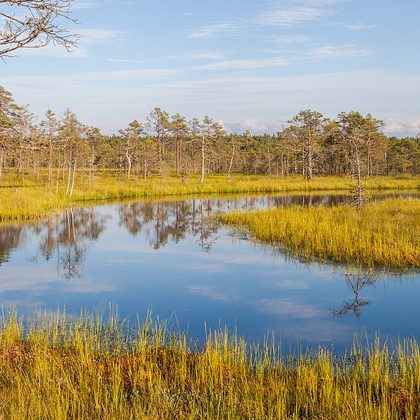
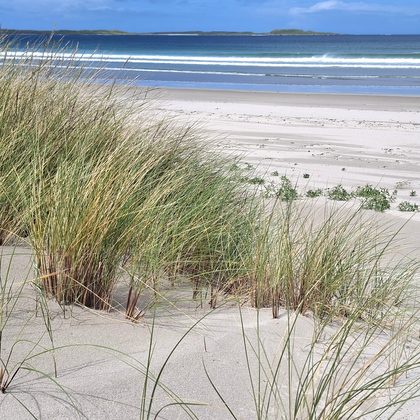
Open, treeless country with a dense herb layer and plenty of voles: saltmarsh, dune slacks, rough grassland, raised bog, newly reclaimed polders, set-aside and field margins. It nests on the ground in a scrape in the vegetation. In vole peak years dozens of pairs can suddenly appear where there were none the year before, and in poor years they vanish just as readily — Short-eared Owls are true nomads.
Where the bird is most at home, classified with EUNIS — the European standard for habitats.

Range and movements
A breeding bird of northern and eastern Europe with scattered outposts south and west, part migrant and part wanderer. In the Netherlands it is a scarce breeder, with virtually the whole population on Terschelling, Ameland and Schiermonnikoog and occasional pairs on the mainland, plus a regular winter visitor on the saltmarshes of Groningen and Friesland, in the Delta and in the Flevoland polders. In Spain it breeds very sparingly in the north and winters in fluctuating numbers on the southern plains, rice fields and marismas.
- Resident
- Breeding (summer)
- Winter
- Passage
- Migration direction
- dark = core range, pale = thinly spread
Where and when to look
Between October and March, take a dyke or viewpoint over a saltmarsh or rough grassland in the last hour before sunset. That is when birds lift off their day roost and quarter low over the vegetation; on a good vole night you may see several at once, sometimes with Hen Harriers among them. On the Wadden islands, April to June is the season for the wing-clapping display flight — but stay on the paths, because the nests are on the ground.
Conservation status
Not globally threatened (IUCN: Least Concern), but the European trend is clearly negative and in the Netherlands the species is Red-listed as critically endangered. Drainage and intensification of grassland, the loss of rough vegetation, predation and disturbance all press on numbers, and the strong swings of the vole cycle make trends hard to read. Keeping large, quiet, rough-vegetated areas with a healthy vole population is the key measure.