All species › Waders, gulls and terns › Gulls and terns › White-cheeked tern
White-cheeked tern | Sterna repressa
Arabische stern | Charrán arábigo
The white-cheeked tern is a common tern dipped in grey: the same size and flight, but dark right down to the belly, with one clean white stripe across the cheek. It is the one Red Sea tern that can be counted on at Eilat every summer.

Voice
A sharp, high kee-lick, close in tone to common tern but thinner and more hurried, running when agitated into a rattling kik-kik-kik. Over a colony it becomes a continuous shrill screech. Along the Eilat shore the voice is often the first thing to register: a common tern call pitched too high above the surf.
No freely licensed recording is available for this species yet.
Identification
Slender and long-winged, a shade smaller and finer than common tern, with a light, almost flickering beat and short dives from low down. In breeding plumage the whole underside is dark slate-grey from throat to undertail, and a narrow, sharply cut white stripe runs between the black cap and that grey. The bill is long and thin, deep red with a dark tip; the legs are short and red. The rear end matters: mantle, rump and tail carry the same grey, so there is no white block anywhere in the upperparts. From below the spread hand shows a broad, diffuse dark trailing edge. Outside the breeding season the underparts fade and the forehead turns white; juveniles are scaly brown above with a dark shoulder bar and a dark bill with a yellowish base.
Confusion species
It always comes down to common tern, which stands right beside it at Eilat. Three things separate them. The underparts: evenly dark grey into the belly on white-cheeked, pale grey with a white undertail on common. The rear end: white-cheeked has a grey rump and tail running seamlessly into the back, common a white rump and tail contrasting with the grey mantle — the feature that survives distance and backlight. The bill: deep red with only a small dark tip against orange-red with a clear black tip. Arctic tern is paler and whiter still, with very short legs and an evenly translucent hand. Do not confuse a fresh white-cheeked with a moulting black tern either: that bird is smaller, has a shallowly forked tail and hunts by dipping rather than diving.
Habitat
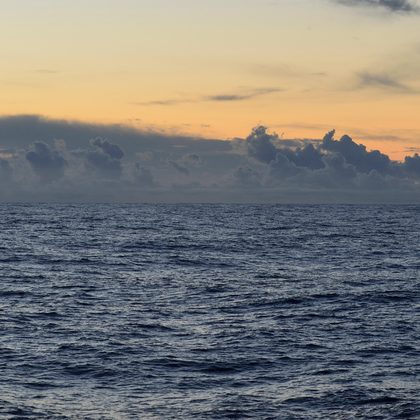
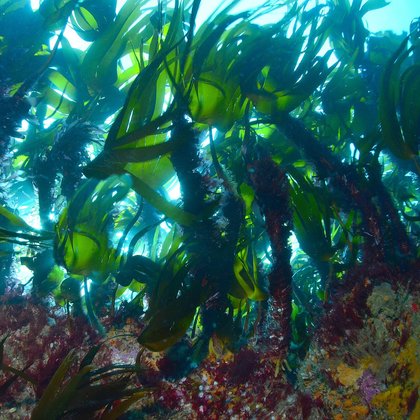
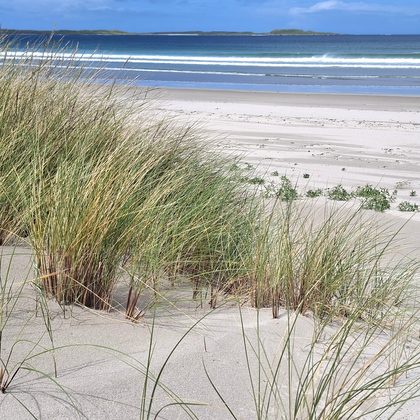
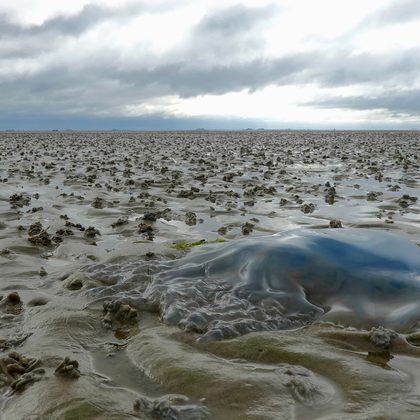
Shallow inshore water over coral reefs and sandbanks, with roosts on beaches, exposed flats, buoys and piers. It breeds in small colonies of ten to two hundred pairs on bare coral, rock and sand islets, usually alongside other terns. It feeds with quick, shallow dives and by picking prey straight off the surface, close in over the reefs.
Where the bird is most at home, classified with EUNIS — the European standard for habitats.
Range and movements
The species belongs to the Red Sea, the Gulf of Aden, the Persian Gulf and the coasts of East Africa east to western India. Inside this guide's map one point of that remains: the head of the Gulf of Aqaba. At Eilat, and on the Jordanian side at Aqaba, it is a regular sight from April to October, most numerous in June and July, with next to nothing in December and January. The breeding stations lie on islets further down the Red Sea, off the map; the birds around Eilat are non-breeders and feeders out of those colonies. In winter the population moves south into the Indian Ocean.
- Breeding (summer)
- Passage
- Migration direction
- dark = core range, pale = thinly spread
Where and when to look
Stand on North Beach at Eilat in June or July, preferably late in the afternoon, and follow the terns working back and forth just beyond the breakers. Do not hunt for the cheek stripe, which is hard to see at range; sort on overall tone instead — a tern that is simply too dark for a common tern. As soon as a bird turns away, check the rump; if it stays grey, the job is done.
Conservation status
Not globally threatened, but numbers are falling. The species nests on low islets that are easy to land on, and disturbance by day trippers, egg collecting, dogs and rats regularly costs a whole colony. Coastal resort building, oil pollution and declining stocks of small fish add to it. The colonies inside protected areas on the Egyptian Red Sea coast are holding up best.