All species › Passerines › Thrushes › White's thrush
White's thrush | Zoothera aurea
Goudlijster | Zorzal dorado
White's thrush is the largest thrush seen in Europe — longer and heavier than a mistle thrush — and at the same time the hardest of the lot to get a look at. It is golden-buff and cream from head to tail with heavy black crescents, a pattern that looks gaudy in a photograph and renders the bird invisible on a woodland floor. The Japanese name toratsugumi, tiger thrush, suits it better than any European one. Most people who find one see it exactly once: a big scaly bird that explodes from the leaf litter at their feet, showing two black bands and a broad white one across the underwing, and drops back into cover thirty metres on.

Voice
As a vagrant essentially silent — a large thrush going up without a sound is itself a clue. On nocturnal migration, and occasionally on flushing, it gives a thin, high, drawn-out tseeep, recalling a distant Redwing but flatter. The song, never heard here, is among the strangest sounds of the country it comes from: a long, thin, almost toneless whistle, hyoooo, repeated every eight or ten seconds, usually in darkness or the very first light. In Japan that sound was put down to the nue, a spectral creature of the old tales, which says enough about how unearthly it is.
No freely licensed recording is available for this species yet.
Identification
Big, long-legged and heavy-headed, with a long stout bill; at twenty-seven to thirty-one centimetres it is longer than a mistle thrush and considerably more solidly built. The whole bird follows one design: every feather of crown, mantle, wing coverts, breast and flank carries a black crescent at the tip, over a ground colour that is golden to olive-buff above and white to cream below. The face is pale with a dark crescent behind the ear-coverts and a second, shorter mark below it, giving the head an oddly broken look; two dark bars cross the wing. Belly and undertail coverts are white and almost unmarked. In flight — usually all you get — two things stand out: a broad white band across the base of the primaries, bordered black on both sides, and white tips to the outer tail feathers. The flight is powerful and undulating, low over the ground, and ends in a dive into cover. Sexes alike; in autumn young birds cannot be separated from adults in the field.
Confusion species
Mistle thrush is the only real pitfall, and mainly at distance or in flight: also large, also long-tailed, also with white tail corners and an undulating action. But its underparts carry round black spots on white rather than crescents, its upperparts are cold grey-brown without a hint of gold, and its underwing is plain white with no bands — that last point settles it. It also rattles as it goes, where white's thrush leaves in silence. Juvenile Mistle and song thrushes in July and August show pale feather tips on the mantle that can look scaly from a distance, but they are far smaller, their underparts are not scaled and the underwing band is absent; song thrush is in any case half the weight and warm brown. The Siberian Turdus thrushes passing in the same weeks are slimmer and plain above, with a supercilium or a marked throat, and lack both the scaling and the banded underwing. That underwing it does share with Siberian thrush, which resembles it in nothing else: small, dark or brown, with a bold supercilium. Several closely related scaly thrushes occur in Asia, among them the smaller Scaly Thrush Zoothera dauma of the Himalayas, but none has ever been recorded in Europe: here, any giant scaly thrush is a White's.
Habitat
Breeds in dense, damp forest with a closed canopy and a rich understorey: spruce, larch and pine in the Siberian taiga, mixed woods of birch and lime in the Amur country, and in Korea and Japan above all shady broadleaved forest in the hills and lower mountains. The constant is a dark place with a deep layer of leaf litter, moss and fallen wood where the bird can feed unseen; open woodland, woodland edge and farmland are avoided. Outside the breeding season it seeks the same kind of cover, into parks and old gardens with a thick shrub layer.
Where the bird is most at home, classified with EUNIS — the European standard for habitats.
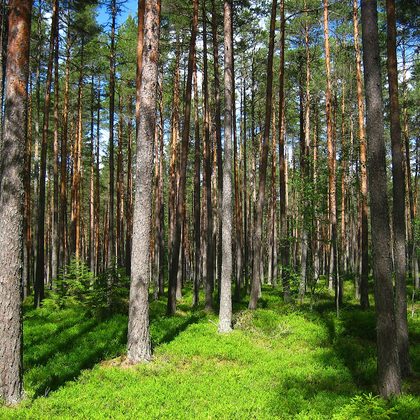
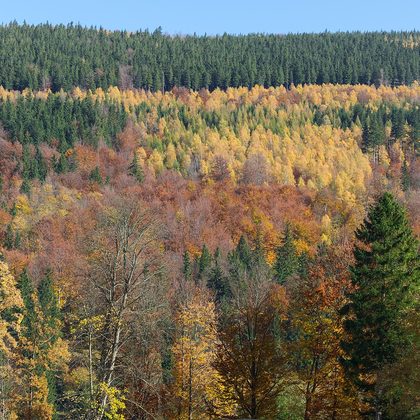
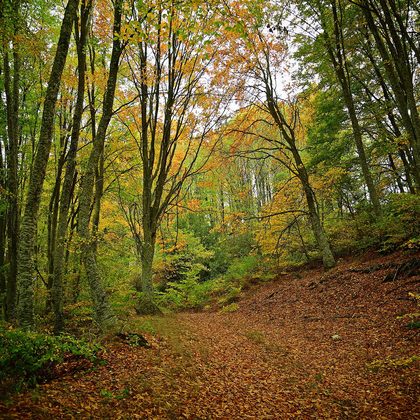
Range and movements
Breeds from the Urals eastwards across southern Siberia to the Amur region, Sakhalin, the Kurils, Korea and Japan, and winters in southern China, South-East Asia and southern Japan. Of all the Asian vagrant thrushes it is the most regular in western Europe: Britain and Ireland have recorded over two hundred since the first, in Hampshire in 1828, concentrated in October and November with scattered birds through to May. The Netherlands has twenty-five accepted records — eleven up to 1979, three in the 1980s and 1990s, eleven since 2000 — with Texel and the Holland and Friesland coastal strip as the regular sites, the most recent in October 2025. A striking share of the Dutch records are birds that hit a window or were picked up exhausted, which says more about how inconspicuous a living white's thrush is in cover than about anything else.
Where and when to look
October and November, after a spell of easterlies, but keep the species in mind all winter: there are records into spring. The best odds are where the other Siberian vagrants land — Shetland, Fair Isle, the Isles of Scilly — but on the mainland it is old estate woodland, wooded dunes and cemeteries with rhododendron, holly and ivy that pay off. Walk slowly and listen for leaves being turned over; that is more often the first sign than any view of the bird. If it flies, look at once at the underwing and the tail corners, because a second chance rarely comes. And in winter check every outsized mistle thrush that lifts silently off the ground.
Conservation status
Not globally threatened. The range is very large and the species is thinly but widely spread throughout it; systematic counts are almost entirely lacking, so the trend is poorly known. Logging of old, dense forest in Siberia and East Asia is the pressure most often named, together with forest loss on the wintering grounds. White's thrush was long carried as the northern form of Scaly Thrush Zoothera dauma and has been treated as a separate species since that group was revised, some fifteen years ago; the Red List now assesses it in its own right and arrives at the same category as for the broader species. In Europe it is a matter of stray individuals only.