All species › Pelicans, herons and ibises › Pelicans › Australian Pelican
Australian Pelican | Pelecanus conspicillatus
Australische pelikaan | Pelícano australiano
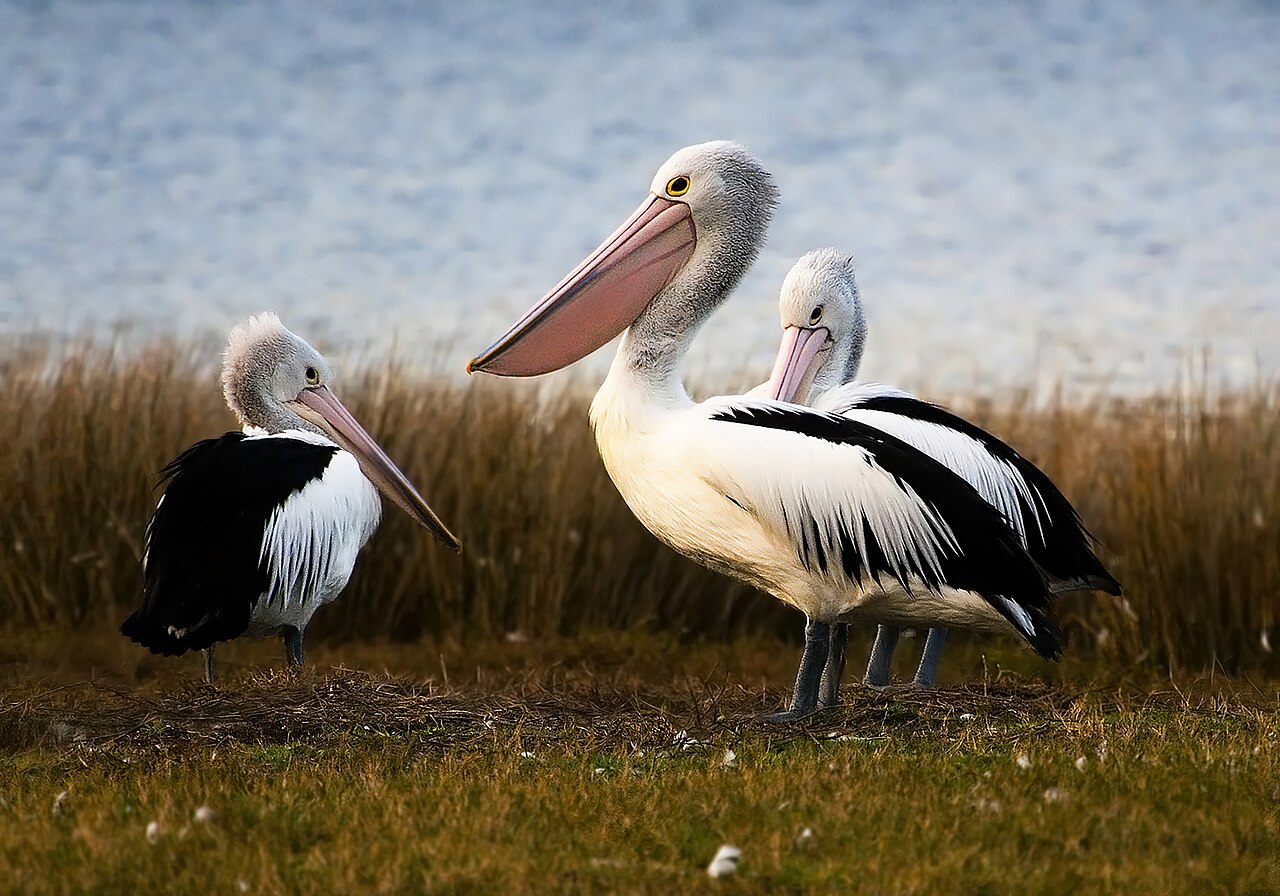
The Australian Pelican carries the longest bill of any bird in the world, forty to fifty centimetres, with a pouch that holds thirteen litres. It is a coastal bird that shows its true character inland: as soon as the salt lakes of the desert fill, it breeds there in tens of thousands and then disappears again.
Voice
Away from the colony it is all but silent; on the water you hear at most the clap of the bill as it shakes out the pouch. In the colony it is another matter: deep grunting, yapping and a rumbling blowing that hangs over the whole breeding ground. Young beg loudly and shrilly and pull adults in from a distance. Flying parties are silent; the only sound then is the rush of the wings.
No freely licensed recording has been found for this species yet; what to listen for is described below.
Identification
A huge white bird of 1.6 to 1.8 metres with a wingspan of 2.3 to 2.5 metres, with black flight feathers, a black tail and a black band across the upperwing that gives a hard black-and-white pattern in flight. The bill is pale pink and enormously long, with the bare pouch slung beneath; a pale ring of skin around the eye gave the species its scientific name. The male is larger and longer-billed than the female. In courtship the forward half of the pouch turns salmon pink, the throat chrome yellow, and cobalt blue patches and a black diagonal stripe appear on the bill. In flight it draws the head back between the shoulders and soars on flat broad wings in formation, often so high that the birds circle as white specks in a thermal.
Confusion species
There is no second pelican in the region, so confusion arises only at distance and in silhouette. Australasian Gannet (Morus serrator) and Cape Gannet (Morus capensis) are also white with black wingtips, but far smaller, with pointed wings and a plunge-dive the pelican never performs. Black-necked Stork (Ephippiorhynchus asiaticus) soars on the same flat wings but holds the neck extended and trails legs well beyond the tail. Faced with a party of soaring pelicans over land, the unwary observer thinks of storks or even swans before thinking of a coastal bird.
Habitat
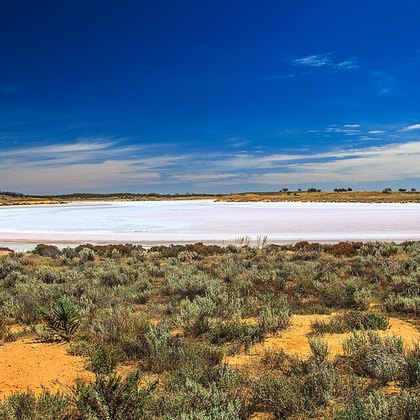
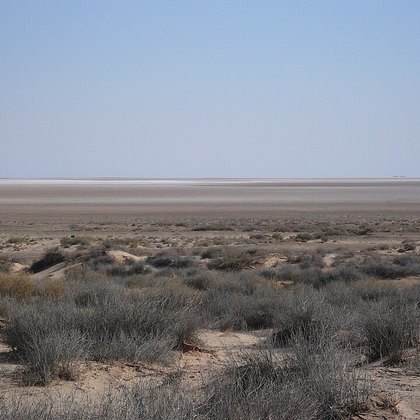
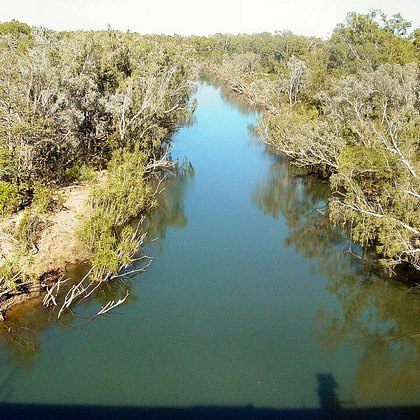
Open water of every kind, fresh, brackish and salt: lakes, reservoirs, swamps, wide rivers, estuaries, coastal lagoons, harbours and sheltered arms of the sea. Inland it uses temporary salt lakes and claypans for as long as they hold water, and on the edge of towns settling ponds and fish-cleaning wharves. What it does not use is the open ocean; it stays within sight of the coast.
Where the bird is most often found, arranged by main group and formation.


Range and movements
Across the whole of Australia, spilling over into New Guinea and western Indonesia, with stray birds reaching New Zealand and the Pacific islands. It does not migrate by the calendar but follows the water, which makes it the most wide-ranging large bird of the continent: it is not built for sustained flapping flight, but on thermals it can stay aloft for twenty-four hours, cover hundreds of kilometres and climb to three kilometres. Breeding is the key to its distribution. As soon as the Queensland rivers send enough water south to fill Kati Thanda-Lake Eyre, birds come inland from the whole coast and form colonies on the islets in the salt lake; after the flood of 1990 some hundred thousand pelicans raised as many as ninety thousand young at Lake Eyre South within six months. When the lake dries again the colony dissolves and the birds spread back over the coast and the rivers of the southeast.
- Resident
- dark = core range, pale = thinly spread
Where and when to look
On a warm day look up over an estuary or a waterside town: pelicans ride thermals and then circle so high that they are hard to find with the naked eye. On the coast the harbour is the best place, where they are regulars wherever catches are cleaned. Anyone who wants to see the inland colonies must follow the flood news from the Lake Eyre basin; it happens only once in a number of years.
Conservation
Least Concern (LC) and common across the continent. The species profits from reservoirs, settling ponds and fish waste, which have given it a steady and easy living on the coast. Entanglement in fishing line is the most frequently seen cause of death, and inland a colony fails completely when the salt lake dries before the young can fly.
Scientific name
Pelecanus conspicillatus | Temminck, 1824
Temminck described the species in 1824 as Pelecanus conspicillatus, and it has stayed in that genus, so author and year carry no parentheses. The genus Pelecanus goes back to Linnaeus in 1758 and to Greek pelekan, itself linked to pelekys, 'axe'. conspicillatus means 'spectacled', after the pale ring of skin around the eye. The type locality is Australia, narrowed to New South Wales.