All species › Pelicans, herons and ibises › Herons, egrets and bitterns › Great Egret
Great Egret | Ardea alba
Grote zilverreiger | Garceta grande
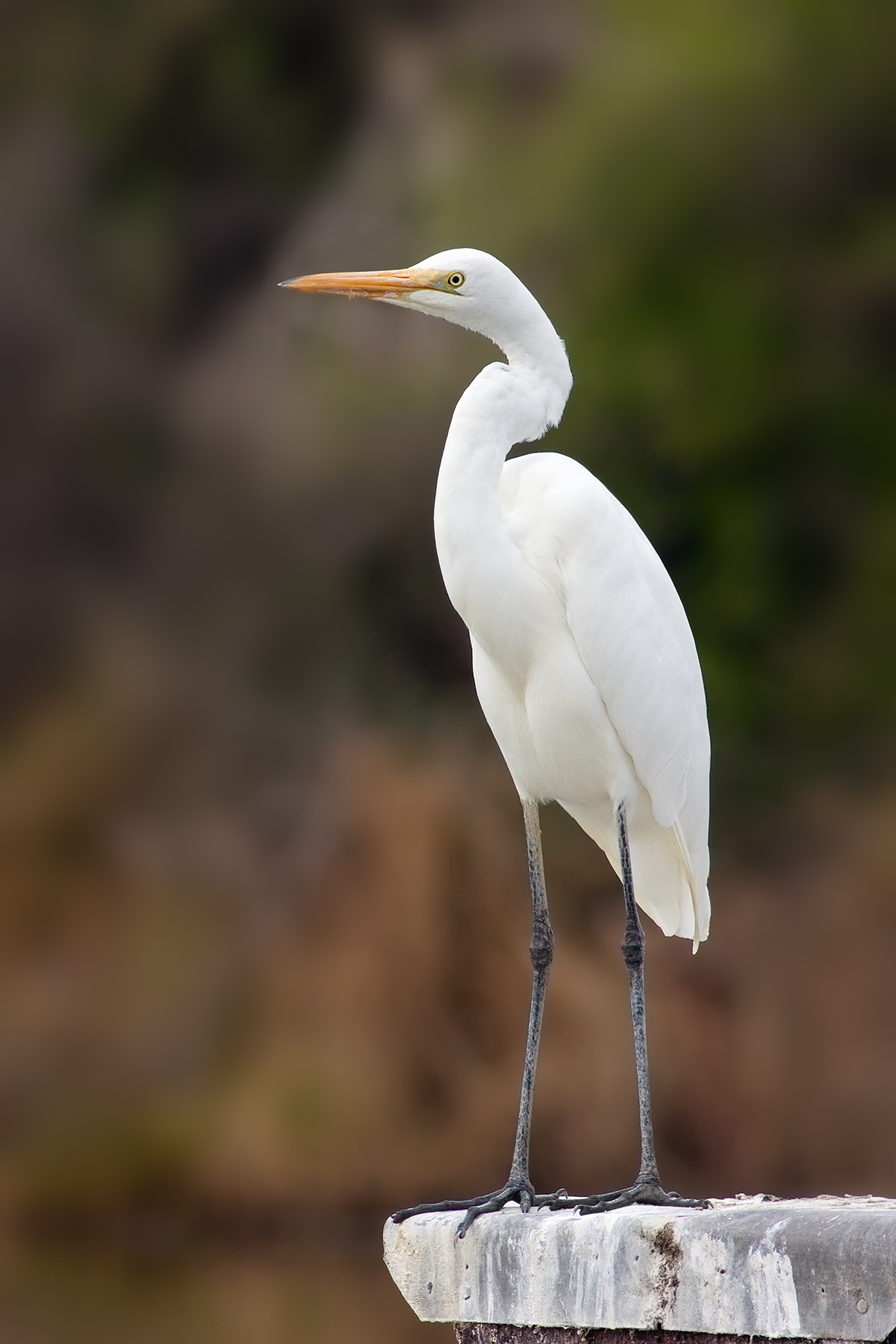
The Great Egret is the largest and most stately of the three white egrets of Australasia: close to a metre long, all white, carrying its long neck in a sharp kink and a heavy yellow bill that turns black in the breeding season. In New Zealand it is the kotuku, and it breeds at a single place in the country.
Voice
Over water it is close to silent. Flush it and you get a low, hoarse croak, one growling note as it lifts. The breeding colony is another matter: a hard repeated cuk-cuk-cuk, raucous squawks in disputes over a nest branch, and a rolling rattle in greeting between partners. Young birds rattle continuously for food.
No freely licensed recording has been found for this species yet; what to listen for is described below.
Identification
An all-white heron of eighty centimetres to just over a metre, on long black legs, with a neck longer than the body that rests in a pronounced kink — visible at range and enough on its own to set it apart from the smaller white egrets. The bill is heavy, yellow outside the breeding season and black with blue-green lores within it. The clinching mark is in the face: the gape line runs to well behind the eye, whereas in the Plumed Egret it stops level with the back of the eye. In breeding dress long filmy plumes trail over the back past the tail, and the tibia flushes reddish. In flight the beat is slow and deep, neck drawn in, feet projecting far behind.
Confusion species
Plumed Egret (Ardea plumifera) is the hard one: 56–70 cm, a head shorter, with a short blunt yellow bill, an evenly curved neck without the sharp kink, and a gape line that ends level with the back of the eye. Little Egret (Egretta garzetta) is clearly smaller and slimmer, with a slender black bill all year. Eastern Cattle Egret (Ardea coromanda) is small, stocky and short-necked with a thick yellow bill. The white morph of the Pacific Reef Heron (Egretta sacra) is told by its short thick legs and heavy dull-yellow bill, and stands on rock rather than in a marsh.
Habitat
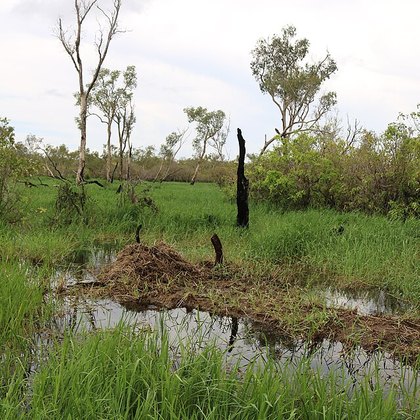
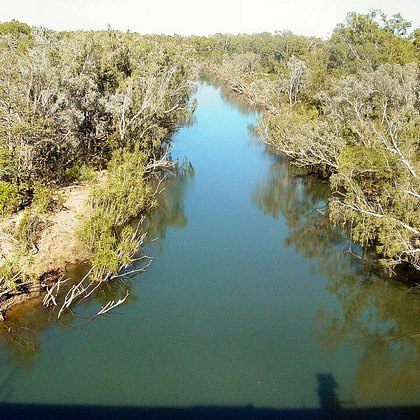
Shallow fresh and brackish water of every kind: lake and reservoir margins, reed and sedge swamp, slow creeks, flooded grassland, rice fields and sewage ponds, and on the coast the mudflat and the estuary. It hunts standing, motionless for minutes on end, then strikes. It breeds colonially in trees over water — eucalypt, melaleuca or mangrove — often alongside other herons and cormorants.
Where the bird is most often found, arranged by main group and formation.


Range and movements
Almost anywhere in Australia that holds water, from the Top End and the Kimberley to Tasmania, in greatest numbers in the northern swamps and the Murray-Darling basin; in dry years it shifts to the coast. In New Zealand it is widespread as a winter visitor on estuaries and lake edges of both main islands, but breeds only at Waitangiroto by the Okarito lagoon in Westland — the country's single colony, with a national total estimated in the low hundreds. On Norfolk Island it is a scarce visitor.
- Resident
- Winter
- dark = core range, pale = thinly spread
Where and when to look
Look at the neck before the bill: the sharp kink halfway down, and a neck longer than the body, name the Great Egret before size or colour come into it. Close enough, follow the line of the gape — if it runs behind the eye, this is the bird. In New Zealand the jet-boat trip up the Waitangiroto River from Whataroa, September to February, is the sure way to see it in breeding dress.
Conservation
Least Concern (LC) globally, and widespread and numerous in Australia. The nineteenth-century plume trade cut the species down everywhere: the long back feathers, the aigrettes, went onto hats, and whole colonies were shot out in the breeding season. Protection allowed a recovery. What presses now is river regulation and the failure of inland floods, because without high water the swamp colonies do not form at all. In New Zealand that single colony leaves the national population exposed to storm, flood and introduced predators.
Scientific name
Ardea alba | Linnaeus, 1758
Linnaeus described the species in 1758 as Ardea alba and placed it straight into Ardea; having been returned there after spells in Egretta and Casmerodius, author and year carry no parentheses. Ardea is the Latin word for heron, alba means 'white'. The type locality is Europe. Australasian birds belong to the subspecies modesta, treated by some lists as the separate species Ardea modesta; this guide keeps it within Ardea alba. The New Zealand name kotuku stands there for anything rare and precious.