All species › Passerines › Cuckooshrikes › Barred Cuckooshrike
Barred Cuckooshrike | Coracina lineata
Geeloogrupsvogel | Oruguero lineado
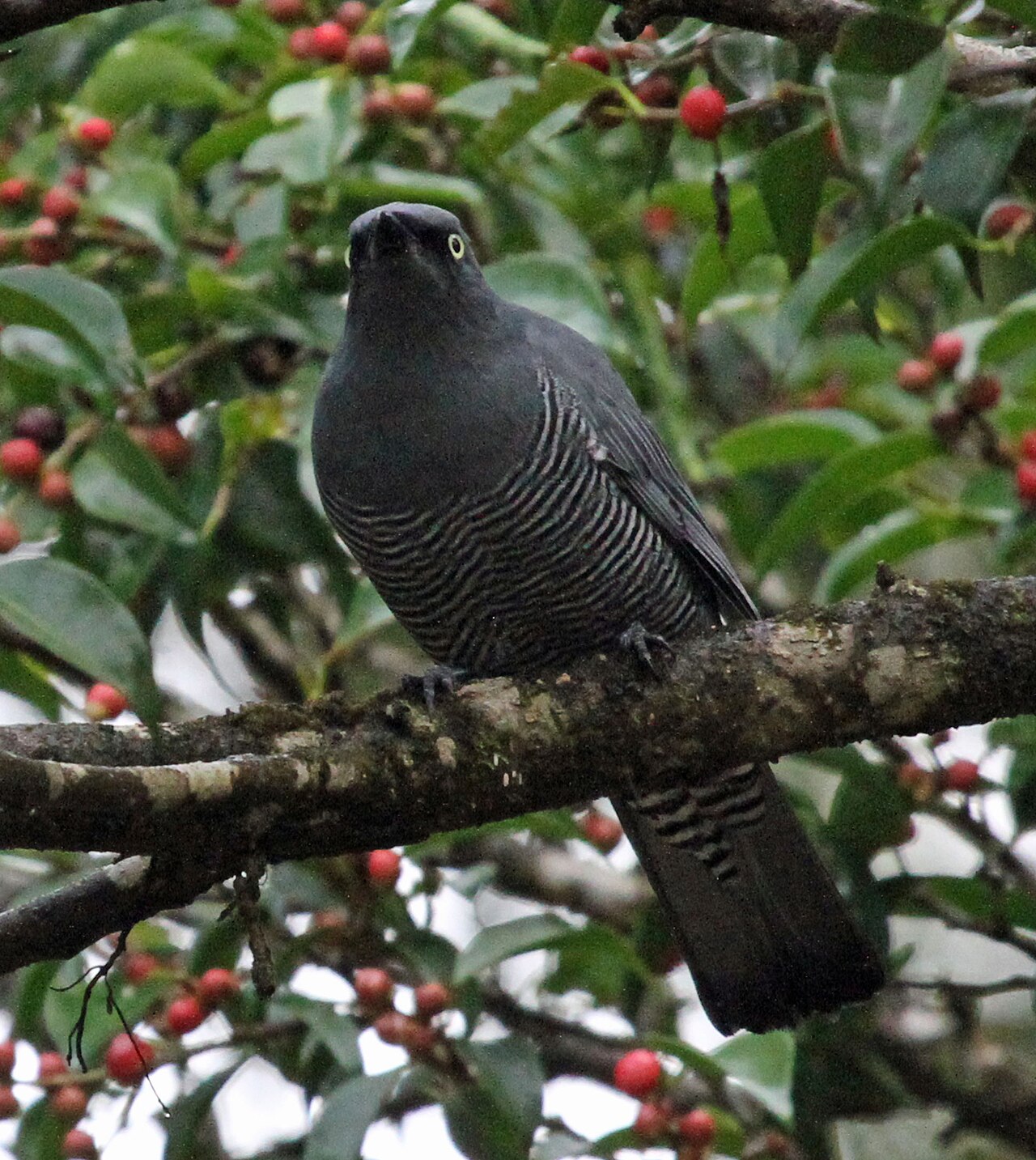
The Barred Cuckooshrike is the cuckooshrike of the rainforest, and it shows itself above all where figs are ripening. When a large Ficus is in fruit, a loose party of ten to thirty birds may hang about in the crown for days on end: moving heavily and slowly, inconspicuous from below, with a soft rolling call that drifts down through the canopy. Seen close, it gives itself away at once by two things no other Australian cuckooshrike has: a bright yellow iris set in an otherwise dark face, and underparts finely barred from the breast to below the tail.
Voice
A soft, rolling, faintly nasal 'kreeow' or 'prreeup', usually given in flight or from a perch high in the canopy, and often repeated by several birds of the same party in quick succession. It is a strikingly quiet sound for a bird of this size: far rounder and less harsh than the grating 'skeeif' of the Black-faced Cuckooshrike (Coracina novaehollandiae), and it does not carry far. That is precisely what makes it useful: if you hear a soft rolling murmur above you in a fig tree with nothing visible, look again more carefully. The species has no true song; the repertoire consists of contact calls between party members and a shriller alarm note.
No freely licensed recording has been found for this species yet; what to listen for is described below.
Identification
A substantial cuckooshrike of about twenty-four to twenty-seven centimetres, plain blue-grey on head, back and wings, with blackish lores and chin forming a small dark mask around the base of the bill. The decisive mark is the iris: bright lemon to golden yellow, so that the eye lights up in the dark face at some distance — the source of the Dutch name and of Cornell's field code for the species. The second mark is on the underside: from the breast to the undertail coverts it is white with fine, regular blackish-grey cross-bars, the pattern that explains both the scientific name lineata and the English one. Male and female are much alike; on the female the barring generally extends further forward onto the throat, while on the male throat and upper breast stay plainer grey. Young birds are duller and more coarsely barred.
Confusion species
The real pitfall is the White-bellied Cuckooshrike (Coracina papuensis), equally grey and liable to be in the same coastal forest. That bird, however, has a dark, not yellow, iris, a white and entirely unbarred belly, and a black face mask running back behind the eye instead of being confined to the lores. The Black-faced Cuckooshrike (Coracina novaehollandiae) is larger and longer-winged, with a broad black mask taking in throat and eye, a dark iris and plain pale grey underparts; it is moreover a bird of open woodland rather than closed rainforest, and has the characteristic habit of shuffling its wings a few times after landing. The Ground Cuckooshrike (Coracina maxima) does have barred underparts, but is a bird of the dry inland plains that walks a great deal on the ground, with a much longer tail and an entirely different range. A barred cuckooshrike in rainforest is therefore this species; a barred cuckooshrike in spinifex or Mitchell grass is the Ground Cuckooshrike.
Habitat
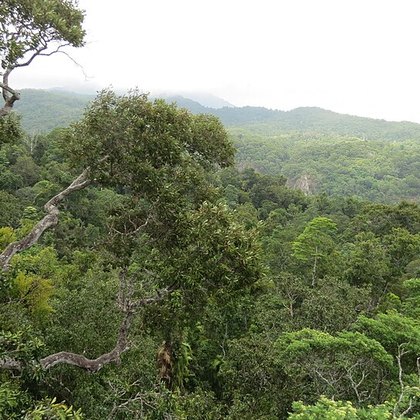
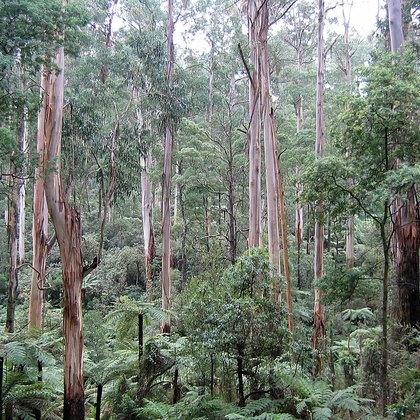
Tropical and subtropical rainforest and its margins, adjoining wet sclerophyll forest, gallery forest along creeks and, in the north, monsoon vine forest and vine thicket. Where fig trees stand in parks, gardens and along roads, the species will come to those as well. The diet is markedly frugivorous: figs form the bulk of it, supplemented with other soft forest fruit and with insects and caterpillars gleaned from foliage. That dependence on fruit makes the birds strongly nomadic locally — they follow the crop and may be absent from a district for months, only to be present in dozens at the next fig harvest. The nest is a small, shallow saucer of twigs bound with cobweb, built high in a horizontal fork of a forest tree and barely visible from below; the clutch is small, usually two eggs.
Where the bird is most often found, arranged by main group and formation.


Range and movements
In Australia confined to the eastern coastal strip and its immediate hinterland, from Cape York Peninsula south through the Wet Tropics and the Queensland coastal ranges to northern New South Wales, the southern limit lying roughly about the Hunter and Manning valleys. Beyond Australia the species occurs on New Guinea, in the Bismarck Archipelago and in the Solomon Islands, where a series of island forms is recognised; Australian birds belong to the nominate form, which Swainson described from a bird taken at Moreton Bay. The species is entirely absent from New Zealand, from western and inland Australia and from Tasmania.
- Resident
- Breeding (summer)
- dark = core range, pale = thinly spread
Where and when to look
Do not look for the bird, look for the tree. A fruiting Ficus in or at the edge of rainforest — in the Wet Tropics around Cairns and Atherton, in the Border Ranges, at Lamington — draws in almost everything that eats figs during the fruiting season, and the Barred Cuckooshrike is often among them, still and high. Take your time: the birds move little and vanish almost completely against the light. Once you have one well in view, check in this order: first the iris (yellow or dark), then the belly (barred or plain). Those two together rule out every other cuckooshrike. Listen also for the soft rolling notes parties exchange on their way to a fig tree; that is often the first sign that they are about.
Conservation
Least Concern (LC) globally: the species is spread across a large island region and is nowhere scarce in the core of its range. The Australian population, however, depends entirely on rainforest and on large, old fig trees, and both were historically pushed back hard in the south-east of the range by the clearing of lowland rainforest in southern Queensland and northern New South Wales. Along that southern edge the bird is accordingly scarce and irregular. Retaining fruiting trees within the forest itself and in the remaining patches along creeks and roads matters more to this species than total forest area, because one good fig crop will feed a whole district for months.
Scientific name
Coracina lineata | (Swainson, 1825)
William John Swainson described the species in 1825 as Ceblepyris lineata, from a bird taken at Moreton Bay in Queensland; author and year therefore stand in parentheses, since the species now sits in Coracina. That genus name goes back to Greek korakinos, 'little raven', for the dark grey plumage of many of its species. The epithet lineata is Latin for 'lined' or 'striped' and refers to the fine barring of the underparts — the same mark chosen by the English name Barred Cuckooshrike and the Spanish oruguero lineado. The Dutch name geeloogrupsvogel, 'yellow-eyed cuckooshrike', picks the other character, the yellow iris, and is at least as useful in the field. The genus Coracina has shrunk considerably over the past two decades, molecular work having shown that it was not a single natural group; a number of species moved to Edolisoma, but the Barred Cuckooshrike stayed in Coracina.