All species › Waterfowl › Ducks, swans and geese › Black Swan
Black Swan | Cygnus atratus
Zwarte zwaan | Cisne negro
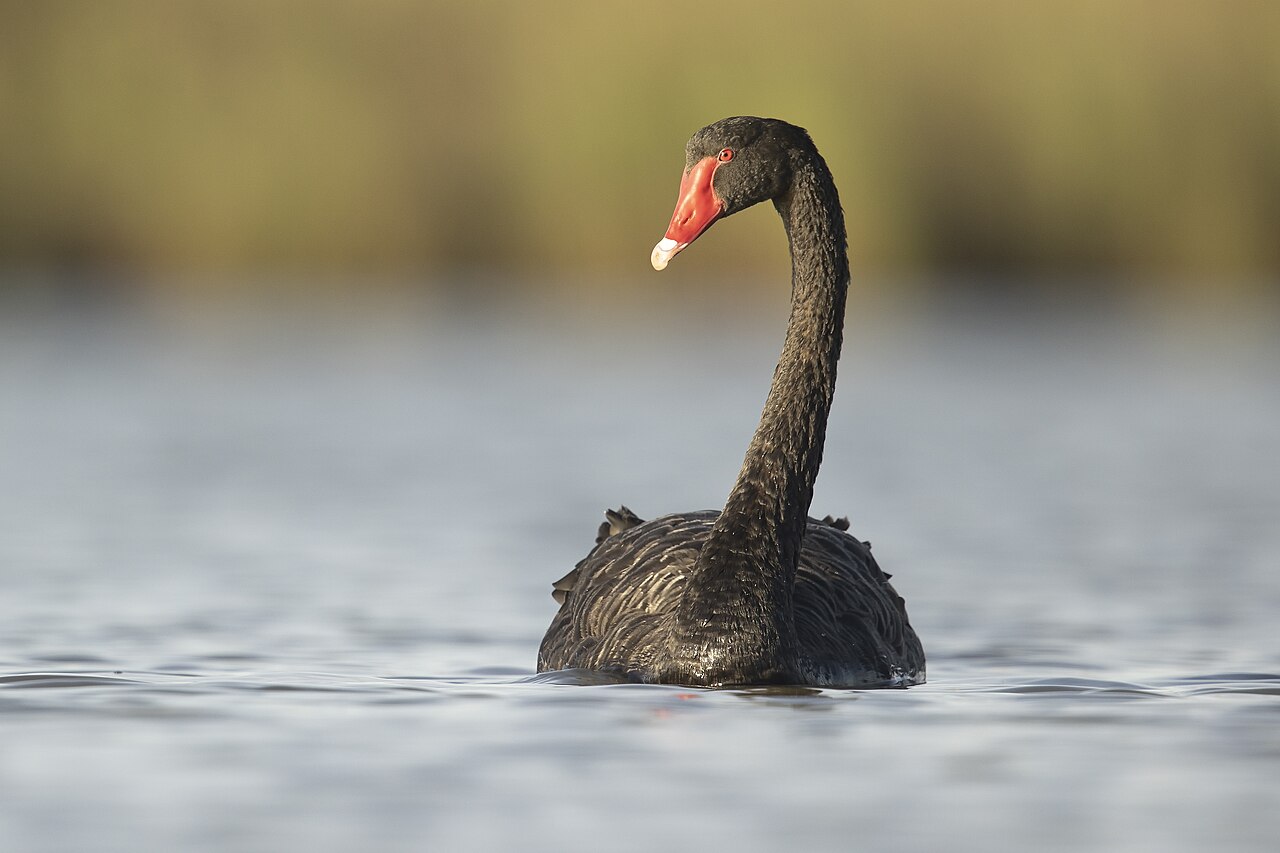
The Black Swan is the big waterbird of southern Australia: entirely black, with a bright red bill and a neck proportionally longer than that of any other swan. Only when it takes off does the white in the flight feathers appear, and the silhouette changes at a stroke.
Voice
The call is a far-carrying musical bugle, a high and slightly tremulous hoo-oo that pairs and flocks exchange constantly in flight and on the water. Alongside it comes a soft crooning between partners at the nest, and a hissing snort in threat. The wings sing loudly and rhythmically; a passing flock is often heard before it is seen.
Recording: Sonothèque ADVL — CC0 · Sougeal, Ille-et-Vilaine, Bretagne, France · xeno-canto
Identification
An all-black swan with a long, S-curved neck and a bright red bill carrying a white bar and a white tip. The scapulars are curled and raised, giving the back a crimped look; in flight the pure white flight feathers flash against the black. The sexes are alike, the male larger and straighter-billed. Young birds are grey-brown with pale feather edges and a grey bill.
Confusion species
There is no second black swan in the region, so confusion comes mainly from distance and light. Mute Swan (Cygnus olor), introduced to New Zealand and to southwestern Australia, is white, but its grey-brown young resemble young Black Swans at range; look then at the orange base of the bill. High overhead the species is confused with Magpie Goose (Anseranas semipalmata), which has a shorter neck, a black and white wing pattern and a much slower wingbeat.
Habitat
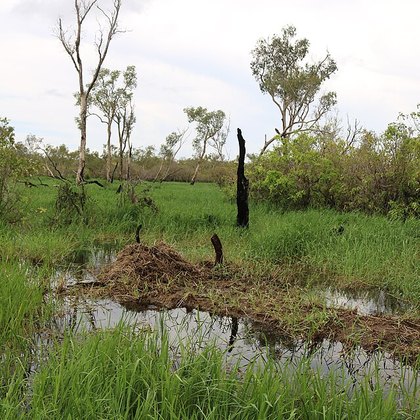
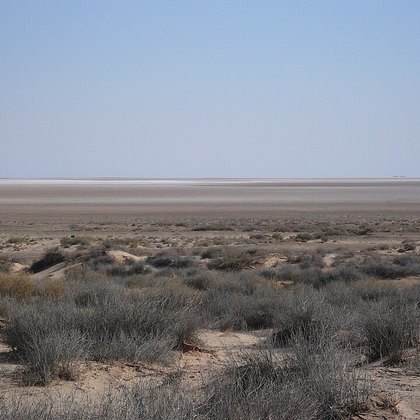
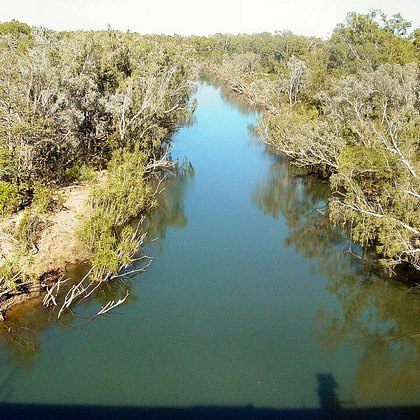
Large shallow fresh and brackish waters with abundant submerged plants: permanent lakes, reservoirs, reed and rush swamp, and the lagoons and estuaries of the coast. The water must be shallow enough to reach the bottom with the neck, and that governs where the bird sits; deep crater lakes and fast rivers are avoided. After heavy rain it moves inland and appears on claypans and ephemeral lakes that lay dry for months.
Where the bird is most often found, arranged by main group and formation.


Range and movements
Native to southeastern and southwestern Australia including Tasmania, and scarce in the tropical north; the Murray-Darling basin and the coastal lagoons hold the largest numbers. It wanders with water levels and shifts over a thousand kilometres in dry years. In New Zealand the native swan was gone before European settlement; Australian birds were released in 1864 and others arrived under their own power at the same time, so the species is now common there.
- Resident
- dark = core range, pale = thinly spread
Where and when to look
Count them on a large shallow lake in the late afternoon, when families come out of the reeds and the flocks drift from open water towards the shore. Watch the wing of every flock that lifts: at long range the white is the only mark that survives, and it separates the bird at once from any dark goose or cormorant.
Conservation
Not threatened (LC) and numerous, with a population running into the hundreds of thousands across Australia and New Zealand. Numbers swing with water levels, and a single event can clear a stronghold: in 1968 the storm around the Wahine took the swans and the water plants of Te Waihora together. Wetland drainage, botulism and disturbance at breeding colonies are the standing pressures.
Scientific name
Cygnus atratus | (Latham, 1790)
Latham described the bird in 1790 as Anas atrata, among the ducks; because it later moved to another genus, author and year stand in parentheses. The genus Cygnus was introduced by De Garsault in 1764 and is simply the Latin word for swan. atratus means 'clothed in black', said of someone in mourning dress. For type locality Latham gives no more than 'the lakes of Australia'.