All species › Falcons › Falcons and caracaras › Brown Falcon
Brown Falcon | Falco berigora
Grote bruine valk | Halcón berigora
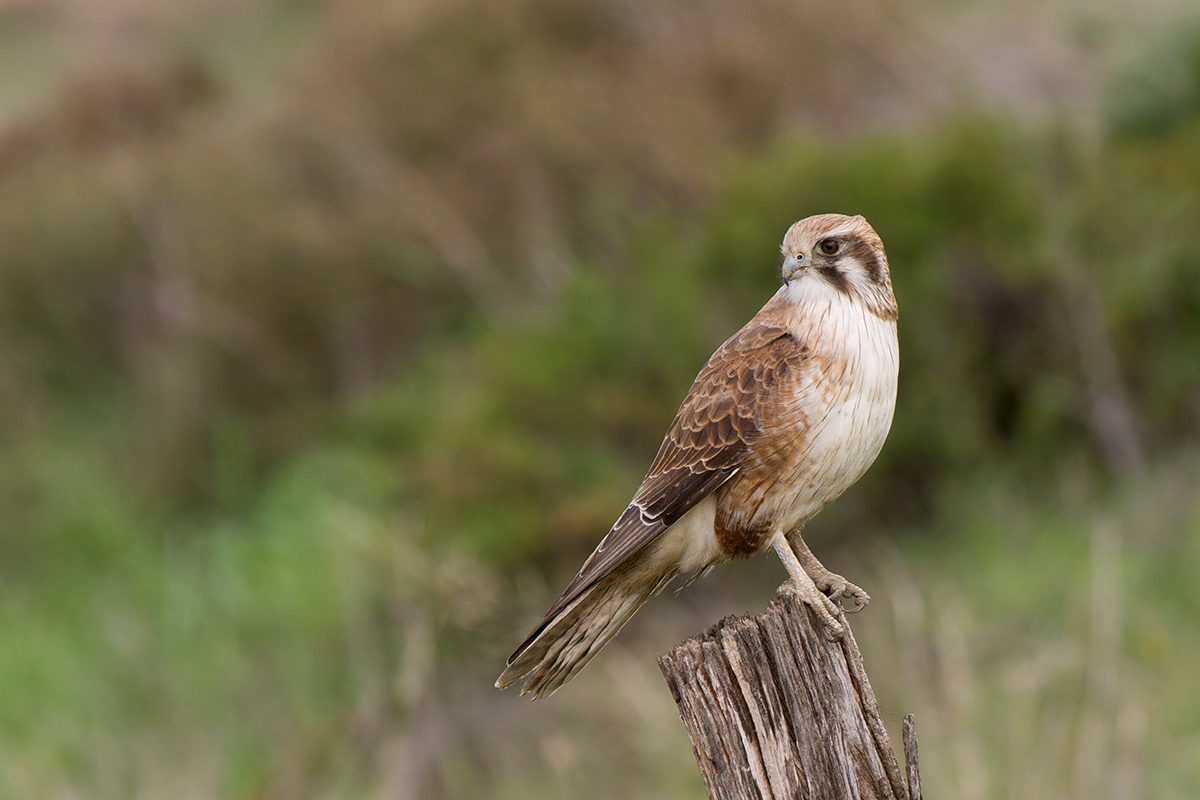
The Brown Falcon is the commonest and noisiest raptor of open country in Australia: a long-legged brown falcon that sits for hours on a telegraph pole or fence post and lifts off with slow, rowing beats. Its plumage varies so much that it can imitate almost any other brown raptor, which is exactly why it is the most often misidentified bird in the group.
Voice
This is the most vocal falcon in Australia, and voice is often the quickest identification. In flight and at the nest it gives a loud, hoarse cackling laugh, kak-kak-kak-kak, carrying far across open country, alternating with a drawn-out, rasping, plaintive kair-kair. Where Black Falcon and Grey Falcon are all but silent, the Brown Falcon gives itself away unprompted — a calling brown falcon on a post is nearly always this species.
No freely licensed recording has been found for this species yet; what to listen for is described below.
Identification
A solid falcon of about forty-five centimetres with strikingly long, bare legs, broad and fairly blunt wings and a long, barred tail. The plumage runs from almost blackish-brown to very pale cream: most birds are dark brown above with cream underparts, a pale nape and an obvious dark tear-stripe below the eye against a light face. Tropical birds in the north are very dark with pale faces, central Australian birds notably pale. The flight is loose and slow, with rowing beats and wings held in a shallow V, and it hovers clumsily — no other Australian falcon flies so untidily.
Confusion species
Black Falcon (Falco subniger) is the trap with dark birds: it is uniformly sooty brown with an unbarred tail, short feathered legs and a sleek, tight outline, and flies with swift powerful beats rather than rowing ones. Grey Falcon (Falco hypoleucos) resembles the palest Brown Falcons, but has a bright orange-yellow cere, orbital ring and legs, black wingtips against an otherwise plain grey plumage, and white 'trousers' covering half the bare lower leg — in Brown Falcon the legs are long, exposed and blue-grey to dull yellow. Nankeen Kestrel (Falco cenchroides) is smaller, rufous above and hovers gracefully. Black Kite (Milvus migrans) has a forked tail and fingered wings.
Habitat
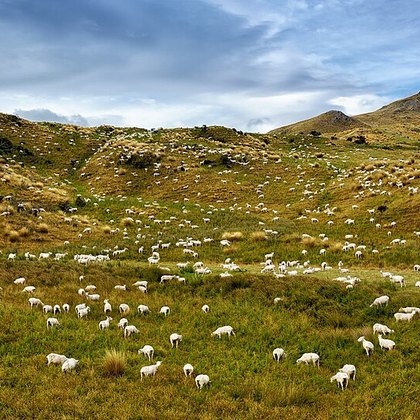
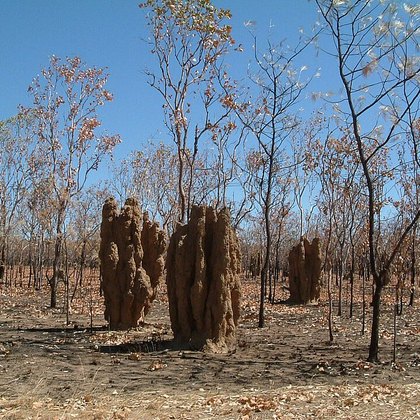
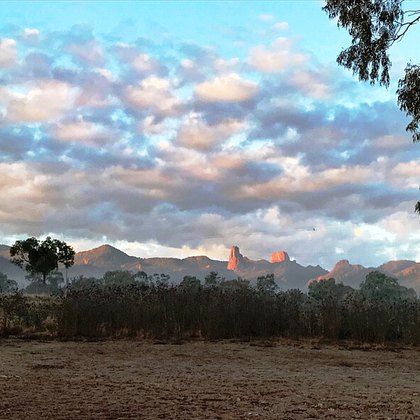
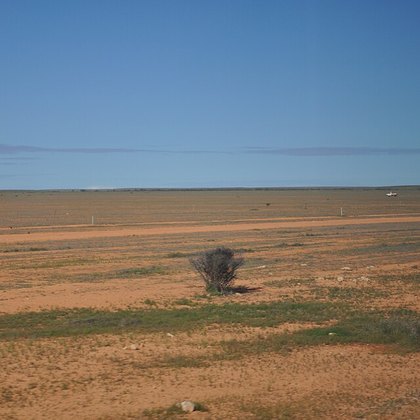
Almost any landscape except the densest forest: grassland, cropland and pasture with scattered trees, eucalypt savanna, dry eucalypt forest and woodland, Mitchell grass plains and saltbush country. What it needs is a lookout — a dead branch, a fence post, a telegraph pole — with open ground around it. Inland it moves to recently burnt or freshly mown ground, where grasshoppers and lizards are exposed.
Where the bird is most often found, arranged by main group and formation.


Range and movements
Throughout Australia, from Cape York to Tasmania and from the west coast to the east, including the arid interior and most coastal islands; beyond the map window the range continues to New Guinea. Pale birds predominate inland, very dark ones in the wet tropics of the Top End and Cape York. The species does not occur in New Zealand. In most districts this is the raptor you see on a post most often on a day's drive.
- Resident
- dark = core range, pale = thinly spread
Where and when to look
Drive a country road and watch the posts: the Brown Falcon perches upright, with the long legs visible and the wingtips falling well short of the tail tip, and often lets you get close. If you are torn between a dark Brown Falcon and a Black Falcon, wait for it to take off — the slow rowing beat and the barred tail settle it, and it will usually call as well.
Conservation
Least Concern (LC) and rated secure federally and in every Australian state and territory. It is one of the few raptors that has clearly gained from clearing for livestock: open pasture dotted with posts is prime hunting ground, and around outback towns it grows tame. Losses to traffic on roads where it clears carrion, and secondary poisoning during mouse and rabbit control, remain local; the population is large and stable.
Scientific name
Falco berigora | Vigors & Horsfield, 1827
Vigors and Horsfield described the species in 1827 as Falco Berigora, and it remains in that genus, so author and year carry no parentheses. The epithet is not Latin but an Australian Aboriginal name: the authors themselves noted that 'Berigora' was the native name of this bird, most likely recorded around Parramatta by the collector George Caley and his guide Moowattin. Which language it came from is uncertain — a link has been proposed with Yuwaalayaay biyaagaarr for this falcon, and an onomatopoeic origin from the cackling call has been suggested too. The type locality is New South Wales.