All species › Passerines › Finches, euphonias and allies › Eurasian Chaffinch
Eurasian Chaffinch | Fringilla coelebs
Vink | Pinzón vulgar
The Eurasian Chaffinch is the introduced bird that has pushed deepest into the native forest. The acclimatisation societies brought it to New Zealand from the 1860s, where it was slow to take; it is now one of the country's most numerous songbirds, and sits not only in the garden but in beech and podocarp forest where otherwise only native birds sing.
Voice
The contact note is the familiar, ringing chink chink, given by both sexes all year and often the only sign of the bird at all. From August to January the male sings from a fixed perch a short accelerating rattle rounded off with a flourish, repeated several times a minute. North Island and South Island each carry their own song dialect, and the difference can be heard by ear.
Recording: Sonothèque ADVL — CC0 · Vains, Manche, Normandie, France · xeno-canto
Identification
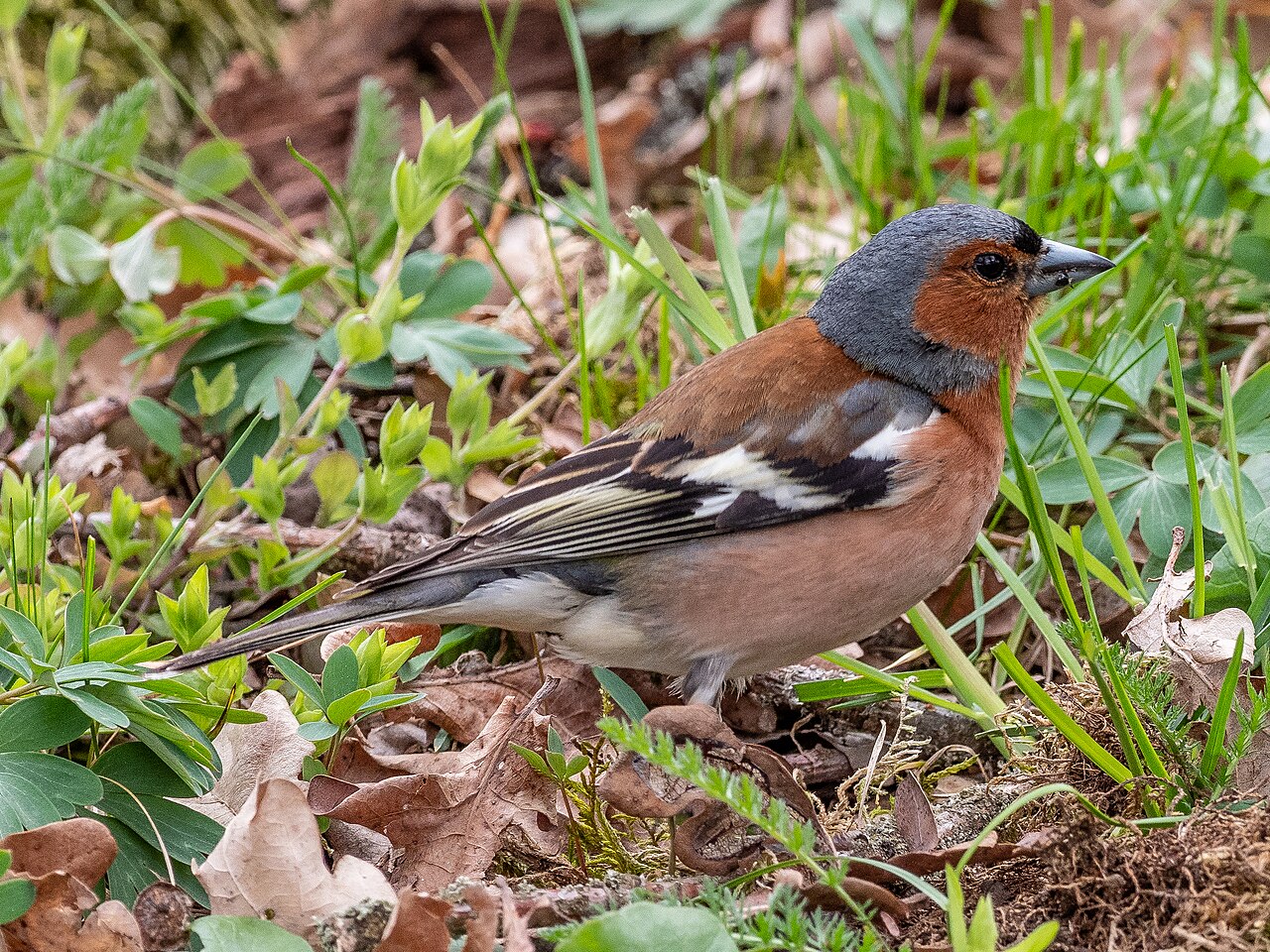
A slim finch of fourteen and a half centimetres with a long tail. In summer the male has a slate-blue crown and nape, a chestnut mantle, an orange-red breast and a greenish rump; in winter brown feather fringes veil those colours and he looks much duller. The female is plain grey-brown. Both sexes carry the same unmistakable wing pattern: a broad white shoulder stripe and a second white bar below it, and in flight the white outer tail feathers flash out.
Confusion species
European Greenfinch (Chloris chloris) is bulkier, with a heavy pale bill and yellow rather than white flashes in wing and tail. Redpoll (Acanthis flammea) is smaller and finely streaked throughout, with a red forehead patch and a small black chin. A female House Sparrow (Passer domesticus) is stockier, has a heavier conical bill and lacks both the double white wing bar and the white in the tail — and it is that white which names every departing Chaffinch.
Habitat
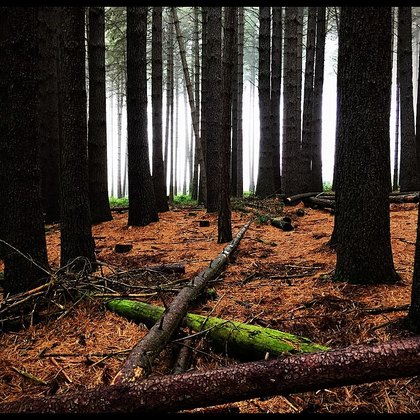
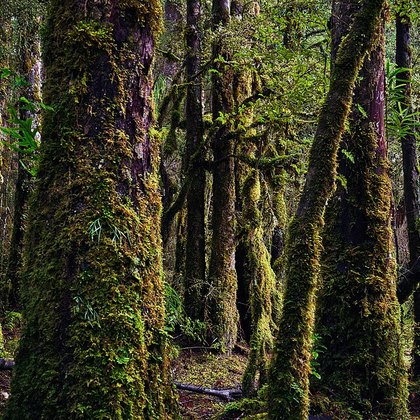
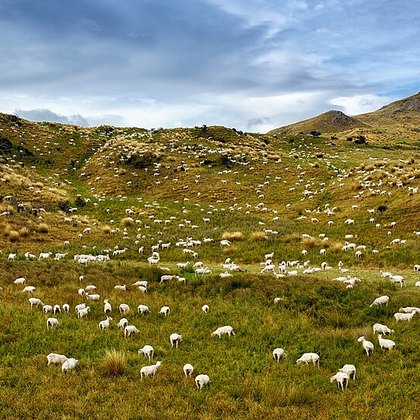
From pine plantation and garden to native beech and podocarp forest, and beyond that hedges, shelter belts, orchards, subalpine scrub and grazed land with standing trees. It asks for no more than trees or shrubs to sing from and open ground beneath to find seed on. In New Zealand it runs from sea level to fourteen hundred metres, and its move into closed native forest is unusual for a released European songbird.
Where the bird is most often found, arranged by main group and formation.


Range and movements
Across the mainland of both islands and on the Chathams, and resident on Stewart Island, the Snares, the Auckland and the Campbell Islands; scattered records come from Norfolk, Lord Howe, the Kermadecs and the Antipodes. In Australia it was released repeatedly in the nineteenth century without a population ever forming; what is seen there are single birds. In New Zealand it does not migrate, but outside the breeding season, March to August, flocks gather on stubble and field margins.
- Resident
- dark = core range, pale = thinly spread
Where and when to look
In summer, December to February, walk a forest edge or a shelter belt and count singing males: each holds his own fixed perch and repeats the rattle every twenty seconds or so. On any brown bird that flies off, watch the rear end; two white wing bars and white down each side of the tail settle the Chaffinch at once, even when the colours are dull in winter.
Conservation
Least Concern (LC) and established in New Zealand as an introduced bird. As an agricultural pest it amounts to little: some fruit buds and newly sown grain, no more. No case of it displacing a native bird has been shown, although the fact that it reaches into closed beech forest is reason to keep an eye on it — there it eats the same seed and insects as the native songbirds. It is also a host for bird diseases that travelled with it.
Scientific name
Fringilla coelebs | Linnaeus, 1758
Linnaeus described the species in 1758 as Fringilla coelebs and it has stayed in that genus, so author and year carry no parentheses; Fringilla is the Latin word for a finch. coelebs means 'unmarried', and an observation lies behind it: Linnaeus noticed that in the Swedish winter it was mainly the females that left, and the males that stayed behind alone. The type locality is Sweden.