All species › Passerines › Fantails › Grey Fantail
Grey Fantail | Rhipidura albiscapa
Grijze waaierstaart | Abanico gris
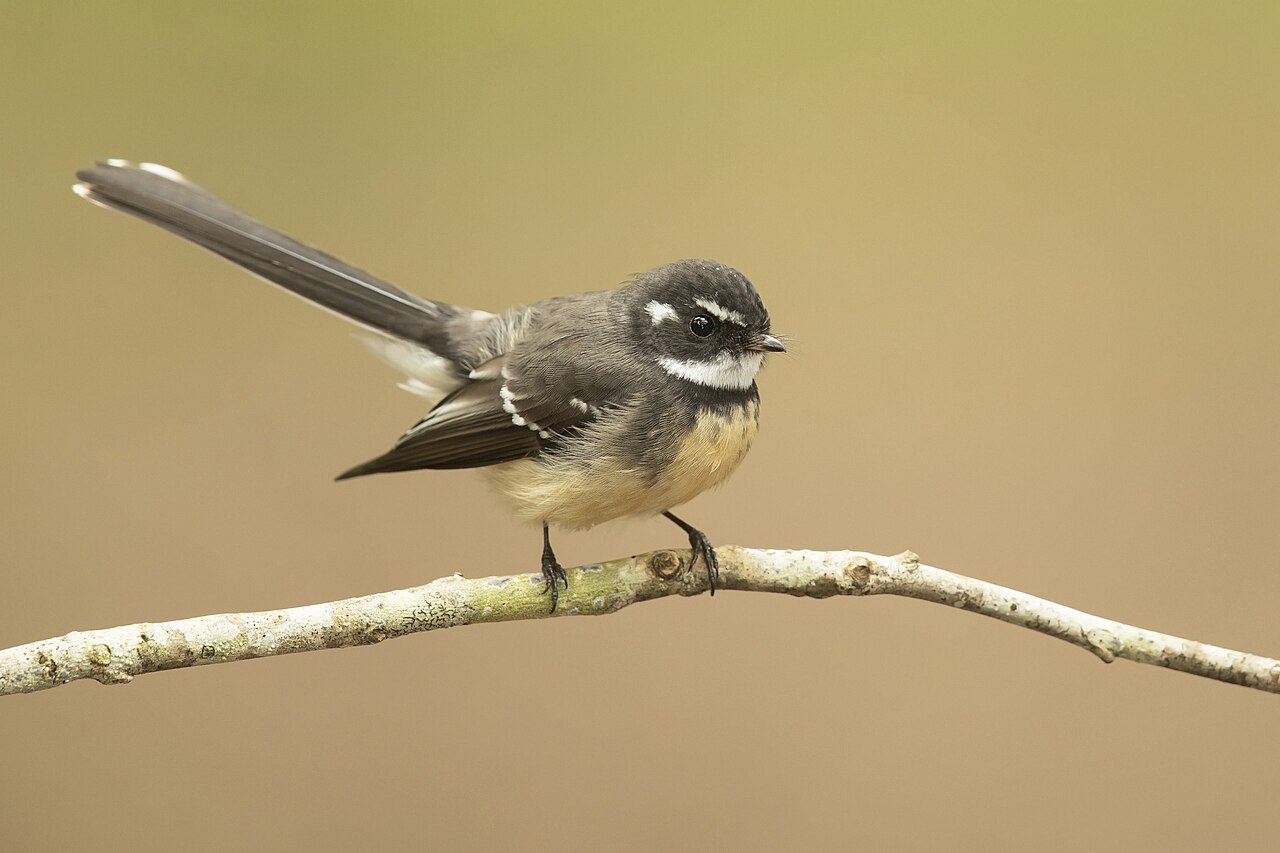
The Grey Fantail is the most restless bird in the Australian bush: a grey scrap of fifteen centimetres that will not sit still for half a second, that flings its tail open like a fan and tumbles after gnats in mid air. It is curious about people and will often come a branch closer of its own accord to see what is moving.
Voice
A high, almost metallic cheek, given singly or, more often, strung into a fast rattling chatter. The song is a thin, violinistic run of seven or eight notes that climbs and falls, so slight that wind carries it away. Near the nest there is a sharp scolding. Anyone who hears the squeaking knows the bird is there before seeing it move.
No freely licensed recording has been found for this species yet; what to listen for is described below.
Identification
A small, long-tailed bird of 14 to 16 centimetres, half of that tail, and barely nine grams. The upperparts are grey to grey-brown, the underparts paler and often washed buff to orange. The throat is white with a narrow dark band below it, and white marks stand above the eye and on the cheek. Two pale bars cross the wing. The outer tail feathers are white-edged or wholly white depending on the subspecies; in the fanned tail that is the feature that carries.
Confusion species
Northern Fantail (Rhipidura rufiventris) is larger, sits still and upright, holds the tail closed and has one broad grey breast band. Arafura Fantail (Rhipidura dryas) and Australian Rufous Fantail (Rhipidura rufifrons) have an orange rump. Mangrove Fantail (Rhipidura phasiana) is paler and stays in the mangroves. New Zealand Fantail (Rhipidura fuliginosa) is the sister species this bird was split from; it does not occur in Australia.
Habitat
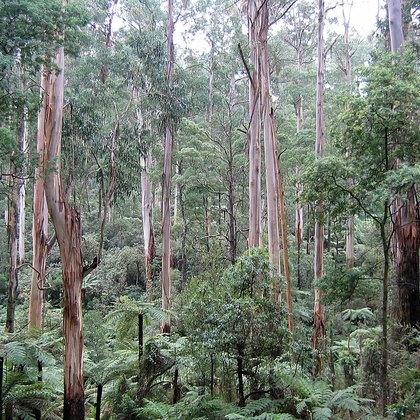
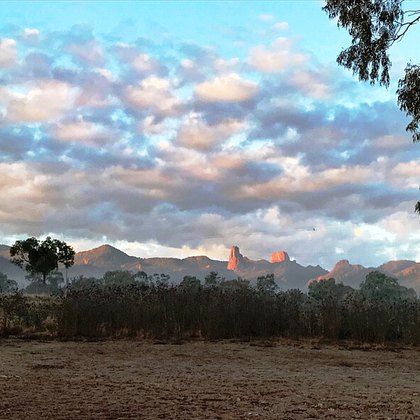
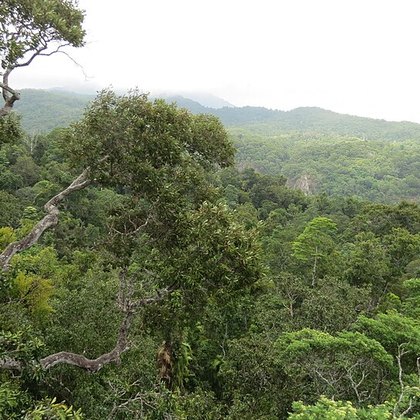
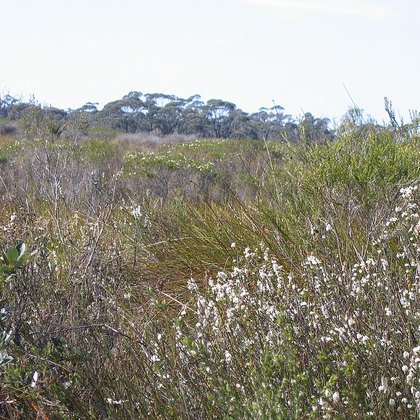
Almost any treed country: wet and dry eucalypt forest, rainforest, mangrove, wooded heath and woodland out into the semi-arid interior along the creeks. In winter, in June and July, it appears in densely planted town gardens and parks where it is otherwise absent. It hunts in the middle and lower storey and needs open space between the branches for its aerial work.
Where the bird is most often found, arranged by main group and formation.

Range and movements
All of Australia including Tasmania, and beyond that Norfolk Island, New Caledonia, Vanuatu and the Solomon Islands; Norfolk has a subspecies of its own. Southeastern birds migrate: in autumn and winter, from March to August, they shift north and northwest, while the western and eastern upland forms stay put and the inland form wanders. In the Northern Territory, at the edge of the range, it is rare and carries a critically endangered listing under territory law.
- Resident
- dark = core range, pale = thinly spread
Where and when to look
Watch for movement, not for colour: in the gloom of the understorey it is a grey flash with a white tail edge. Stand still, because it will come to you — a person pushing through scrub puts up insects and the fantail knows it. In winter it is the first bird you meet in a southern town garden, while in summer it has gone from there.
Conservation
Least Concern (LC) and common over most of Australia. It copes with fragmented forest better than most bush birds, because it can use narrow strips along roads and creeks and falls back on gardens in winter. Where the understorey is stripped out entirely it does go. At the northern edge of its range it is scarce, and migrating southeastern birds are killed against windows in numbers.
Scientific name
Rhipidura albiscapa | Gould, 1840
Gould described the species in 1840 directly in Rhipidura, so author and year carry no parentheses. The genus was introduced by Vigors and Horsfield in 1827, from Greek rhipis, rhipidos, fan, and oura, tail. albiscapa means white-shafted, from Latin albus, white, and scapus, shaft, after the white shafts of the outer tail feathers. The type locality is Tasmania. Since the split the name Rhipidura fuliginosa belongs to the New Zealand bird.