All species › Passerines › Thornbills, scrubwrens, gerygones and allies › Grey Gerygone
Grey Gerygone | Gerygone igata
Maorimangrovezanger | Gerigón maorí
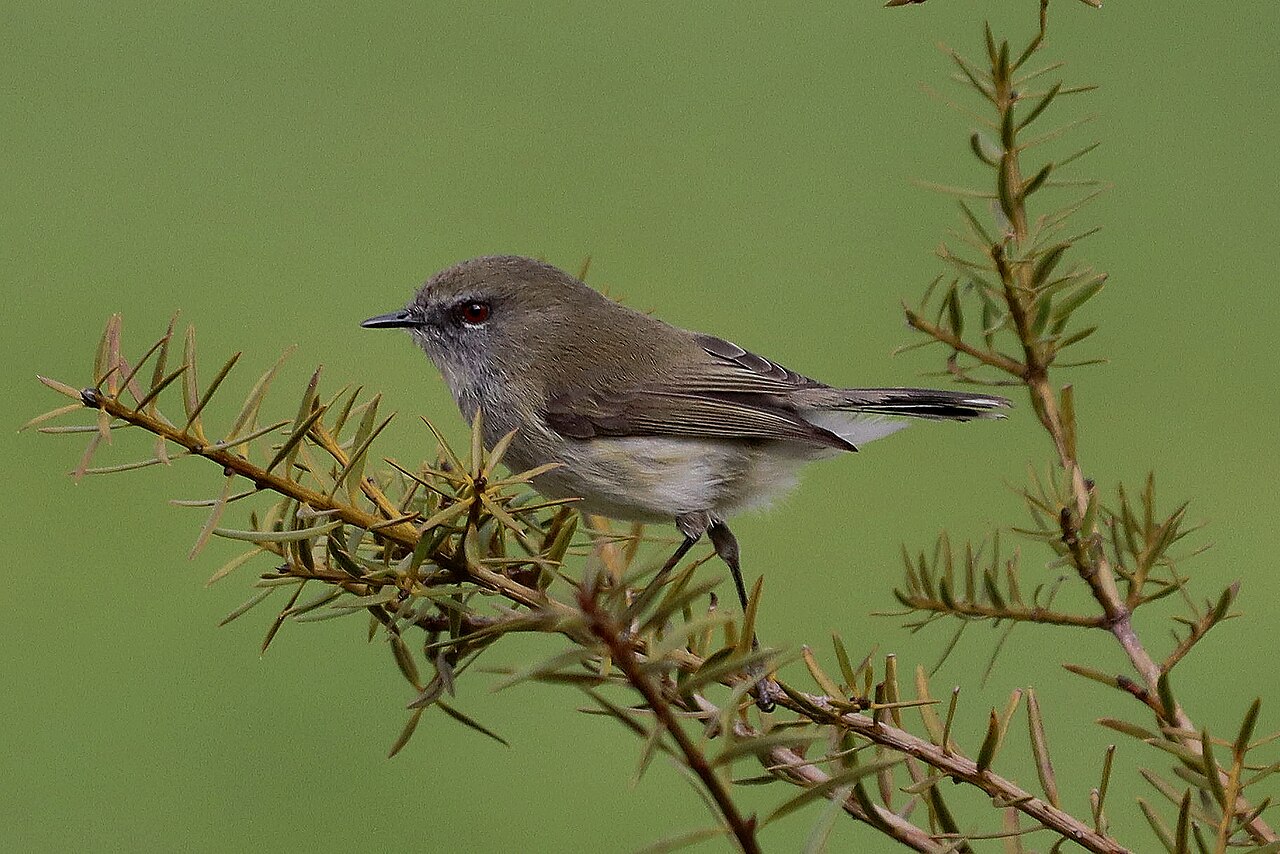
The Grey Gerygone, riroriro in New Zealand, is the only gerygone on the New Zealand mainland and therefore the simplest of the whole genus: any small grey bird giving a long wavering trill in a New Zealand forest or garden is this species. It occurs wherever there are trees or shrubs, from northern kauri forest to the last manuka on a South Island slope, and it is the only mainland host the Shining Bronze-Cuckoo has.
Voice
The song is the trademark: a long, high, slightly plaintive trill that swells and falls away, and that is remarkably loud for so small a bird. Only the male sings it; the female gives short chirping contact notes and nestlings a high, urgent begging call. Anyone walking into New Zealand bush hears this trill almost without pause and often never sees the bird — which is the sensible way to leave it, because nothing else here sounds like that.
Recording: craig wilson — CC BY 4.0 · Millerton Dam Walk (near Millerton), Buller District, West Coast Region, New Zealand · xeno-canto
Identification
Eleven centimetres and five and a half to six and a half grams: one of the smallest birds in New Zealand. The upperparts are olive-grey, the face grey, the underparts off-white. The tail is darker grey with white tips that light up in flight as a clear white band — the best character at range. The bill is fine and pointed, the legs slender and black, and the eye is bright red. The sexes look alike. It forages in the middle and upper canopy and hovers a great deal, hanging in front of the leaf tips.
Confusion species
On the New Zealand mainland confusion with another Gerygone is impossible: it is the only one. Chatham Islands Gerygone (Gerygone albofrontata) is larger, the male has a white forehead, male, female and juvenile each have their own plumage, and it rarely hovers; there is no overlap. Norfolk Gerygone (Gerygone modesta) is its sister species, formerly treated as one species with it, and is likewise wholly separated geographically. In the field the real confusion lies elsewhere: Silvereye (Zosterops lateralis) is about as small and as busy but has a white eye-ring and greener flanks, and the young Shining Bronze-Cuckoo (Chalcites lucidus) raised by this species is far larger and barred below. None of the Australian species reaches the New Zealand mainland, so Mangrove Gerygone (Gerygone levigaster), Large-billed Gerygone (Gerygone magnirostris) and Brown Gerygone (Gerygone mouki) play no part here.
Habitat
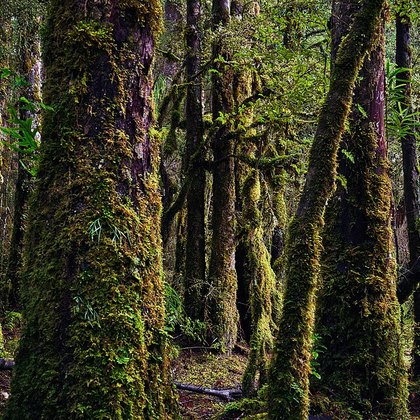
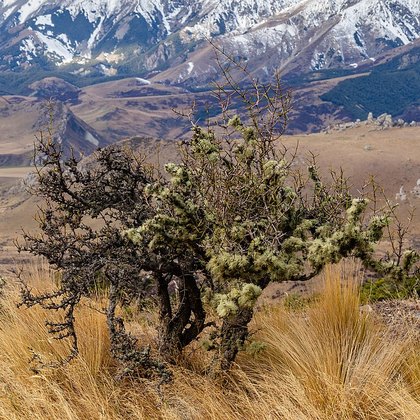
Everywhere there are trees or shrubs. New Zealand Birds Online calls it plainly ubiquitous on the three main islands and most offshore islands: native podocarp-broadleaf forest, beech forest, manuka and kanuka scrub, exotic plantings, town gardens and parks. Only alpine tussock (grassland of loose, tall clump-forming grasses, especially in New Zealand) above the treeline stays empty. It eats small insects and spiders picked from leaves and twigs, often while hovering. The nest is an enclosed hanging dome with a side entrance, built by the female two to four metres up; breeding runs from August to January, with one brood a year in the north and usually two in the South Island.
Where the bird is most often found, arranged by main group and formation.


Range and movements
Endemic to New Zealand and distributed there across the North Island, the South Island, Stewart Island and most offshore islands. On the Chathams it is replaced by the Chatham Islands Gerygone. It is sedentary and stays year-round in the same area, though young birds wander after fledging. It is one of the few native New Zealand songbirds that has held its ground completely in the human-altered landscape.
- Resident
- dark = core range, pale = thinly spread
Where and when to look
Learn the trill and you know the species. Walk a bush track, stop the moment you hear it, then look high in the leaves for movement: a small grey bird hanging and hovering in front of the leaf tips. The white tail tips flash as it turns. A second pointer is the second brood in the South Island: anyone who sees a riroriro in November or December carrying food endlessly to a far too large, barred youngster is watching a Shining Bronze-Cuckoo being raised by this species.
Conservation
Least Concern (LC) in the IUCN category, and likewise unthreatened in New Zealand's own listing, which holds it at Not Threatened. That is notable: most native New Zealand land birds have been driven back hard by introduced rats, stoats and possums (climbing marsupials), and this species is one of the exceptions. The explanation probably lies in the hanging, enclosed nest high in the foliage, harder for climbing mammals to reach than an open cup, and in the broad habitat tolerance, which lets planted and urban vegetation count. Brood parasitism by the Shining Bronze-Cuckoo costs broods but does not threaten the population.
Scientific name
Gerygone igata | (Quoy & Gaimard, 1832)
Quoy and Gaimard described the species in 1832; because it was originally placed in another genus, authors and year stand in parentheses. The epithet igata has no clear classical meaning and its origin is left open here. The genus name Gerygone is usually read as 'born of song', which fits this species better than any other. The Maori name riroriro follows the song. The English name varies: New Zealand Birds Online carries it as grey warbler, this guide as Grey Gerygone. The Dutch maorimangrovezanger and the Spanish gerigón maorí both take the people rather than the bird; the element mangrovezanger has no basis here, since mangrove in New Zealand grows only in the far north and this bird is in no way tied to it.