All species › Waterfowl › Ducks, swans and geese › Hardhead
Hardhead | Aythya australis
Australische witoogeend | Porrón australiano
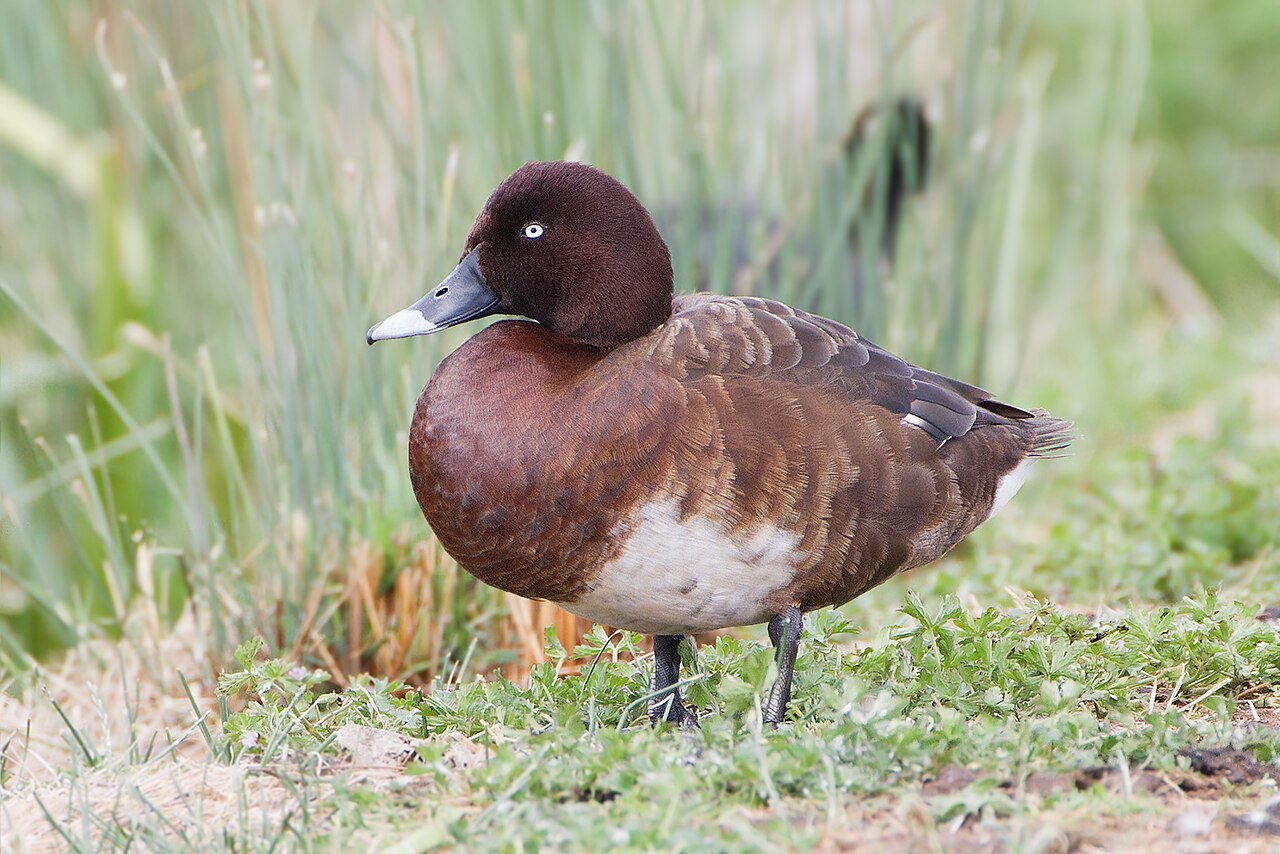
The Hardhead is the diving duck of inland Australia: a stocky, chocolate-brown bird that rides low in the water and, in the male, carries a startlingly clean white eye. It dives deep and long for its food, almost never comes ashore, and wanders across the continent with the rain.
Voice
Usually silent, as befits a diving duck. The male gives a soft, breathy whistle and a muffled whirr in display; the female has a hard rattling gaark, delivered when disturbed or over her brood. In a flock on a large lake what you mostly hear is the splash of birds going under.
No recording with a suitable Creative Commons licence has been found for this species yet; what to listen for is described below.
Identification
A medium-sized diving duck of 45 to 60 cm with a high, rounded rear crown and a short neck, uniformly chocolate-brown with warmer rufous flanks. The belly patch and the undertail coverts are clean white, and that white undertail is the most reliable mark on the water. The male has a striking white eye, the female a brown one. The bill is dark with a pale blue to grey band just before the black nail. In flight a broad white bar along the trailing edge and a white underwing edged brown light up. It sits low and heavy in the water and goes under without a run-up.
Confusion species
Female Blue-billed Duck (Oxyura australis) is just as dark brown and also dives, but carries a stiff cocked tail and has dark undertail coverts where the Hardhead is white. Female Australasian Shoveler (Spatula rhynchotis) is brown too but has a long broad bill and dabbles at the surface instead of diving. In New Zealand the confusing bird is New Zealand Scaup (Aythya novaeseelandiae): smaller, darker and more compact, with dark undertail coverts and, in the male, a yellow rather than white eye.
Habitat
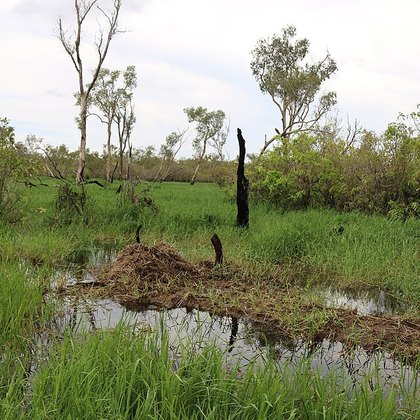
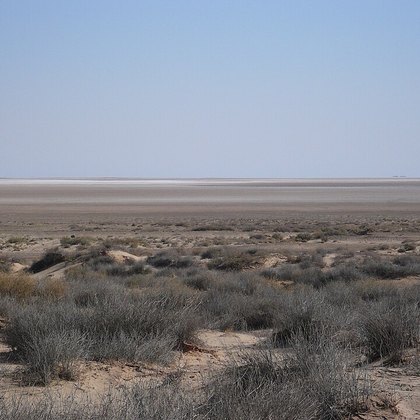
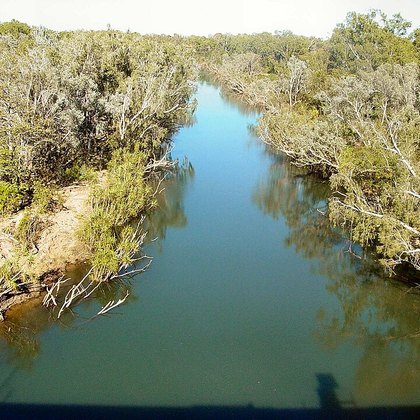
Deep, still fresh water: large lakes, reservoirs, swamps and slow rivers, with dense fringing vegetation for breeding. In drought it falls back on whatever is left, down to shallow pools and flooded grassland, and exceptionally on sheltered estuaries. It dives for water plants and small aquatic animals, particularly mussels and other freshwater shellfish, sometimes staying under for a full minute and covering up to forty metres in the process. It hardly ever comes ashore and never perches in trees. The nest is a platform of trampled reeds, sticks and vegetation with a little down, hidden in the swamp growth.
Where the bird is most often found, arranged by main group and formation.

Range and movements
Across the whole of Australia, with the centre of gravity in the south-east and above all in the Murray-Darling Basin. It has little in the way of fixed quarters: moderately nomadic in normal years, but in drought it scatters across the continent and beyond, to New Guinea, the Pacific islands and New Zealand. In New Zealand, where it is called karakahia, it bred on North Island lakes until the late 1800s; today it is a vagrant there, with recent records at Christchurch (2012–2013), Foxton (2013), Blenheim (2015) and Nelson (2023).
- Resident
- dark = core range, pale = thinly spread
Where and when to look
Scan a large deep lake or reservoir from the shore and pick out the ducks that vanish rather than up-end; then time how long they stay down, because a full minute is ordinary in this species. On a bird surfacing, go to the rear end first: a clean white undertail on a chocolate-brown body is enough. The male's white eye leaps out in sunlight at range, but against the light even that reads dark.
Conservation
Least Concern (LC), and still numerous taken across Australia as a whole; the species copes with drought by not being tied to one place and following the rain for hundreds of kilometres. The long-run trend in the south-east is nonetheless downward: regulation of the big rivers and extraction from the Murray-Darling Basin shorten the floods that breeding is tuned to, and drainage of swamp removes the cover the nest has to sit in. In several states it is also a game bird. In New Zealand the breeding population has been gone for over a century.
Scientific name
Aythya australis | (Eyton, 1838)
Eyton described the species in 1838 as Nyroca australis; because it later moved to Aythya, author and year stand in parentheses. The type locality is Australia. australis means 'southern'. The genus name Aythya comes from Greek aithuia, an unidentifiable seabird mentioned by Aristotle and Hesychius. The English name Hardhead has nothing to do with temperament but with nineteenth-century taxidermists, who found this duck's skull hard to work; the older name White-eyed Duck refers to the male's iris, which is what the Dutch name renders as well. In New Zealand it carries the Maori name karakahia.