All species › Parrots › New Zealand parrots › Kakapo
Kakapo | Strigops habroptilus
Kakapo | Kakapo
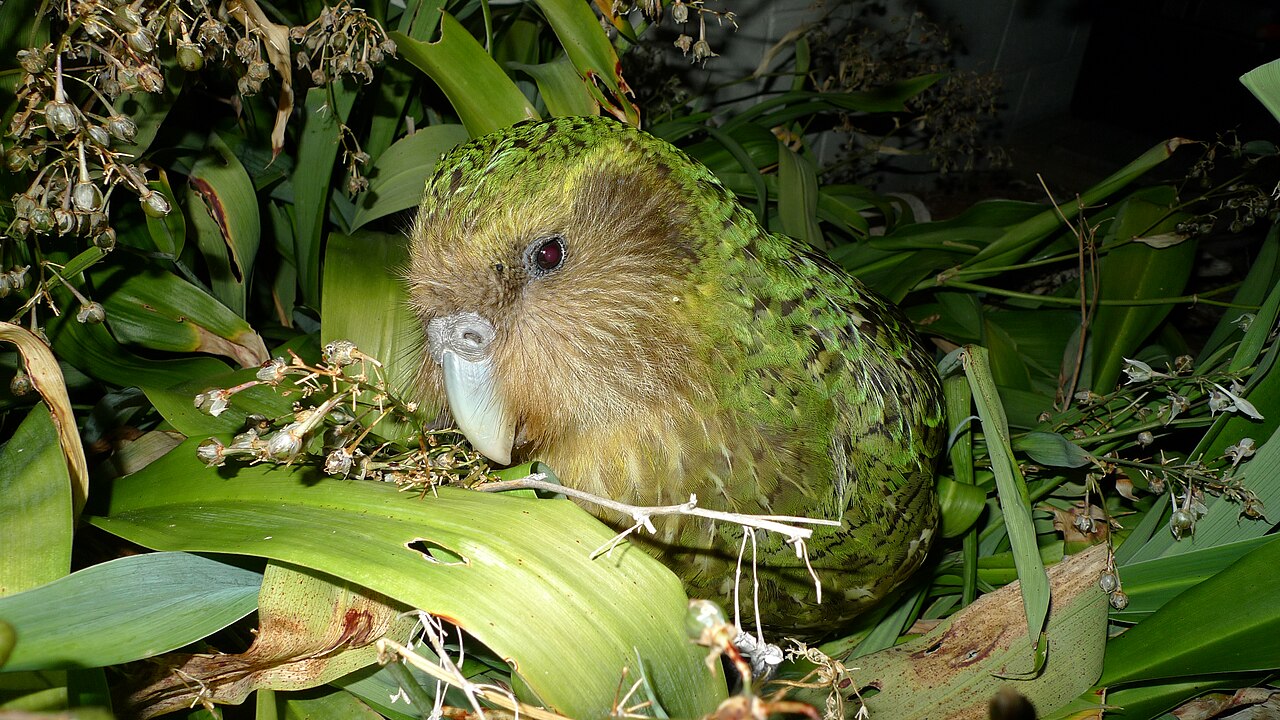
The Kakapo is the heaviest parrot in the world and the only one that cannot fly: a nocturnal bird in moss green, with a veil of fine feathers around the eyes that recalls an owl. On 1 September 2026 there were 325 of them, all on predator-free islands.
Voice
The male booms through the southern summer from a bowl dug in the ground: a deep boom below a hundred hertz, twenty to thirty times over, night after night. A note that low carries more than a kilometre but can hardly be placed — a listener hears that booming is going on, not where from. At the end of a series comes a high metallic ching, which does give a direction.
No freely licensed recording has been found for this species yet; what to listen for is described below.
Identification
Large and heavy: 58 to 64 cm, a male of two kilograms, a female of one and a half. The plumage is yellow-green barred with black, moss green under a lamp and invisible against the forest floor by day. The head carries a flat veil of fine feathers around a pale, broad bill, with bristles that feel the ground as the bird walks. The short rounded wings will not carry it: they serve for balance in climbing and for parachuting down from a canopy.
Confusion species
In the field confusion is impossible: no other New Zealand parrot is green, walks the ground at night and cannot fly. In a photograph Kea (Nestor notabilis) can enter the question — also olive green, but with a long curved upper mandible, red underwings and a range above the treeline. Kaka (Nestor meridionalis) is brown with an orange belly and far slimmer.
Habitat
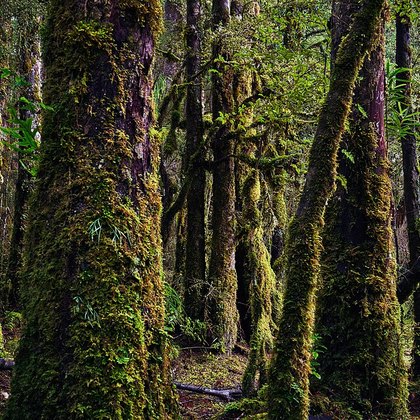
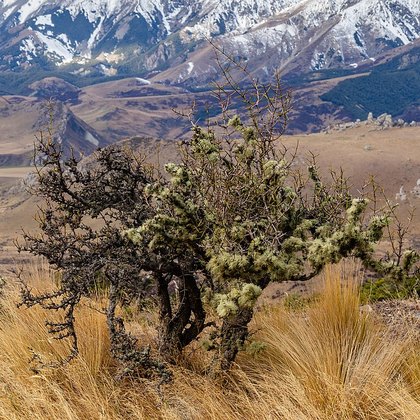
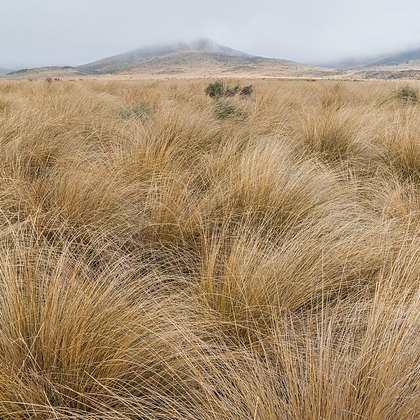
On the present islands, podocarp–broadleaf and southern beech forest with a dense layer of ferns and mosses, in which it hides by day under a root. Formerly from the coast to above the treeline, including tall tussock grassland and low scrub. Breeding hangs on a single plant: only in a year when rimu fruits heavily — once in three to five years — does it happen at all.
Where the bird is most often found, arranged by main group and formation.

Range and movements
Formerly throughout the country: North, South and Stewart islands, still common in Fiordland into the nineteenth century. The bird does not migrate and moves on foot; every present population was put in place by hand. The whole species now sits on Whenua Hou, Pukenui and Te Kāhaku, three predator-free islands, with a trial since 2023 of a few males in the fenced mainland sanctuary of Maungatautari. The map in this guide therefore shows not a range but a management decision.
- Resident
- dark = core range, pale = thinly spread
Where and when to look
This bird cannot be seen. The islands it lives on are closed ground; nobody lands without a permit from the Department of Conservation, and that is exactly why the species still exists. What remains is everything around it: the night recordings of the booming and the annual count. It is in this guide because it is alive, not because it can be found.
Conservation
Critically endangered. On 1 September 2026 the species stood at 325 birds after an exceptional breeding season; in 1995 there were 51. Every bird carries a transmitter and has a name, every nest is watched and every chick weighed. The brake is no longer breeding success but space: predator-free islands of sufficient size have run out.
Scientific name
Strigops habroptilus | Gray, 1845
George Robert Gray described the species in 1845 as Strigops habroptilus, introducing the genus Strigops in the same work; author and year stand without parentheses, because the species has not changed genus since. Strigops is Greek for 'owl face', from strix (owl) and ops (face); habroptilus joins habros (soft) and ptilon (feather). The specimen described came from 'one of the islands in the South Pacific'; Mathews and Iredale later restricted the type locality to Dusky Sound. Kākāpō is Māori for night parrot.