All species › Waders, gulls and terns › Sandpipers and allies › Long-toed Stint
Long-toed Stint | Calidris subminuta
Taigastrandloper | Correlimos dedilargo
The Long-toed Stint is one of the rarest small waders in the map window and at once the trickiest: exactly the size of the ubiquitous Red-necked Stint, but with yellow-green legs, an upright stance and notably long toes. It breeds not on the tundra but in the peat bogs of the Siberian taiga, which is what the Dutch name refers to. In Australia it turns up in small numbers every year; in New Zealand there are not yet a handful of records.
Voice
The call is a soft, rolling, rippling brrt-chrrup, with a purring undertone that suggests a swallow and sounds nothing like the thin squeak of a Red-necked Stint. Alongside it comes a short, sharp, repeated tik tik tik when the bird is startled. That sound is often how the species gets found at all: an odd call out of a flock of stints that otherwise all look the same.
No freely licensed recording has been found for this species yet; what to listen for is described below.
Identification
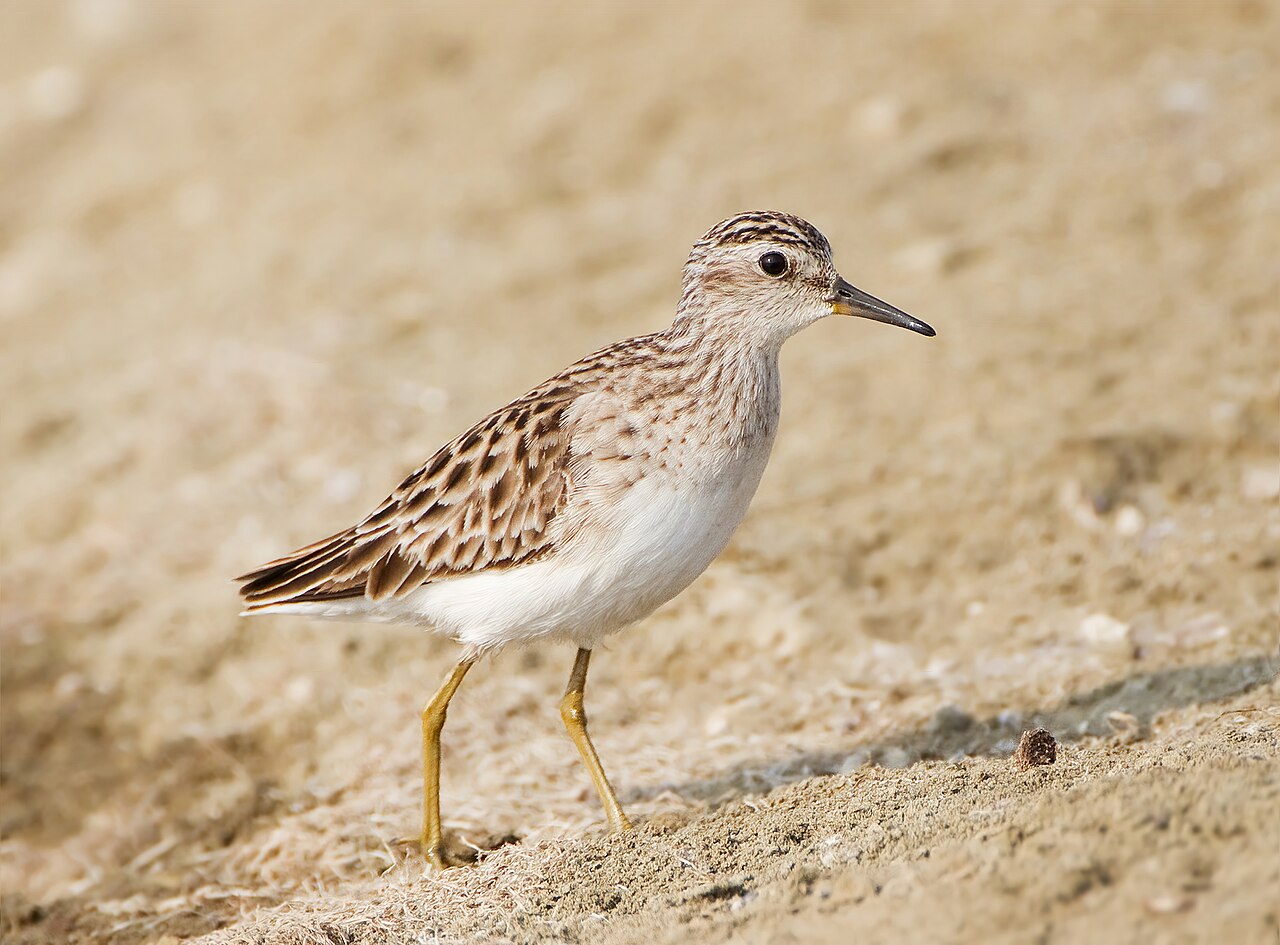
A very small wader of thirteen to fifteen centimetres, but the long legs and long neck make it look far slimmer and taller than its measurements suggest; it often stands bolt upright with the neck stretched, like a miniature Wood Sandpiper. The legs are pale yellow-green, and that is the decisive feature. The bill is short, dark and straight, sometimes with a slightly paler base. The middle toe is longer than the bill, which is what the English name refers to, but in the field that shows only on a bird in shallow water or on mud. The crown is rufous, with a broad pale supercilium that all but meets across the forehead. The mantle is dark-striped: black feather centres with parallel rufous fringes, giving lengthwise stripes instead of the scalloped look of most small stints. The breast is finely streaked and cut off sharply against the white belly.
Confusion species
Red-necked Stint (Calidris ruficollis) is the species it almost always stands among, and separates at a glance: black legs, shorter in leg and neck, far more horizontal and hunched in posture, greyer and plainer above. Little Stint (Calidris minuta) also has black legs and a white V across the mantle, and is paler. Watch for the biggest pitfall: Sharp-tailed Sandpiper (Calidris acuminata) also has yellow-green legs and a rufous cap, and so looks like an enlarged Long-toed Stint — but at eighteen to twenty-two centimetres it is decidedly bigger, fuller in the breast, and its breast streaking fades out rather than ending sharply. Wood Sandpiper (Tringa glareola) shares the upright stance and yellow legs but is far larger, longer-billed, and shows a white rump in flight.
Habitat
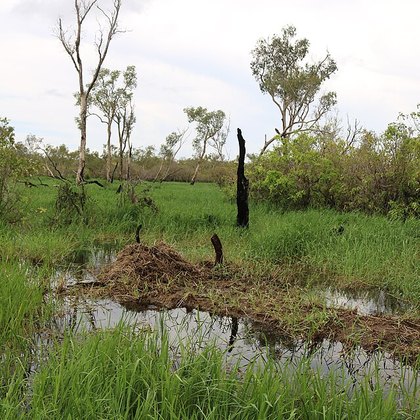
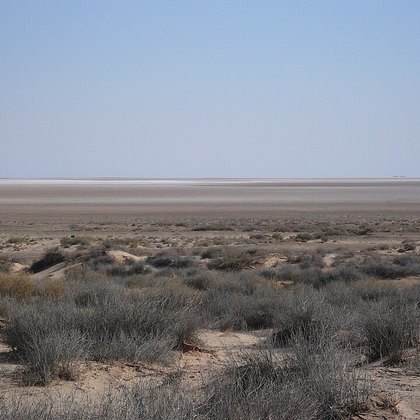
Shallow fresh and brackish wetlands with low, open vegetation: sewage farms and settling ponds, the muddy margins of inland lakes and stock dams, flooded claypans and saltmarsh edge. Unlike most stints it largely avoids open tidal flats and prefers to walk among low plants, pausing again and again to stretch its neck. Usually alone or in small parties among other waders.
Where the bird is most often found, arranged by main group and formation.


Range and movements
In Australia a scarce but annual summer visitor, above all in the northwest around Broome on the shallow lakes and sewage ponds there, and otherwise scattered across inland wetlands and treatment works as far as Victoria, where the Werribee sewage farm is the best-known site; numbers almost always stay at one or a few birds at a time. In New Zealand it is an outright vagrant with only four accepted records: three at Lake Ellesmere, in August and September 1997, in December 2000 and from December 2022 into January 2023, and one bird at Waituna Lagoon in Southland in January 2024. The window in which to expect it runs from September to April.
- Breeding (summer)
- dark = core range, pale = thinly spread
Where and when to look
Look for it at a sewage farm or a muddy lake margin rather than on tidal flats, and scan every flock of small stints for leg colour. A bird with pale, yellow-green legs that also stands upright with the neck stretched is almost certainly this species — but check the size first, because Sharp-tailed Sandpiper has the same leg colour. Then look for the lengthwise striping across the mantle. Anyone who has once heard it will find it next time on call: that rolling brrt-chrrup stands out from a flock of Red-necked Stints.
Conservation
Least Concern (LC). The breeding grounds lie in the thinly settled peat bogs and taiga of central and eastern Siberia, far from the intensive farming and coastal reclamation that hit other migrants on this route so hard, and in the non-breeding range the species is thinly but widely spread across Southeast Asia. Because it uses inland freshwater swamps rather than the tidal flats of the Yellow Sea, it also sidesteps the bottleneck that does catch Red-necked Stint and Sharp-tailed Sandpiper. Even so it is everywhere so sparse and so easily overlooked that real trends are hard to measure.
Scientific name
Calidris subminuta | (Middendorff, 1853)
Middendorff described the species in 1853 as Tringa subminuta, from birds on the western slopes of the Stanovoy Mountains and at the mouth of the Uda in eastern Siberia; because of the move to Calidris, author and year stand in parentheses. The epithet is formed from Latin sub, 'nearly', and minuta, the species name of Little Stint: 'almost as small as the Little Stint'. The English name names the long toes and the Dutch name the taiga breeding habitat — two different keys to the same bird.