All species › Passerines › Pittas › Noisy Pitta
Noisy Pitta | Pitta versicolor
Australische pitta | Pita bulliciosa
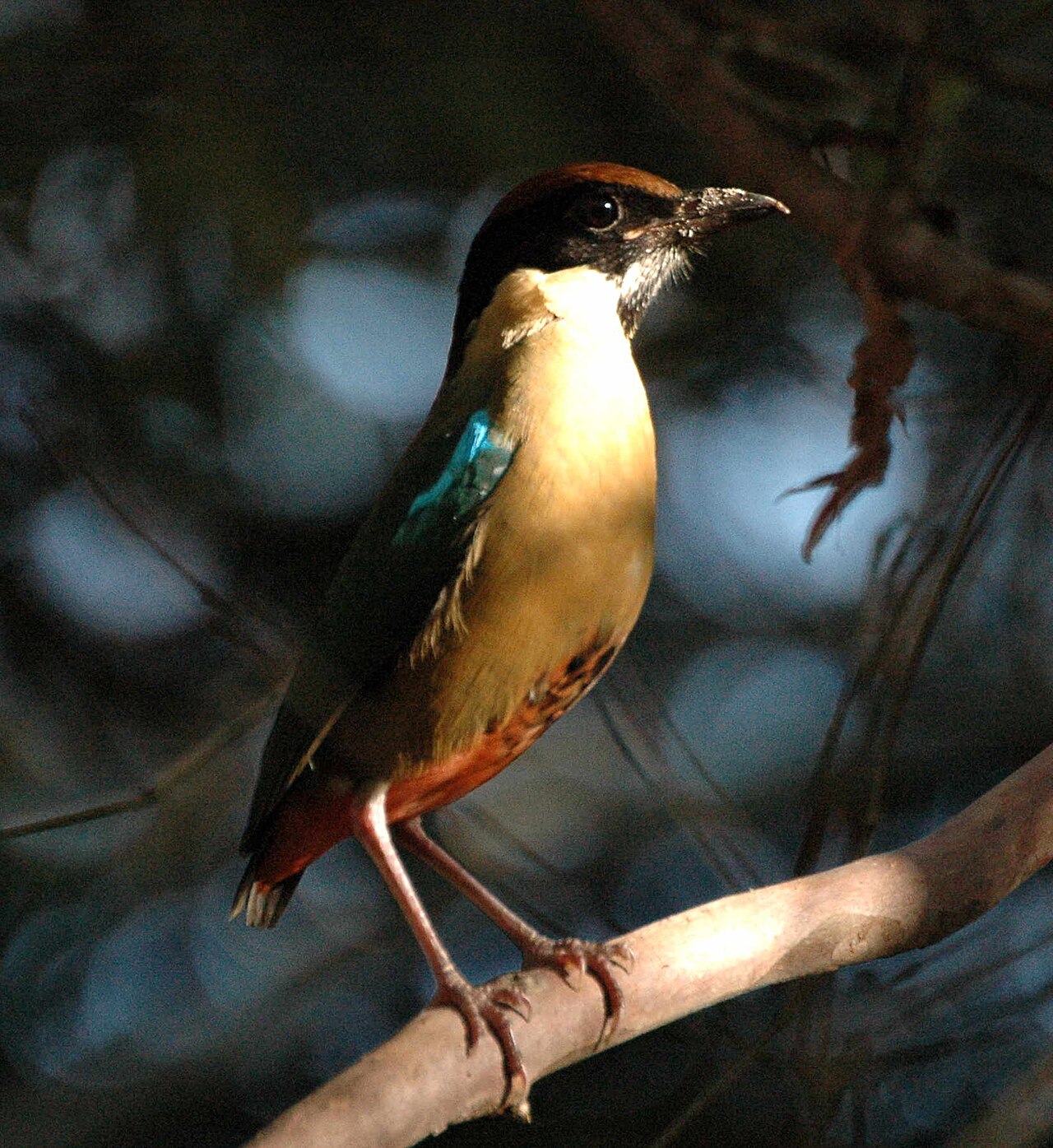
The Noisy Pitta is one of the most brilliantly coloured birds on the continent and at the same time one of the hardest to see: green, blue, black, buff and vivid red in a single squat, almost tailless body of twenty centimetres that walks the rainforest floor on long legs and vanishes into the dark under the ferns at the slightest movement. Whoever looks for it hears it first — a loud, far-carrying three-note whistle — and then often finds only its workplace: a stone or root buttress strewn with the broken shells of forest snails.
Voice
The hallmark of the species. The song is a loud, clear three-note whistle rendered in Australia by tradition as walk-to-work: two short notes and a longer, rising third. It carries hundreds of metres through dense rainforest and is given chiefly in the early morning and towards dusk, and besides that almost all day in the breeding season after rain. There is also a low growling keow as an alarm and soft churring between partners. Because the bird itself stays invisible, this whistle is in practice the only reliable way of establishing its presence; observers learn it first.
No freely licensed recording has been found for this species yet; what to listen for is described below.
Identification
Nineteen to twenty-one centimetres: a heavy, rounded bird with long sturdy legs, a short thick bill and a tail that hardly reaches past the wingtips. The head is black with a broad chestnut crown and nape; the back and wings are bright grass-green, with a conspicuous glossy turquoise-blue patch on the shoulder that in poor light is often the first thing seen. The underparts are warm buff with a black stripe down the centre of the belly; the undertail coverts are bright red. In flight a white patch flashes at the base of the primaries. The sexes look alike. Young birds are dull brown with a pale bill base and lack most of the colour pattern.
Confusion species
Rainbow Pitta (Pitta iris) is smaller, has an entirely black head with no chestnut crown, and is black below instead of buff; besides which it lives more than two thousand kilometres to the west, in the Top End and the Kimberley, so that the two nowhere meet. Papuan Pitta (Erythropitta macklotii) is smaller, has a blue breast band and a red belly, and touches this species' range only at the tip of Cape York. In Australia there is no other bird with this silhouette. Anyone who sees a gaudy, short-tailed bird shoot off across the forest floor in the east may therefore assume it is this species; real confusion arises rather by ear, where the three-note whistle is taken by inexperienced observers for a person whistling.
Habitat
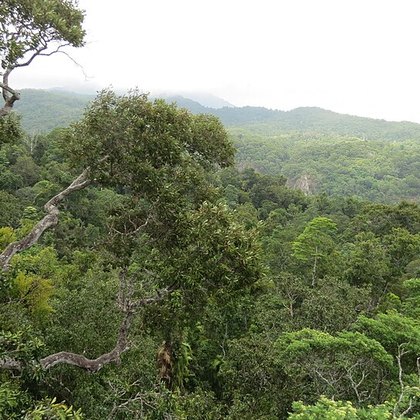
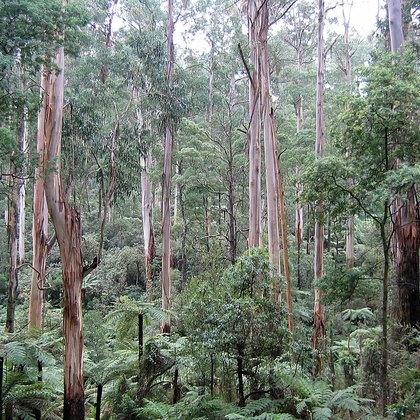
Tropical and subtropical rainforest with a dense, moist litter layer, and besides that wet eucalypt forest with a rainforest understorey and vine thicket. What the species chiefly requires is ground that stays damp all year and holds forest snails, earthworms, beetles and centipedes. Characteristic is its use of an anvil: the bird carries a land snail to a regular stone or exposed root and smashes the shell there, so that over time a little heap of fragments builds up. In winter birds from the southern part of the range move to lower, warmer forest and sometimes appear in mangroves and in gardens along the forest edge.
Where the bird is most often found, arranged by main group and formation.

Range and movements
Eastern Australia, from Cape York in the north along the coast and the eastern ranges to north-eastern New South Wales, roughly as far as the Hunter; outside Australia also in New Guinea. In the north the species is resident, in the south partly migratory: some of the breeding birds of New South Wales and southern Queensland leave the high forest in winter and move north or down to the coastal plain. In doing so they sometimes end up far outside the usual range, and in winter single birds turn up in city gardens in Brisbane and even in Sydney.
- Resident
- dark = core range, pale = thinly spread
Where and when to look
Expect to hear the bird rather than see it, and then reverse that by standing still. Walk a rainforest track early, wait for the three-note whistle, and then look not in the trees but on the ground, twenty to thirty metres off, in the shade under the ferns — the brilliant colours work there as camouflage among light flecks and leaves. Watch for little heaps of broken snail shells on a stone: they betray a settled presence even when no bird is calling. Stay on the track, because this bird walks in the understorey and retreats further with every step taken towards it.
Conservation
Least Concern (LC). The species is still common throughout its range and benefits from the fact that a good part of the eastern rainforest is now protected. Where rainforest has been cleared or reduced to narrow strips it has gone, for it needs continuous forest with a dense, moist litter layer; fragmented patches are too dry and too bright. Locally it is under pressure from feral pigs, which turn over the litter layer and eat out the snails and worms it lives on, and cats and foxes take birds off the ground. The severe bushfires of 2019 and 2020 damaged rainforest margins in parts of the southern range. None of these factors currently threatens the species on a national scale.
Scientific name
Pitta versicolor | Swainson, 1825
William Swainson described the species in 1825 from material out of 'Australasia', later fixed on New South Wales. The genus name Pitta comes not from Latin or Greek but from the Telugu of southern India, where pitta simply means 'small bird'; the word entered scientific language through the early British naturalists in India. The epithet versicolor is Latin for 'of many colours'. The English name Noisy Pitta names the loud whistle and the Spanish pita bulliciosa does the same; the Dutch Australische pitta places the bird geographically, which is somewhat misleading since the species also occurs in New Guinea and there are two further pittas in Australia.