All species › Parrots › Old World parrots › Northern Rosella
Northern Rosella | Platycercus venustus
Zwartkoprosella | Perico gracioso
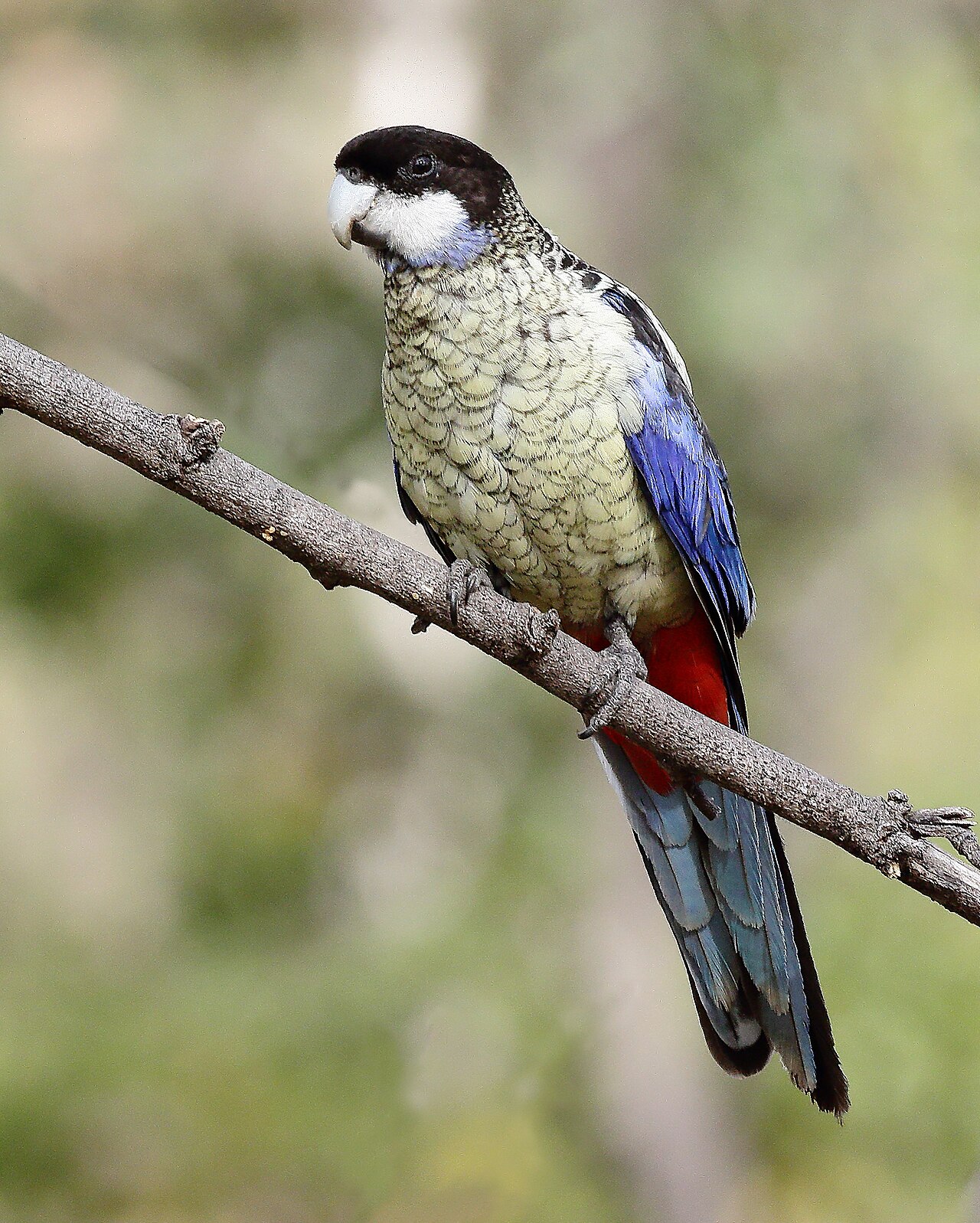
The Northern Rosella is the rosella of the tropical north and the only one with a jet-black crown and nape. Below that sit a white or blue-white cheek patch and pale yellow underparts in which every feather is finely edged black, so that breast and belly look scalloped at close range. It is shyer and far quieter than the other rosellas, and easily overlooked for it.
Voice
The flight note is a short, sharp chit-chut chit-chut, much less carrying than the screeching of the southern rosellas. From a perch comes a three-note rising whistle or a metallic piping, and feeding birds keep up a soft chatter. The species is sparing with sound altogether: anyone birding by ear has to lean well forward.
No freely licensed recording has been found for this species yet; what to listen for is described below.
Identification
A medium-sized rosella of about thirty centimetres, slim in build. Crown, forehead and nape are glossy black, the cheek white or blue-white, and the whole underside is pale straw-yellow with a fine black edge to every feather, giving a neat scalloped pattern. The mantle is black with yellow feather edges, the shoulder and wing coverts blue, the tail blue-green. The sexes are much alike; the female is duller and sometimes shows scattered red feathers on head and breast. Juveniles are washed out, with a less defined cheek patch and greyish rather than glossy black.
Confusion species
Pale-headed Rosella (Platycercus adscitus) is the closest relative and the obvious mistake, but has a pale yellow head with no black crown and plain light blue underparts with no scalloping; it also reaches no further west than Queensland, so the two ranges meet at most in the far north-west of that state. Hooded Parrot (Psephotellus dissimilis) shares the ground in Arnhem Land and the male likewise has a black hood, but it is smaller and slimmer, turquoise on breast and belly, and carries a big golden wing patch. Australian Ringneck (Barnardius zonarius), in its Cloncurry form, has a pale green head instead of black and a broad yellow belly band.
Habitat
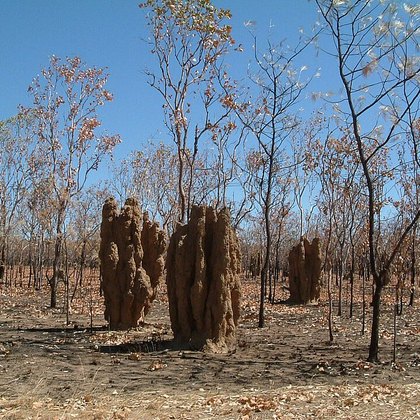
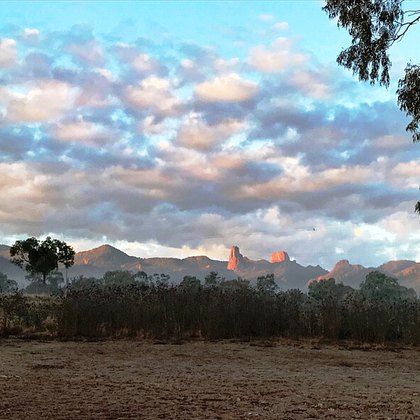
Grassy open eucalypt forest and savanna woodland, above all the deciduous savanna woodland of the monsoon belt, plus the vegetation along creeks, in gorges and around sandstone ridges and rock formations. It avoids dense forest. It feeds on grasses, seed and blossom, on the ground as well as in the canopy, and comes readily to water through the day. It nests in eucalypt hollows, mostly in the dry season.
Where the bird is most often found, arranged by main group and formation.


Range and movements
Northern Australia, from the Kimberley in Western Australia through the Northern Territory and Arnhem Land to the Gulf of Carpentaria and the western edge of Queensland. It does not occur further east or south; birds in south-eastern Australia are always escaped cage birds. Within that large range it is nowhere really numerous — this guide logs a small fraction of the records it holds for Pale-headed Rosella.
- Resident
- Winter
- dark = core range, pale = thinly spread
Where and when to look
In the dry season go at sunrise to a pool or a dam in Northern Territory savanna woodland and wait: it drinks in pairs or in parties of six to eight and then slips back into the canopy. Work on silhouette, the black head against the pale underside, because that needs no fine light. Expect no noise: disturbed, it goes silently and high into the leaves.
Conservation
Least Concern (LC): the range is large and the population counted as stable, but the bird is uncommon everywhere and lives at low densities, which makes the label less reassuring than it sounds. The main concerns across northern Australia are the altered fire regimes in savanna woodland, which cost old hollow trees, and grazing that hits the grass seed it lives on. It was once trapped on a considerable scale for the bird trade. The species is listed on CITES Appendix II.
Scientific name
Platycercus venustus | (Kuhl, 1820)
Kuhl described the species in 1820 as Psittacus venustus; because it was later moved to another genus, author and year stand in parentheses. The genus Platycercus was introduced by Vigors in 1825, from Greek platus, 'broad', and kerkos, 'tail'. venustus is Latin for 'charming' or 'graceful'. The description rests on a specimen collected by Robert Brown in February 1803 in northern Australia, during Flinders' voyage in the Investigator. Two subspecies are recognised: venustus with mostly white cheeks and hillii in the west, with bluer cheeks, narrower black feather edges below and a longer, broader bill.