All species › Birds of prey › Ospreys › Osprey
Osprey | Pandion haliaetus
Visarend | Aguila pescadora
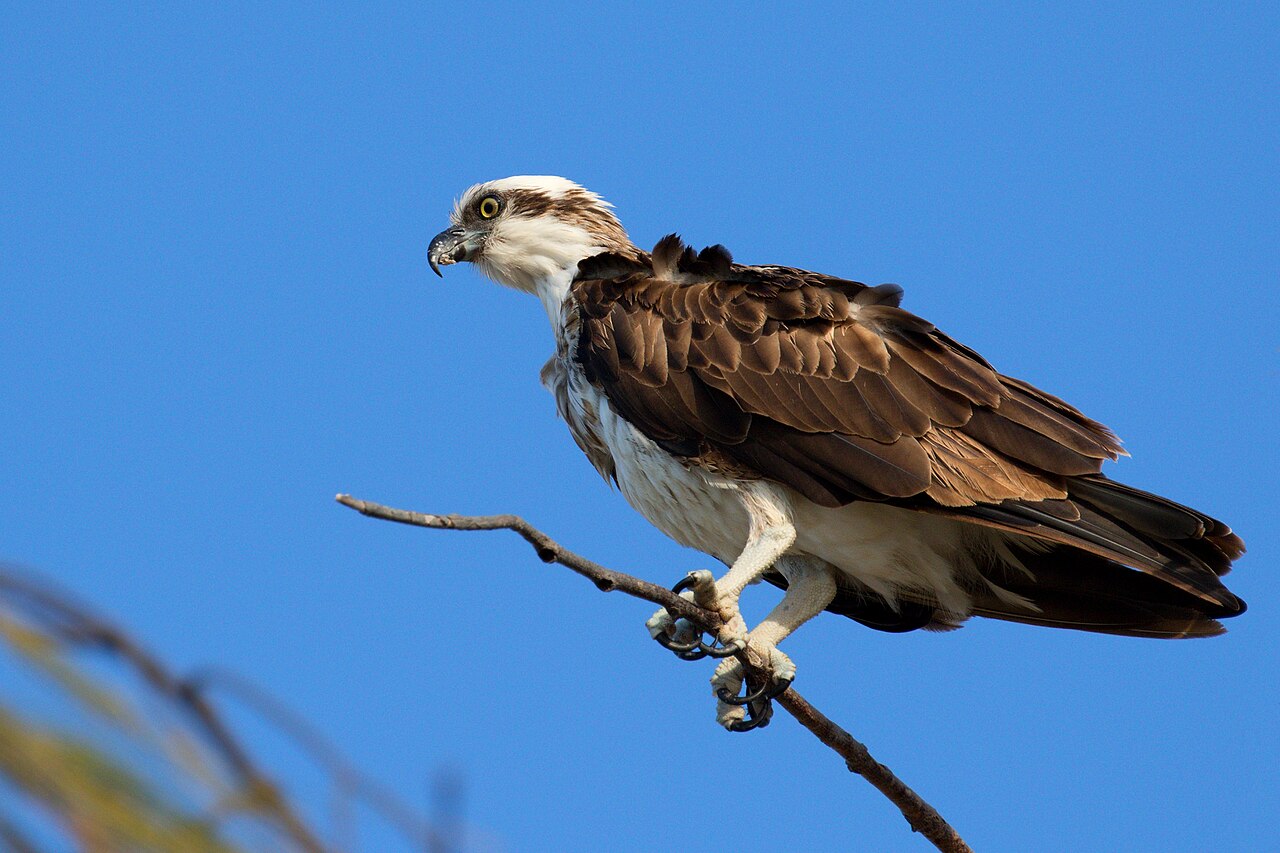
On the Australian coast the Osprey is a resident bird: a pair holds the same nest tree or the same rock year after year, often within sight of a crowded beach. It eats almost nothing but fish, which it takes feet-first from the water and tears apart on a post or a branch. It is the same species as the European bird, but here it behaves in an entirely different way.
Voice
At the nest and between partners comes a series of short, high whistles that quickens and rises towards the end: tyoo tyoo tyoo. Disturbed, that turns into a shrill repeated screaming audible the length of a beach. Birds hunting alone are almost always silent, so the sound belongs around the nest site and not out over the water.
Recording: Doug Hynes — CC BY-SA 4.0 · Owls Head, Nova Scotia, Canada · xeno-canto
Identification
A long, narrow raptor, white below, dark brown above, with a white head crossed by a broad black stripe through the eye. In flight it holds the wings kinked at the wrist, with long spread primaries and a conspicuous black patch at the carpal joint; from below the wing is white with dark bars. The female is larger and carries a fuller, darker band across the breast, faint or absent in the male. A short, ragged crest on the crown is raised when the bird is excited. The outer toe can be turned to the rear and the soles carry sharp spicules, so that a slippery fish does not work loose.
Confusion species
White-bellied Sea Eagle (Icthyophaga leucogaster) hunts the same coast but is far larger, grey rather than brown above, without an eye-stripe, and with a short wedge tail held in an obvious V when soaring. Brahminy Kite (Haliastur indus) has an entirely white head and breast and a chestnut body. Whistling Kite (Haliastur sphenurus) is dull sandy brown with a long tail and picks fish up without diving. In the dive the Osprey is unmistakable: it hangs briefly on beating wings, folds them and hits the water feet first.
Habitat
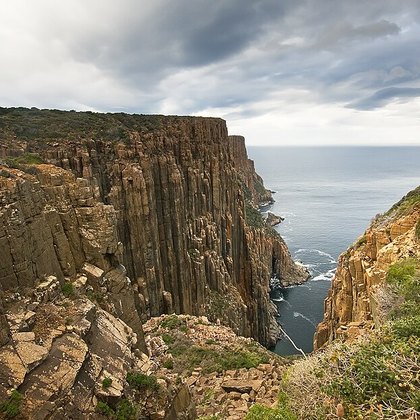
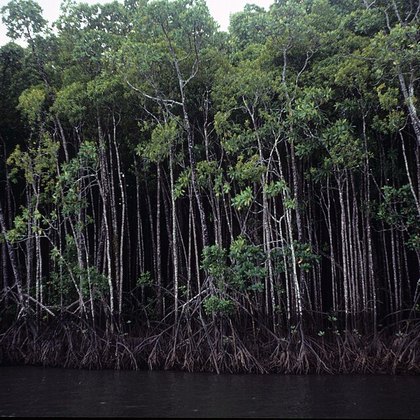
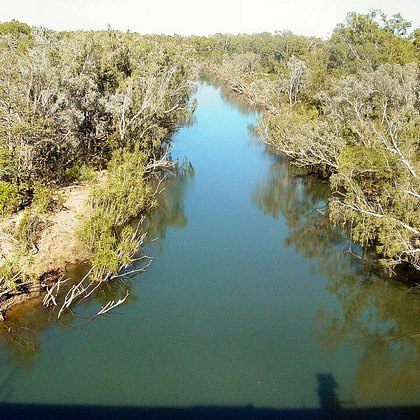
The coast above all: estuaries, mangrove creeks, coral reefs, sandbanks and rocky shores with a lookout above them. Beyond that the lower reaches of rivers, coastal lagoons and, in the north, reservoirs and water storages well inland. What it needs is clear, shallow water in which a fish of half a kilo shows, and a tall dead branch, cliff or pole to nest and eat on.
Where the bird is most often found, arranged by main group and formation.



Range and movements
Along the north and east coasts from Broome to the south coast of New South Wales, and again on the southern coast from Kangaroo Island to the Great Australian Bight and in the west from Esperance to Cape Keraudren. Tasmania and most of the Victorian coast stay empty, and in New Zealand it is no more than a very rare vagrant. The Australian birds are resident and keep their nest for years; only young birds wander, over twenty to four hundred kilometres. Outside the area of this guide the species also occurs in the Philippines, Indonesia and New Guinea.
- Resident
- dark = core range, pale = thinly spread
Where and when to look
Look along an estuary for a great pile of sticks on a dead tree, a navigation pole or a rock stack; the nest stays the same for years and gives the pair away the whole year round. Check the wrist kink and the black carpal patch on every raptor that crosses the water. Keep your distance from the nest even outside the breeding season, because the pair uses the same place to roost and to eat.
Conservation
Not threatened (LC) and locally numerous along the tropical coast, but thinly spread in the southeast and vulnerable at the edge of the range. The loss of tall dead trees at the waterline is the main constraint; artificial nest poles are taken up quickly and have restored numbers on some coasts. Disturbance of the nest site by boats and walkers costs broods, and polluted or turbid water makes hunting impossible.
Scientific name
Pandion haliaetus | (Linnaeus, 1758)
Linnaeus described the species in 1758 as Falco haliaetus; because it was later placed in a genus of its own, author and year stand in parentheses. The genus Pandion was introduced by Savigny in 1809 and refers to Pandion, king of Athens in the Greek tales; the epithet haliaetus is Greek for sea eagle. The type locality is Europe, restricted by Linnaeus himself to Sweden in 1761. The Australian birds were long treated as a species of their own, Pandion cristatus Vieillot, 1816; AviList v2025b merges them back into Pandion haliaetus, and this guide follows that.