All species › Waders, gulls and terns › Buttonquails › Painted Buttonquail
Painted Buttonquail | Turnix varius
Bonte vechtkwartel | Torillo pintojo
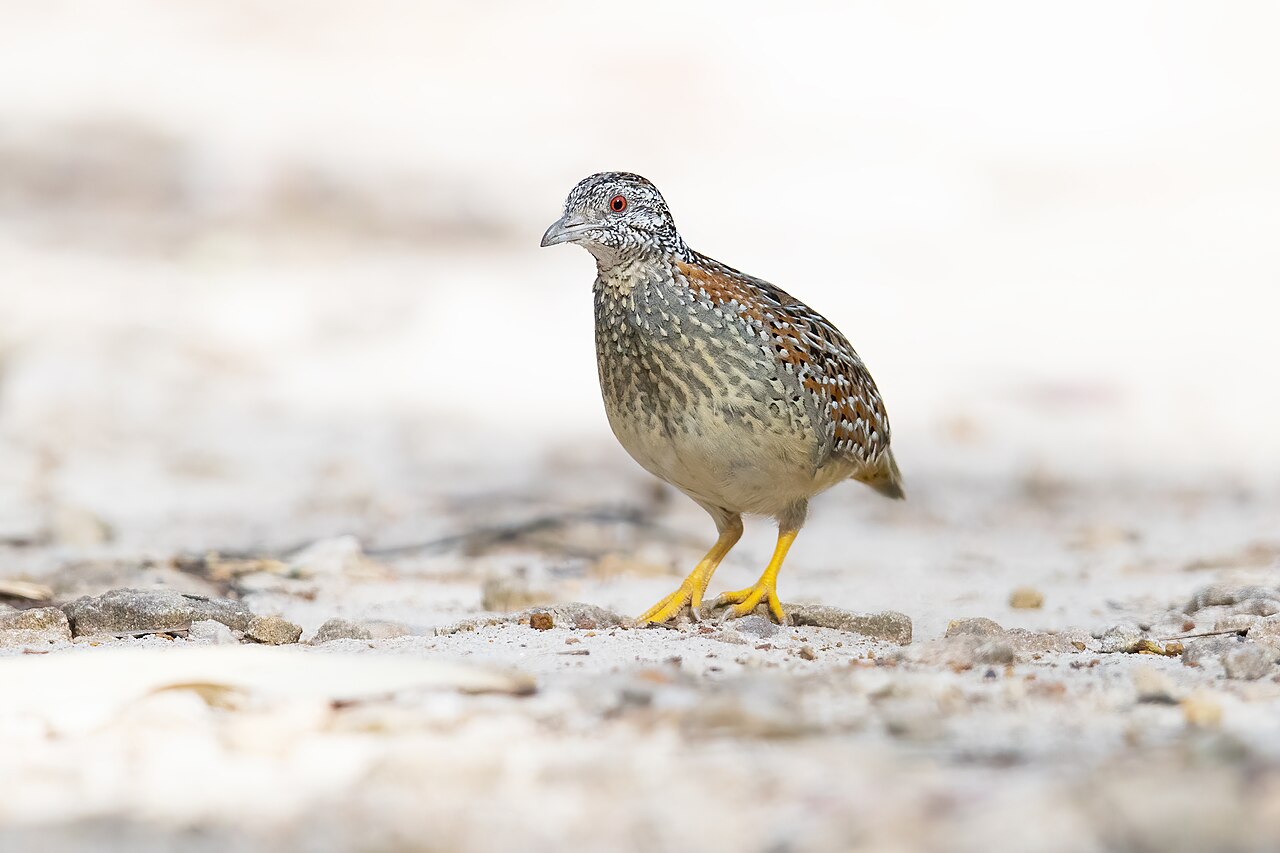
The Painted Buttonquail is the largest and most richly marked buttonquail in Australia, a bird of dry eucalypt forest with a deep layer of leaf litter. It is grey-brown, strewn across back and flanks with pearl-white, black-edged drop spots, and is the only buttonquail in the guide with an orange-red eye. As in all buttonquails the female is the larger and the finer marked of the pair: she calls, she wins the males, and she leaves the incubating and the rearing to them.
Voice
The calling sex is the female, and her voice is a low, hollow booming oom, repeated every few seconds and swelling slowly in strength through a series — a sound that in the forest seems to come from all sides and is next to impossible to place. She calls mainly in the early morning, at dusk and at night. Between birds there is also a soft, clipped coo. The male is all but silent, and a flushed bird makes nothing but the loud whirr of its wings.
No freely licensed recording has been found for this species yet; what to listen for is described below.
Identification
A round, short-tailed ground bird of seventeen to twenty-three centimetres, with three toes: the hind toe is missing, which separates all buttonquails from the true quails. The plumage is grey-brown, marbled across the whole upperside with black, chestnut and white, with a rufous patch on shoulder and nape and with conspicuous pearl-white, black-rimmed drop spots on wing coverts and flanks. The bill is blue-grey, the legs pale flesh, and the eye of the adult is orange-red — a mark no other Australian buttonquail carries, for all of those have a pale, whitish eye. The sexual difference runs the other way round: the female is larger, heavier and far warmer chestnut on neck and shoulder, the male smaller, duller and more finely marked. This reversed sexual dimorphism is unique among Australian birds to this family. In flight the bird looks pale and short-winged, whirrs low across the ground and drops in again after a few tens of metres.
Confusion species
Little Buttonquail (Turnix velox) is smaller, much paler and sandy, with a white flank stripe and a white eye, and belongs in open grassland rather than in litter-floored forest. Red-chested Buttonquail (T. pyrrhothorax) and Red-backed Buttonquail (T. maculosus) are both smaller and have an orange-rufous rather than a spotted breast, and lack the pearly drops. Chestnut-backed Buttonquail (T. castanotus) of the tropical north-west has an even chestnut mantle without the fine marbling, and does not overlap with this range. Black-breasted Buttonquail (T. melanogaster) of south-east Queensland is larger still, and its female has head and breast black with white speckling instead of grey with drop spots. Spotted Quail-thrush (Cinclosoma punctatum) shares the litter forest and the walking habit but is a songbird with a long tail and a hind toe; Brown Quail (Synoicus ypsilophorus) is a true quail, darker, with a hind toe and without the white drops.
Habitat
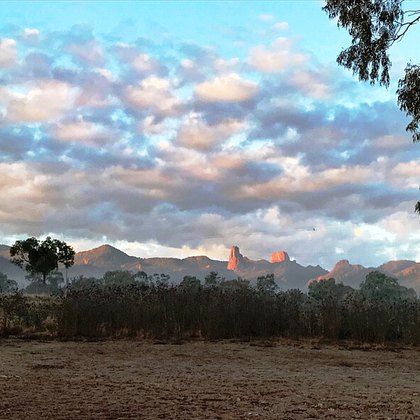
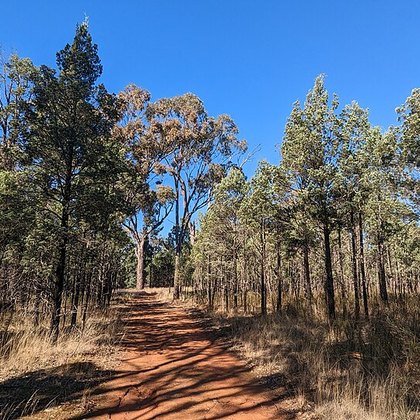
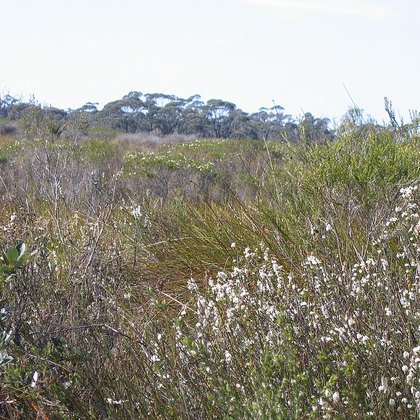
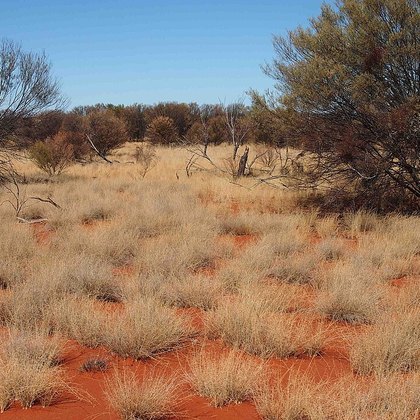
Dry eucalypt forest and open woodland with a deep layer of leaf litter and a grassy or shrubby understorey, where it spends the whole day foraging. Also casuarina and callitris woodland, acacia scrub, eastern heath and wooded coastal dunes, and locally in plantations and rank forest edges. What it needs is litter to turn in and cover to vanish into; bare grazed forest and open grassland it passes by.
Where the bird is most often found, arranged by main group and formation.
Range and movements
Eastern and south-eastern Australia, from Cape York Peninsula through Queensland, New South Wales and Victoria to south-eastern South Australia, plus Tasmania and the Bass Strait islands. A wholly separate population sits in south-western Western Australia, and on the Houtman Abrolhos lives the distinct form scintillans, sometimes split as a species of its own. Within that range it is local and shy, and its presence more often shows in signs than in sightings. It does not reach New Zealand.
- Resident
- dark = core range, pale = thinly spread
Where and when to look
Do not look for the bird but for its work: the Painted Buttonquail leaves round, bare platelets five to fifteen centimetres across in the leaf litter, made by pivoting on one leg while scratching with the other. Fresh platelets under eucalypts point to the species with certainty. Then walk that patch of forest very slowly and be ready for a bird that flushes only at a metre; look straight at the eye, because orange-red is proof here.
Conservation
Least Concern (LC), with a large range and a population still common in the forests of the east. Even so it has fallen back sharply wherever the litter layer goes: too-frequent fire management, stock grazing and the tidying away of dead wood remove exactly what it lives on. Foxes and feral cats take their share of a bird that does virtually everything on the ground. Because it so rarely shows itself, every trend estimate for the species stays uncertain.
Scientific name
Turnix varius | (Latham, 1801)
Latham described the species in 1801 as Perdix varia; because it was later placed in another genus, author and year stand in parentheses. The genus Turnix was introduced by Bonnaterre in 1791 and is a shortening of Latin coturnix, 'quail'. varius means 'variegated' or 'parti-coloured', after the richly marbled plumage. The type locality is New South Wales.