All species › Tubenoses › Petrels, shearwaters and diving petrels › Pintado Petrel
Pintado Petrel | Daption capense
Kaapse stormvogel | Petrel Pintado
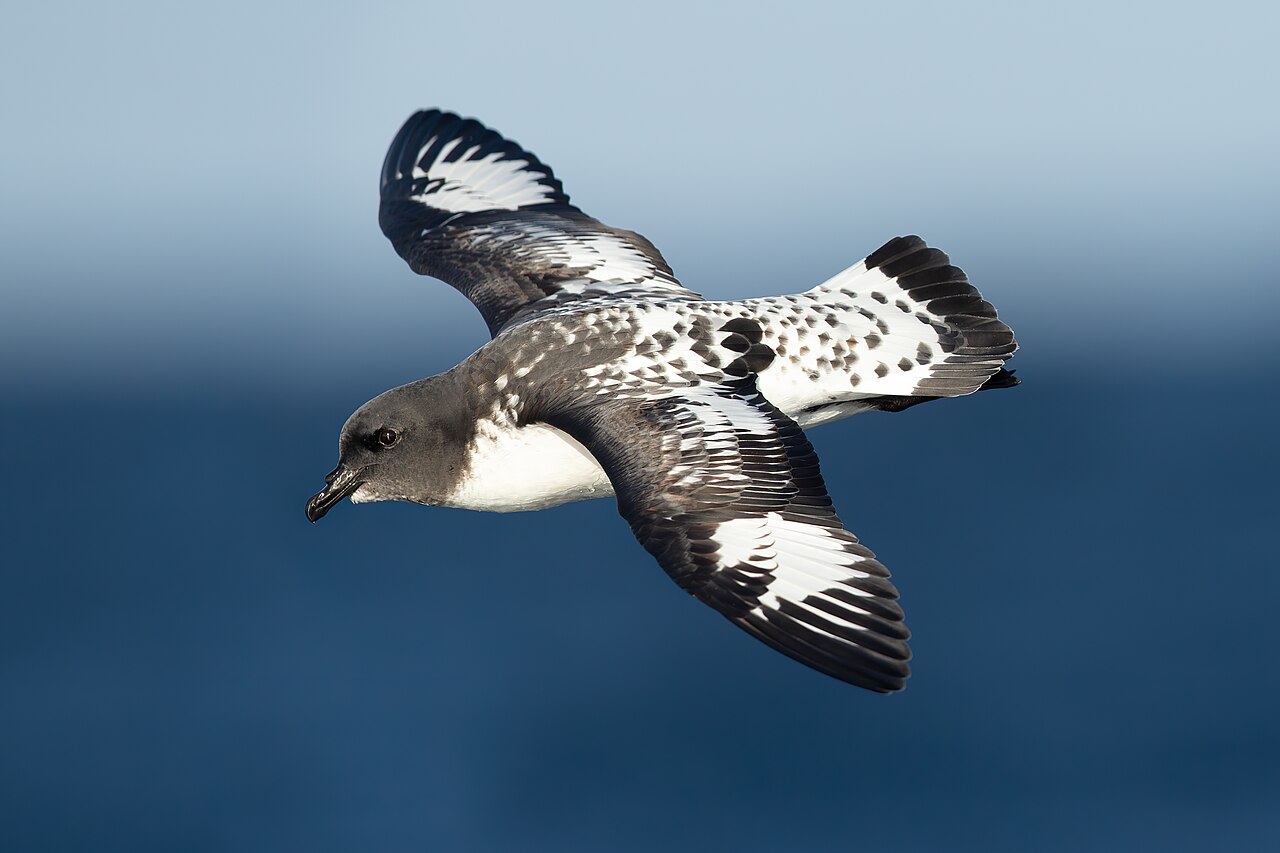
The Cape Petrel is the one southern petrel nobody has to identify: chequered black and white like a draughtboard, noisy, and always the first bird to appear behind a boat. It breeds on the rocks of the subantarctic islands and of Antarctica and then ranges across the cold and cool seas of this whole region.
Voice
For a petrel it is talkative. At the nest it gives a fast cackling and churring ka-ka-ka-kerrr, and at sea a group fighting over food turns loud and quarrelsome, with short hard cries and clattering bills. Anyone on a pelagic trip who suddenly hears shouting behind the boat is usually hearing this species.
No freely licensed recording has been found for this species yet; what to listen for is described below.
Identification
A petrel of forty centimetres with a blackish-brown head, neck and mantle, and a back and upperwing heavily chequered black on white, with a large white patch on each wing. The underparts are white, the underwing white with a black margin, the rump white and the tail ends in a black band. The sexes are alike and young birds cannot be told from old. Flight is fast and stiff, on short beats and glides on flat wings; over food it settles on the water or patters across it with wings open. Birds of the New Zealand islands, subspecies australe, are darker and show less white than those from Antarctica.
Confusion species
There is hardly any confusion, and with this bird that is the message. Antarctic Petrel (Thalassoica antarctica), a rare visitor from the south, has a clean-cut brown and white pattern without chequering and a wholly white trailing wing. At distance a flock of Cape Petrels can look like prions or terns, but prions are blue-grey with a dark M across the upperwing. A Snow Petrel is entirely white with a black bill.
Habitat
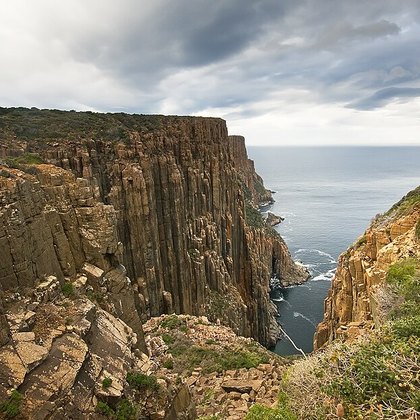
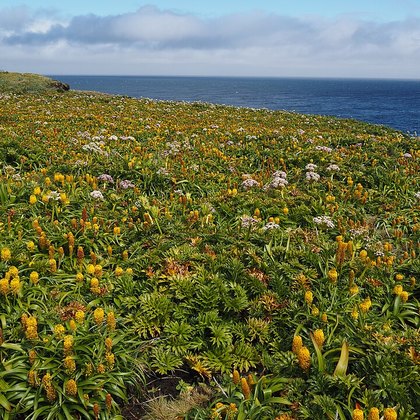
Cold and cool water, from the subantarctic sea to over the continental shelf, and in winter into bays and harbours. It breeds on ledges and in crevices of sea cliffs and rocky slopes, usually in small loose colonies, favouring sites out of reach of ground predators. It avoids warm tropical water.
Where the bird is most often found, arranged by main group and formation.


Range and movements
Circumpolar in the south. Within this region the subspecies australe breeds on the Snares, Bounty, Antipodes, Auckland and Chatham Islands, with over seven thousand pairs on the Snares alone at the 1984 count. Around New Zealand it can be seen all year and, in the breeding season from November to February, especially from Cook Strait south. In Australian waters, by contrast, it is chiefly a winter visitor: May to September along the southern coasts, most numerous off Tasmania, Victoria and southern New South Wales, and in cold years north to Sydney and Perth.
- Resident
- Breeding (summer)
- Winter
- Passage
- dark = core range, pale = thinly spread
Where and when to look
In the Australian winter, between May and August, take a pelagic trip out of Wollongong, Portland or Eaglehawk Neck: the Cape Petrel is usually the first species at the berley and comes within a few metres. In New Zealand a boat from Kaikoura will do in any season. Use it as a yardstick: every other petrel behind the boat is easier to size up with this one beside it.
Conservation
Least Concern (LC), with a world population of several million birds and hundreds of colonies. On the breeding grounds skuas and, where mammals have been introduced, rats and cats are the main enemies; at sea birds are lost as bycatch behind longliners, though the species is less prone to that than the albatrosses. Plastic in the food has been documented in this surface-feeding bird.
Scientific name
Daption capense | (Linnaeus, 1758)
Linnaeus described the bird in 1758 as Procellaria capensis; because it was later placed in another genus, author and year stand in parentheses. The genus Daption was introduced by Stephens in 1826 and is an anagram of pintado, the Spanish and Portuguese word for painted by which sailors knew the bird — the English name Pintado Petrel preserves it. capense means of the Cape. The type locality is the Cape of Good Hope, and the Dutch name comes from there as well.