All species › Passerines › Whiteheads › Pipipi
Pipipi | Mohoua novaeseelandiae
Finschia | Mohoua pipipí
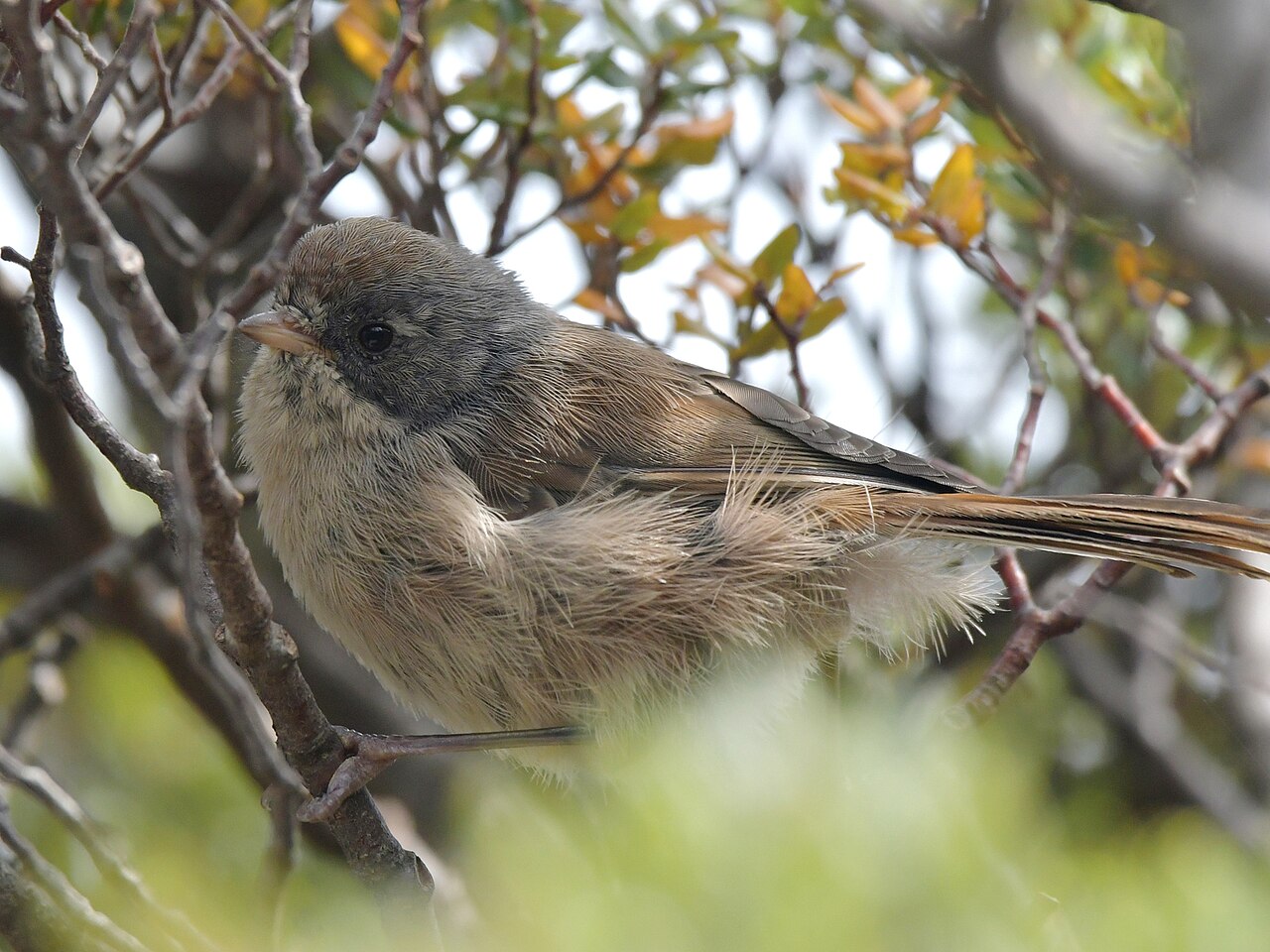
The Pipipi is the small brown forest bird of the South Island and Stewart Island: barely thirteen centimetres, almost never alone, and year-round the noisy core of the mixed flocks that move through the beech forest. When an observer in that forest suddenly has movement and high piping all around, it is almost always a party of Pipipi going past, with tomtits and silvereyes in its wake. Of the three species of the genus Mohoua, which occurs nowhere but New Zealand, this is the only one still doing well nearly everywhere on the South Island mainland.
Voice
The name the bird carries in Maori and now in English too is its contact call: a fast, high, repeated pipipi that a flock keeps up continuously and that sounds through the forest like a sustained tinkling. It is the sound by which the flock is heard coming long before anything is seen. The male's song is a short, hurried cascade of slightly husky sliding notes, canary-like but rougher and without the clear bell tone of the bellbird; he sings from a branch halfway up a tree and keeps it to a few seconds. On alarm the contact call turns into a sharper, more staccato chatter that the whole flock takes up.
No freely licensed recording has been found for this species yet; what to listen for is described below.
Identification
Thirteen centimetres, a good part of it tail. Head and neck are ash-grey with a pale greyish-white eyebrow running back behind the eye, giving the face an open, friendly look; the back, wings and tail are warm cinnamon-brown, the underparts creamy white with a faint buff wash on the flanks. The eye is dark, the bill short, fine and black, the legs grey. The tail has a slightly notched tip. The sexes look alike; the male is a little larger. Behaviour helps more than plumage: the bird is restless, hangs upside down from twigs and leaves like a tit, and works a tree systematically, always in company.
Confusion species
Yellowhead (Mohoua ochrocephala) shares the South Island beech forest with this species and forages in parties in the same way, but has a bright yellow head and breast against the grey head and brown back of the Pipipi, and at fifteen centimetres is noticeably larger and stockier. Whitehead (Mohoua albicilla) has a white head and occurs only on the North Island, so the two nowhere meet. Grey Warbler (Gerygone igata) is smaller, plain grey without a brown back, and has a red eye and a long wavering quavering song. Silvereye (Zosterops lateralis) travels in the same flocks but carries a conspicuous white eye-ring and is olive-green rather than brown. Rifleman (Acanthisitta chloris) is smaller again, green and practically tailless.
Habitat
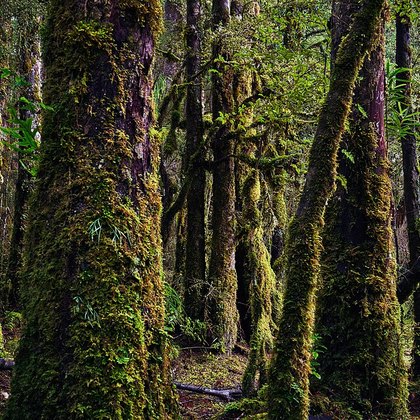
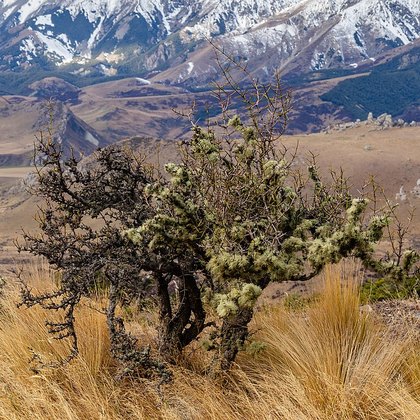
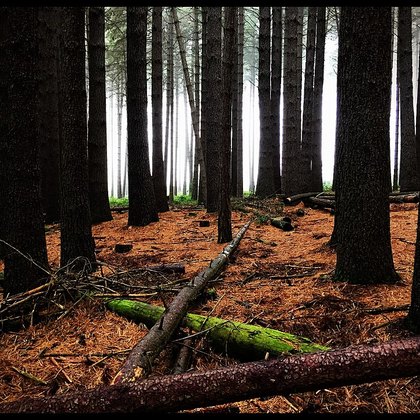
Native forest in the widest sense: southern beech forest, mixed podocarp-broadleaf forest, and on Stewart Island the wind-stunted forest edges as well. The species is less particular than the other two Mohoua and holds on in manuka and matagouri scrub, in regenerating shrubland and even in mature pine plantation, provided there is a dense, insect-rich shrub layer. It forages right through the forest, from the canopy down into low shrubs, gleaning insects and spiders from leaves, twigs and bark; in autumn it takes berries as well. That breadth is exactly why it endures better than the Yellowhead, which is tied to old forest with cavities.
Where the bird is most often found, arranged by main group and formation.

Range and movements
Endemic to New Zealand and confined to the South Island, Stewart Island and a long series of surrounding islands, among them Ulva and the islands of the Marlborough Sounds. It is entirely absent from the North Island, where Whitehead takes its place. Within the South Island it is widespread from the coast to the treeline, at its densest in the beech forest of Westland, Fiordland, Nelson and the Catlins. There is no migration: flocks stay in the same block of forest all year, though they range somewhat more widely in winter.
- Resident
- dark = core range, pale = thinly spread
Where and when to look
Do not look for the bird, listen for the flock. Stand still in native forest and wait for the sustained high tinkling to come slowly closer; then keep still and let the party pass around you, because a flock that is not chased often comes within a few metres. In those few minutes look for the grey head with its pale eyebrow against the brown back, and at the same time count what else is in the flock — for nearly all the small forest birds of the South Island this is the easiest way to see them.
Conservation
Not threatened (LC). The Pipipi is by far the best off of the three Mohoua: it nests in the open in shrubs and low trees rather than in tree cavities, and that makes it far less vulnerable to rats and stoats than the hole-nesting Yellowhead, which cannot leave the nest when the predators arrive. It has, however, gone from the lower, cleared parts of the South Island along with the forest itself, and in years when the beech seeds heavily and rat numbers explode this species too suffers losses. Against that, it recolonises new shrubland and plantings quickly. It is the principal host of the Long-tailed Cuckoo (Urodynamis taitensis) on the South Island, so the fortunes of that brood parasite are tied to its own.
Scientific name
Mohoua novaeseelandiae | (Gmelin, 1789)
Johann Friedrich Gmelin described the species in 1789 from Latham's material out of Dusky Sound on the south-west coast of the South Island, as Parus novaeseelandiae — he took the bird for a tit, which given its behaviour is understandable. The epithet simply means 'of New Zealand'. The genus name Mohoua is Maori. The Dutch name finschia goes back to the old genus name Finschia, which the bird carried for a time and which was formed after the German ornithologist Otto Finsch; in Dutch that scientific name stuck after it had been abolished scientifically. English long called the species Brown Creeper, a name that clashed with the North American treecreeper and has since been replaced by the Maori name Pipipi. Spanish uses mohoua pipipi.