All species › Passerines › Honeyeaters › Purple-gaped Honeyeater
Purple-gaped Honeyeater | Lichenostomus cratitius
Purperteugelhoningeter | Mielero de boqueras
The Purple-gaped Honeyeater is the mallee bird among honeyeaters: a grey-olive bird of the low, many-stemmed eucalypts of semi-arid southern Australia, known by a narrow strip of purple bare skin along the gape. That purple is the only truly distinctive mark in a group where everything is olive-green and yellow-grey, and it is not always clearly visible. Together with Yellow-tufted Honeyeater it is the last species still carrying the name Lichenostomus.
Voice
It prefers to sing before sunrise, from a projecting branch above the mallee (low, multi-stemmed eucalypt scrub of dry southern Australia). The song is a clear, repeated series often written as toweet toweet toweet, followed by a higher, sharper run of yep yep yep. Apart from that there are short contact calls between the birds of a party. Because the mallee is low and dense and the bird disappears into it easily, that early song is often the most reliable way of establishing that it is there at all.
Recording: Eddy Smith — CC BY-NC-SA 4.0 · Monarto South, South Australia, Australia · xeno-canto
Identification
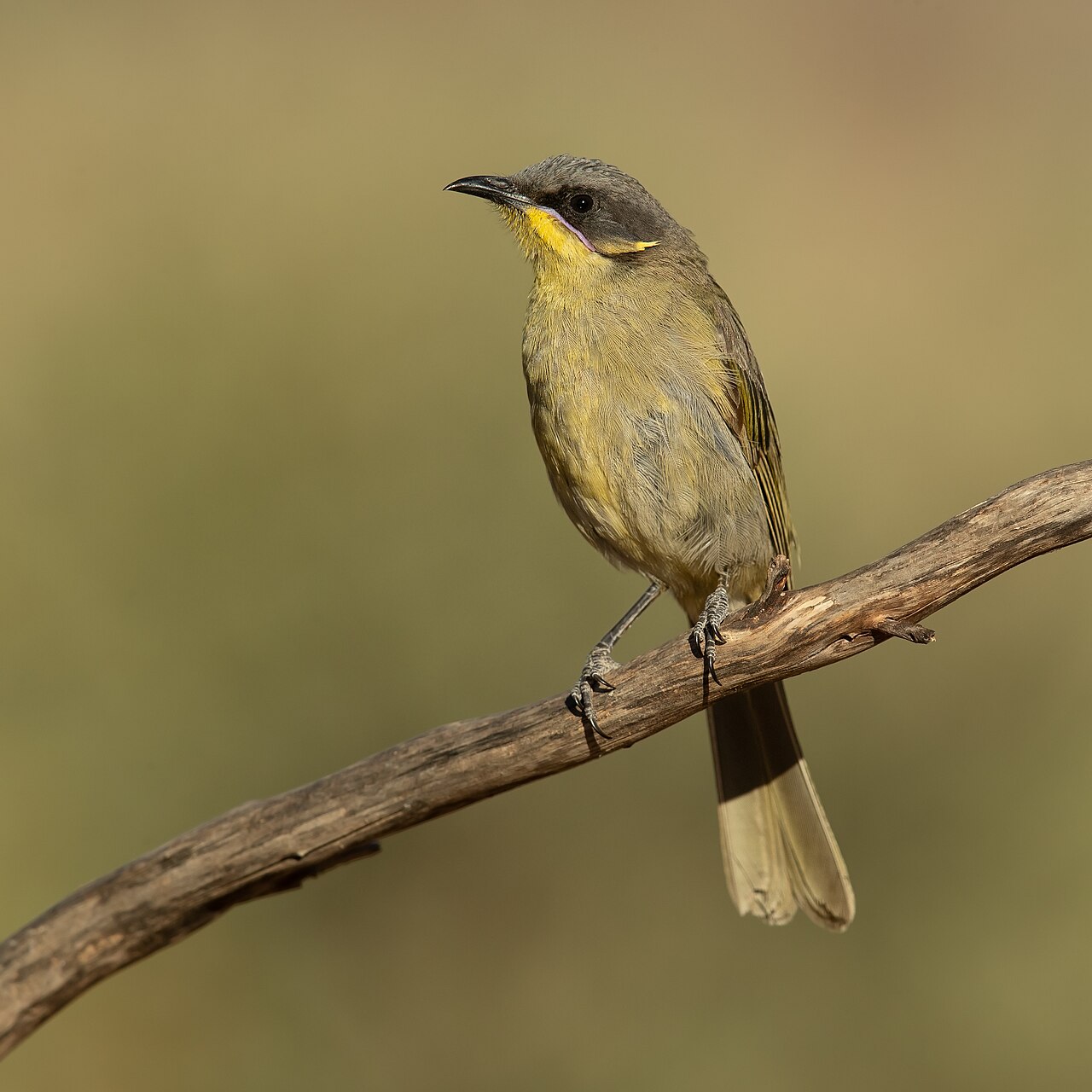
A honeyeater of sixteen to nineteen centimetres, grey-olive on back and wings and pale buffish yellow below. The head carries a black eye-stripe, below it a yellow streak along the side of the throat, and at the end of the ear coverts a pointed yellow ear patch with a black border. The feature it is named for is the narrow strip of bare skin along the gape, bright purple to lilac in adults; in young birds and in birds outside the breeding season it is much duller and sometimes barely visible. Young birds are browner and duller overall. The birds of Kangaroo Island are larger and darker than those of the mainland.
Confusion species
It belongs to the old Lichenostomus problem and has above all to be separated from its own congener. Yellow-tufted Honeyeater (Lichenostomus melanops) has a bright yellow forehead, crown and throat and a glossy black mask, and lives much further east in wetter eucalypt forest. Yellow-faced Honeyeater (Caligavis chrysops) has a single narrow yellow face stripe and no purple along the gape. Yellow-plumed Honeyeater (Ptilotula ornata) shares the mallee with it and is very similar in build and colour, but is smaller, has a black and yellow neck plume and lacks the purple gape entirely; where both sit in the same bush, that is the distinction that counts. White-eared Honeyeater (Nesoptilotis leucotis) has a black head with a large white ear patch, and Bridled Honeyeater (Bolemoreus frenatus) and Eungella Honeyeater (Bolemoreus hindwoodi) live in an altogether different part of Australia. Be honest about the limit: on dull, worn birds the purple can be impossible to establish and only the head pattern is left.
Habitat
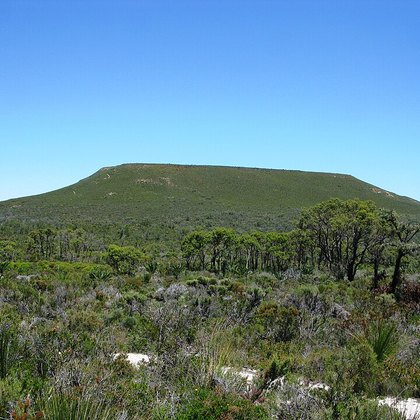
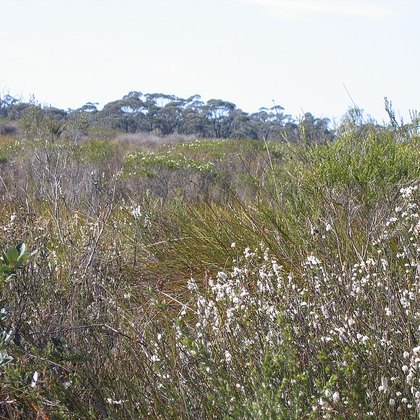
Mallee is the core country — low eucalypts throwing up a bundle of stems from an underground lignotuber — along with tall heath, kwongan (species-rich heath-like scrub of south-western Australia) and dry eucalypt forest and woodland with a heathy understorey. It takes nectar and insects from flowering eucalypts and banksias, searches under bark for prey and also hawks flying insects. It is usually in pairs or parties of three to eight, occasionally in loose gatherings of up to thirty. It drinks and bathes regularly, particularly in warm weather, which makes it conspicuous at water. Despite widely separated subpopulations, genetic variation within the species is remarkably low.
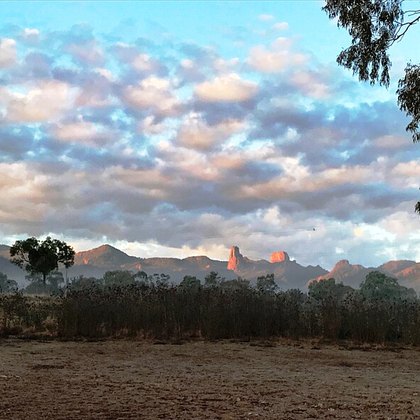
Where the bird is most often found, arranged by main group and formation.

Range and movements
Semi-arid southern Australia, in two main parts: south-western Western Australia, and an eastern area across the mallee belt of South Australia, north-western Victoria and the far south-west of New South Wales, where the north-eastern limit of the range lies. Kangaroo Island holds its own larger and darker form. The range is split into separate populations because the mallee itself is fragmented over long distances. It is sedentary and moves little. It does not occur in New Zealand.
- Resident
- dark = core range, pale = thinly spread
Where and when to look
Stand still before sunrise at the edge of a block of old mallee and wait for the clear, repeated series from a projecting branch; that is far and away the surest way to find it. By day, look for it at a drinking place or a stock dam, because it drinks and bathes often. Once the bird is in view, look straight at the base of the bill: the narrow purple strip along the gape is the decisive mark, but it wants good light and a bird in fresh plumage. If that fails, use the pointed, black-edged yellow ear patch to separate it from Yellow-plumed Honeyeater.
Conservation
Least Concern (LC) internationally, but regionally the species does less well: it is listed as vulnerable in New South Wales and Victoria and as rare in South Australia. The cause is always the same: clearing of mallee for cropping has reduced its habitat in the south-eastern states to separate islands, and what remains is vulnerable to large fires, which leave mallee country unsuitable for a long time. For this species, keeping extensive blocks of old mallee is the heart of the matter.
Scientific name
Lichenostomus cratitius | (Gould, 1841)
John Gould described the species in 1841 as Ptilotis cratitius; the parentheses around his name show that it later changed genus. It ended up in Lichenostomus, introduced by Jean Cabanis in 1851 from Greek leichēn, 'lichen' or 'callous', and stoma, 'mouth' — for the callous gape that is at its most conspicuous in this very species. After the split of 2011 only this species and Yellow-tufted Honeyeater were left in that genus. The epithet cratitius is Latin and means 'made of wickerwork'. The English name Purple-gaped Honeyeater, the Dutch purperteugelhoningeter and the Spanish mielero de boqueras all point at the gape stripe, each with its own word for the same place on the face.