All species › Passerines › Whistlers and allies › Rufous Whistler
Rufous Whistler | Pachycephala rufiventris
Grijsrugfluiter | Silbador rufo
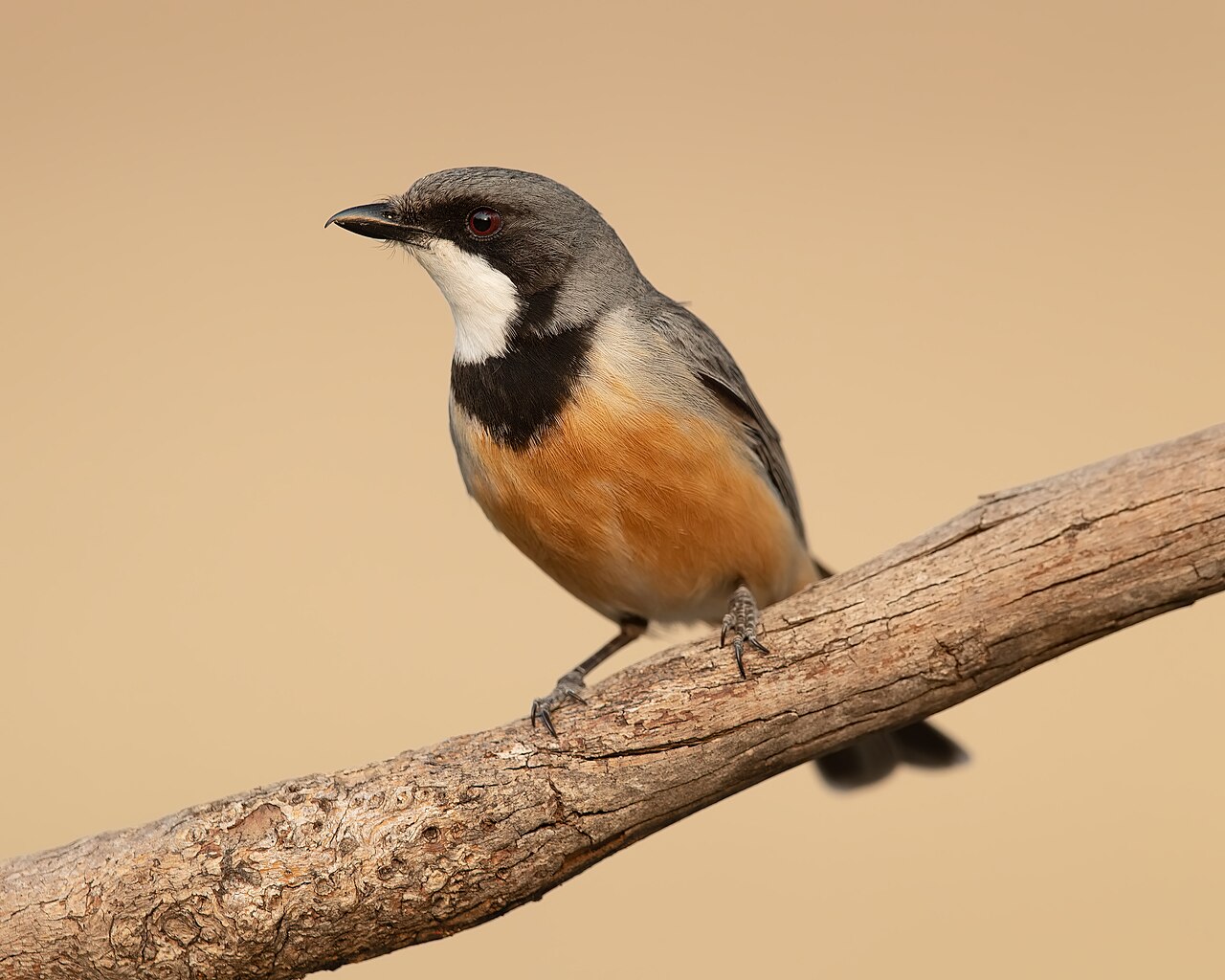
The Rufous Whistler is the loudest whistler in Australia and one of the most frequently heard birds of dry open forest: a slim bird with a grey back, a white throat, a narrow black breast band and a warm rufous belly. The song is explosive and infectious, and unlike most of its relatives this species is a genuine migrant: a large part of the southern breeding population leaves the south in winter and returns in spring.
Voice
One of the most powerful voices of the Australian bush, wholly out of proportion to the size of the bird. The best-known phrase is a rapid, rhythmically repeated 'joey-joey-joey', followed by a loud, driving 'ee-CHONG!' that ends like a whipcrack. The bird sings from an open branch, often for minutes at a stretch, and responds — as the Australian Golden Whistler does — to loud noises: thunder and a clap of the hands draw an immediate answer. In early spring a single male can dominate a whole stand of forest.
Recording: Romuald Mikusek — CC BY-NC-SA 4.0 · Devils River, Murrindindi Shire, Victoria, Australia · xeno-canto
Identification
A slim whistler of sixteen to eighteen centimetres, trimmer and longer-tailed than the Australian Golden Whistler and with a lighter bill. The male is grey on head and back, with a sharply defined white throat, below it a narrow but clear black breast band, and from that band downwards warm rufous to cinnamon across chest, belly and flanks. The female has an entirely different pattern: grey-brown above and white below with dense, fine dark streaking over throat, chest and flanks, and a rusty wash on the belly and undertail coverts. That streaking is the key character in the female, since it is this pronounced in no other Australian whistler.
Confusion species
White-breasted Whistler (Pachycephala lanioides) has the same pattern of white throat and black breast band, but is far heavier, carries an enormous bill, is white rather than rufous on the belly and sits exclusively in mangrove. Red-lored Whistler (Pachycephala rufogularis) has no black breast band at all and wears the rufous on throat and lores instead of on the belly. Gilbert's Whistler (Pachycephala inornata) likewise lacks the black band and is plain grey below. The female causes more trouble: the female Australian Golden Whistler (Pachycephala pectoralis) is much more faintly streaked and heavier-billed, the female Olive Whistler (Pachycephala olivacea) has a finely scalloped white throat and plain ochre underparts, and Grey Whistler (Pachycephala simplex) is smaller and not streaked at all.
Habitat
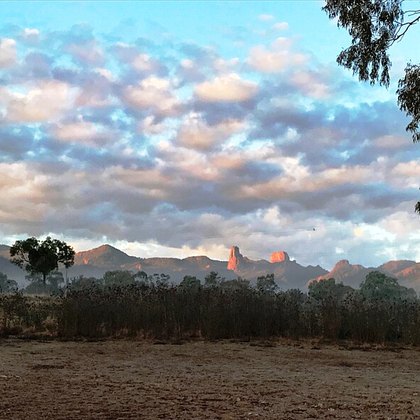
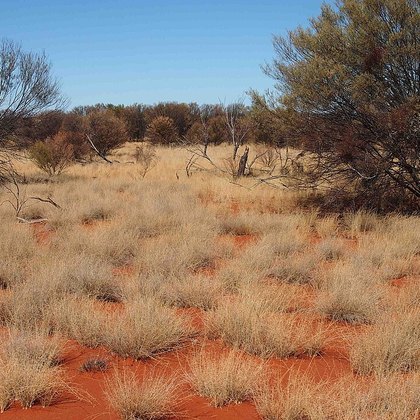
Dry, open eucalypt forest and woodland, riverine woodland along creeks, mallee (low, multi-stemmed eucalypt scrub of dry southern Australia), mulga (acacia scrub of the dry interior, dominated by Acacia aneura) and acacia scrub, and also well-planted gardens, parks and shelter belts in farming country. The bird forages in the mid-storey and canopy, picking caterpillars and beetles from leaf and bark and regularly taking insects in flight. Dense, closed rainforest is avoided — this is the whistler of open, sunlit woodland.
Where the bird is most often found, arranged by main group and formation.



Range and movements
Almost the whole of Australia, excepting the sand deserts of the interior and Tasmania, where the species appears only as a rare vagrant; beyond Australia a separate subspecies lives in New Caledonia. In the south-east and south-west the bird is largely a summer visitor: it arrives in August and September, breeds, and leaves the south in March and April to winter further north and inland. In the north and the interior birds stay all year.
- Resident
- Breeding (summer)
- dark = core range, pale = thinly spread
Where and when to look
This is a species you find by ear and confirm by eye. Walk through dry woodland in October or November and wait for the explosive 'ee-CHONG'; the male usually sings from a clear branch halfway up a tree, so look not into the canopy but at eye level and a few metres above it. For the female there is one question: are the underparts clearly streaked? If so, the identification is settled.
Conservation
Least Concern (LC). The species is widespread and common over most of its range. In the densely settled farming districts of the south-east, however, it is declining locally, because the fragmented woodland it forages in and the shrub layer it nests in are being lost to grazing and clearing. As a migrant it also depends on an unbroken chain of woodland patches between its summer and winter grounds, and it is exactly that chain that has thinned most in the south-east.
Scientific name
Pachycephala rufiventris | (Latham, 1801)
John Latham described the bird in 1801 as Sylvia rufiventris, from a specimen out of New Holland; Gregory Mathews restricted the type locality in 1920 to Sydney. The epithet rufiventris combines Latin rufus ('red, rusty') with venter ('belly'). The genus Pachycephala was introduced in 1827 by Nicholas Vigors and Thomas Horsfield, from Ancient Greek pakhus ('thick') and kephalē ('head'). The English Rufous Whistler and the Spanish silbador rufo follow the Latin and take the rufous belly; the Dutch Grijsrugfluiter ('grey-backed whistler') alone takes the other end of the bird, the grey back.