All species › Passerines › Larks › Singing Bush Lark
Singing Bush Lark | Mirafra javanica
Oosterse struikleeuwerik | Alondra cantante
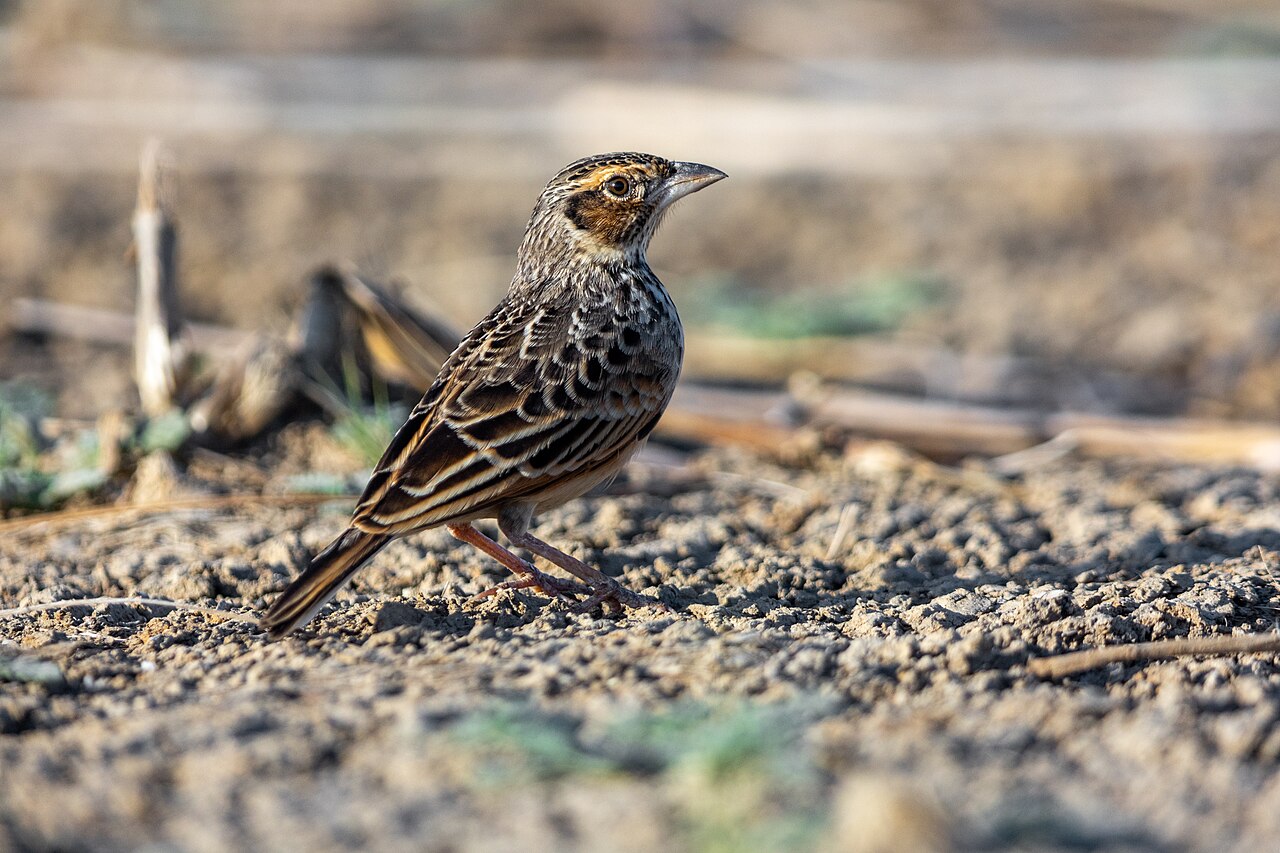
The Singing Bush Lark is a small, thickset grassland bird that in Australia is nearly always heard long before it is seen. In summer the male climbs above the plain in undulating flight and sings there for minutes on end, the calls of every other bird in the district woven through it. When he drops he vanishes among the tussocks and cannot be found again at ten paces.
Voice
The song is a rich, tinkling, fast-shifting run delivered high in the air and shot through with startlingly exact mimicry: thornbills, honeyeaters and swallows follow one another in sequence. From December to January it goes on in bursts by day and by night. From the ground comes a dry chirp as a contact note, and a short hard tzek on flushing.
Recording: Stanislas Wroza — CC BY-NC-SA 4.0 · Salalah, Dhofar Governorate, Oman · xeno-canto
Identification
A short, heavy lark of twelve to fifteen centimetres with a stout sparrow-like bill and a small crest that is seldom raised. The upperparts are brown, rufous or sandy with dark streaking — the tone often follows the colour of the local soil — and the breast is mottled on a pale ground. In flight the rufous wing panel shows and the outer tail feathers are pale. The eyebrow is buff. The sexes are alike.
Confusion species
New Zealand Pipit (Anthus novaeseelandiae) walks rather than hops, is slimmer, has a fine bill and wags its tail; it shows no rufous in the wing. Rufous Songlark (Cincloramphus mathewsi) and Brown Songlark (C. cruralis) are clearly larger and longer-bodied, with a longer tail. Eurasian Skylark (Alauda arvensis), introduced to the southeast and to New Zealand, is bigger, has a real crest and a white trailing edge to the wing.
Habitat
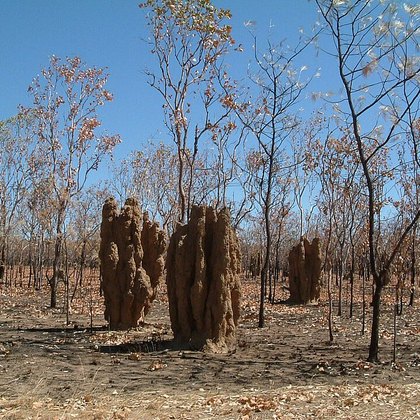
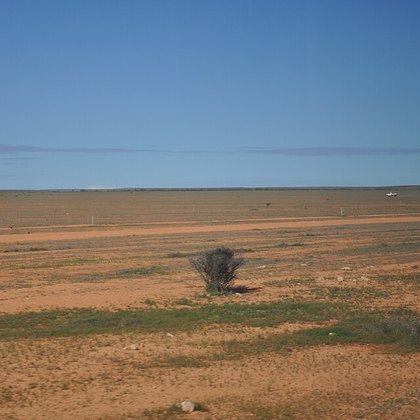
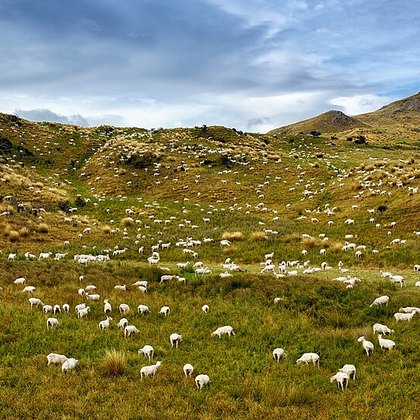
Open grassland of every kind: Mitchell grass on the black soil plains, the grass floor of eucalypt savanna, saltbush (salt-tolerant dwarf shrubland of saline plains) and bluebush (blue-grey salt-tolerant shrubland of the semi-arid interior) plain, and beyond that grain paddocks, thin cane and grazed pasture. It wants low, herb-rich grass with bare ground between for walking, and leaves paddocks that are either too dense or grazed too hard.
Where the bird is most often found, arranged by main group and formation.


Range and movements
Across virtually all of mainland Australia, from the Eyre Peninsula in South Australia east through Victoria, New South Wales and Queensland and west to Shark Bay. On Tasmania it is a vagrant. In the north it is present all year; in the southeast it is a summer bird, arriving in November and December and gone by March. Beyond Australia the species continues into Southeast Asia and Java.
- Resident
- Breeding (summer)
- dark = core range, pale = thinly spread
Where and when to look
Drive a gravel road through open grassland in December or January and stop for every singing speck above the plain; the song flight is the one moment the species is reliably visible. Then walk slowly to where the bird came down: it runs off through the grass and only flushes when you are almost on it, going low and fast to disappear again ten metres on.
Conservation
Least Concern (LC). The species is numerous continent-wide and uses grain paddocks and grazed country alongside native grassland, so the conversion of savanna to farmland has hit it less hard than other grassland birds. Locally, heavy grazing, the loss of herb-rich grassland and too-frequent burning of savanna push the numbers down.
Scientific name
Mirafra javanica | Horsfield, 1821
Horsfield described the bird in 1821 as Mirafra javanica, and it has stayed in that genus, so author and year carry no parentheses; it is also the type species of the genus. What Mirafra means is not known — Horsfield gave no explanation and Jobling leaves the derivation open. javanica means 'of Java', after the island the described specimen came from; the Australian birds belong to the same species.