All species › Passerines › Larks › Eurasian Skylark
Eurasian Skylark | Alauda arvensis
Veldleeuwerik | Alondra común
The Eurasian Skylark is an unremarkable brown bird of open grassland that gives itself away the moment it sings: it climbs on fluttering wings until it is no more than a speck, hangs there reeling for minutes on end, then drops back into the grass with wings closed. In Australia and New Zealand it is no native but a nineteenth-century European import, and it is precisely there that it has become part of the sound of the farmed countryside.
Voice
The song is an unbroken stream of clear rolling, trilling and squeaking notes with no recognisable beginning or end, sustained for minutes while the bird holds one spot high in the air; three to five minutes is normal and a quarter of an hour occurs. It sings through most of the year, in the middle of the day and even in moderate wind, and sometimes from a clod or a fence post. The call is a dry rolling prrit or chirrup, usually given on taking off; anyone walking a New Zealand dune pasture hears that note just before a brown bird bursts from underfoot.
No freely licensed recording has been found for this species yet; what to listen for is described below.
Identification
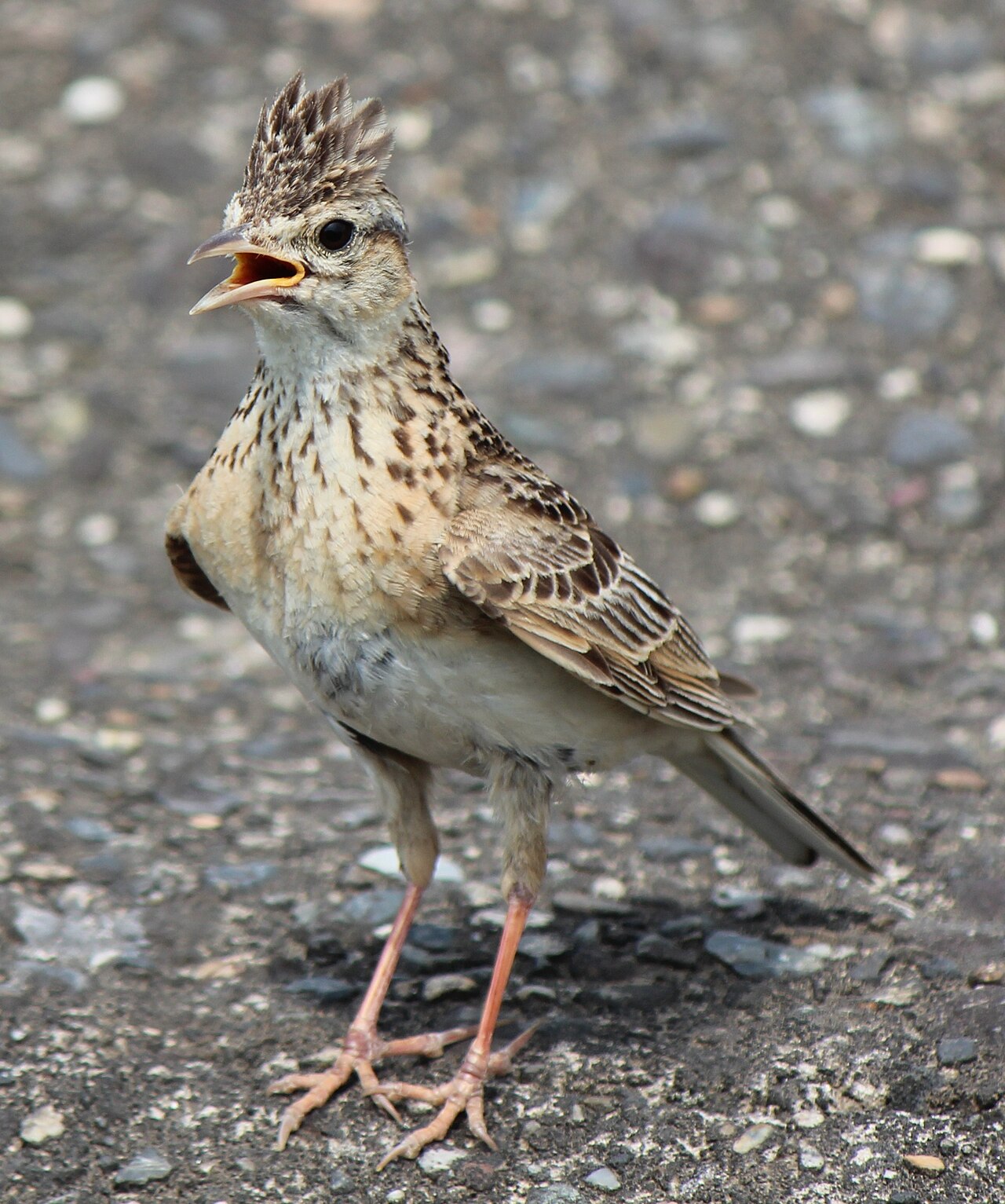
A thickset songbird of eighteen to nineteen centimetres with a short blunt crest that it raises when excited or suspicious and otherwise lays flat, making the head look angular and large. The upperparts are sandy brown with heavy dark streaks, the underparts dirty white with a finely streaked, warm buff breast and an unstreaked belly. A pale ring surrounds the eye, with a vague pale supercilium above it. The bill is fairly heavy and horn-coloured, the legs flesh-coloured with a long straight claw on the hind toe. In flight two things settle it: the white outer tail feathers and a narrow but distinct white trailing edge along the inner wing. The wing is broad and triangular, the flight undulating and hesitant. On the ground it walks and creeps in a crouch; it does not hop.
Confusion species
The two pipits of the region, Australian Pipit (Anthus australis) and New Zealand Pipit (Anthus novaeseelandiae), are the main stumbling block: they are slimmer, longer-tailed and finer-billed, lack the crest, pump the tail constantly and show no white trailing edge to the wing. Singing Bush Lark (Mirafra javanica) of Australia is smaller and shorter-tailed, with a rufous wing panel and a shorter, stubbier bill. Brown Songlark (Cincloramphus cruralis) is far larger and darker and lacks the white tail sides. Remember that in New Zealand a bird heard singing while hanging high in the sky is almost always this species: no native songbird there sings like that.
Habitat
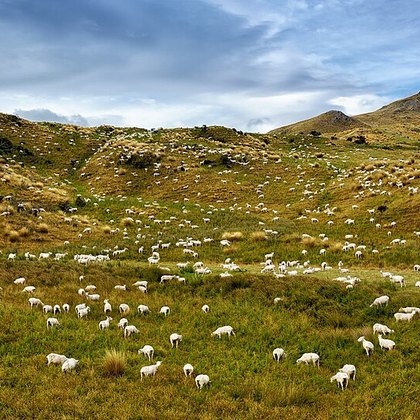
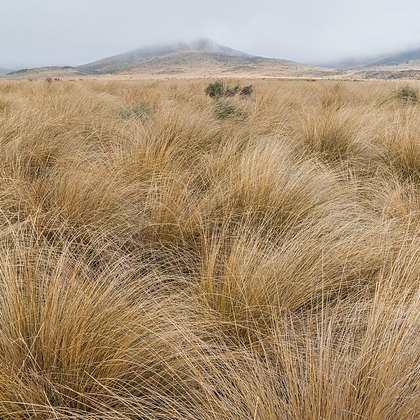
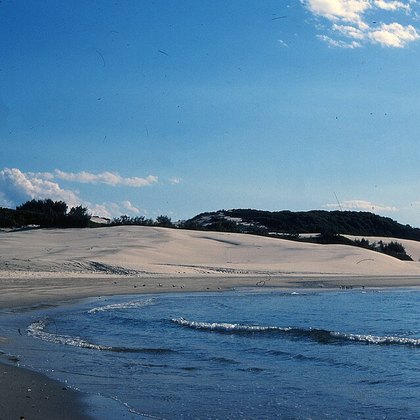
Wholly open, treeless country: pasture and rough grassland, cereal fields and stubble, tussock grassland, dunes and sand flats behind the beach, airfields, road verges and freshly burnt or hard-grazed slopes. In New Zealand it runs from the shoreline to well above the treeline, into the alpine herbfields. It avoids forest, tall scrub and any place where the horizon is closed in, and nests on the ground in a cup among the grass.
Where the bird is most often found, arranged by main group and formation.

Range and movements
Naturally a bird of Europe and temperate Asia, from Ireland to Kamchatka. In New Zealand it has been widespread since its introduction across both main islands and many outlying islands, from sea level into the high country, and is locally numerous on farmland. In Australia it has stayed far more restricted: it persists in the south-east around Melbourne and in parts of Victoria and South Australia, and in Tasmania. That it took hold so much better in New Zealand than in Australia has to do with climate and with the vast area of sown pasture created there after deforestation.
- Resident
- dark = core range, pale = thinly spread
Where and when to look
Find it with your ears, not your eyes. Walk a road past open pasture on a clear spring morning, stop the moment you hear the sustained reeling, and follow the sound straight up: the speck is almost always higher than you expect, often fifty to a hundred metres. If you see it flush, look at the trailing edge of the wing — that one feature rules out both pipits at a glance.
Conservation
Least Concern (LC): the world range is enormous and numbers are high. Yet the story runs opposite ways in the two halves of that range. In Europe the species has declined steeply since the 1970s through the switch to autumn-sown cereals, the loss of stubble fields, and more frequent and earlier grass cutting, which destroys clutches; it is a figurehead there for the decline of farmland birds. In New Zealand and Australia it enjoys no protection as an introduced bird and is instead common; no decline is known in the New Zealand population.
Scientific name
Alauda arvensis | Linnaeus, 1758
Linnaeus described the species in 1758 in the tenth edition of his Systema Naturae; the type locality was at first simply Europe and was restricted by Meinertzhagen in 1951 to Uppsala in Sweden. Alauda is the classical Latin word for lark, borrowed according to Pliny from Gaulish; arvensis means 'of the fields', from arvum, ploughland. The bird was brought to New Zealand from 1864 by the local acclimatisation societies of Nelson, Canterbury and Otago, which through the later nineteenth century systematically released European birds — partly out of homesickness for the sounds of home, partly in the belief that they would control insect pests. It took hold, and within a few decades was numerous enough for farmers to complain of damage to young grain.