All species › Tubenoses › Petrels, shearwaters and diving petrels › Sooty Shearwater
Sooty Shearwater | Ardenna grisea
Grauwe pijlstormvogel | Pardela sombría
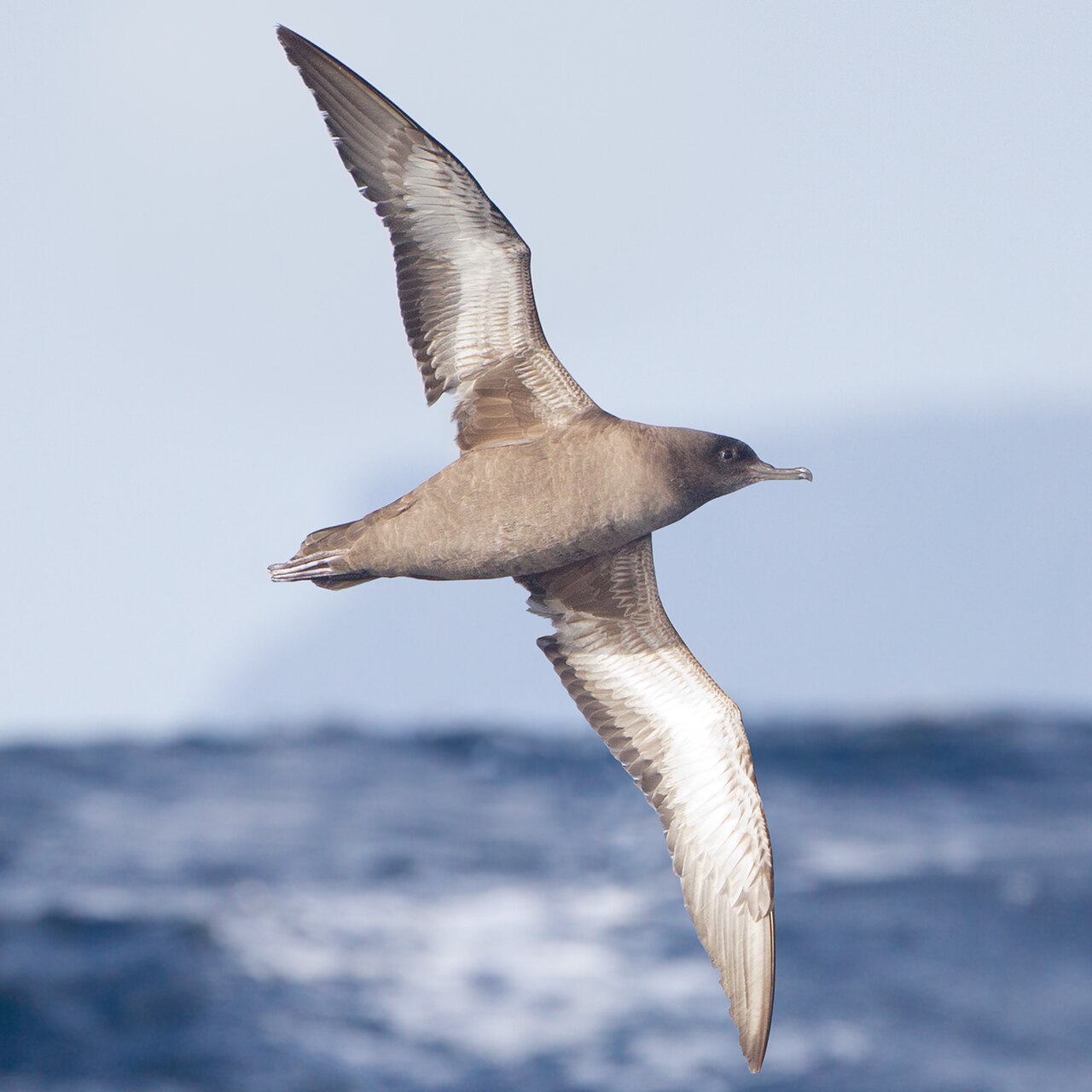
The Sooty Shearwater is the dark seabird you see passing most often in this region: slim, sooty brown, with long narrow wings and a silver-grey flash in the middle of the underwing that lights up the moment the bird banks. New Zealand holds an estimated twenty-one million of them, and as titi or muttonbird (name for young shearwaters harvested for food) it is deeply embedded in the culture there.
Voice
At sea it is almost always silent. At the colony by night comes the sound its Maori name is built on: a loud, rhythmically repeated and slightly hysterical coo-roo-ah, from birds on the ground and from inside the burrows, which on a large island like The Snares merges into a continuous wailing. Disputes over a burrow add sharp yelps.
Recording: David Boyle — CC BY-NC-SA 4.0 · Rangatira Summit, Chatham Islands, New Zealand · xeno-canto
Identification
Forty to forty-six centimetres, averaging forty-three, at some eight hundred grams: a slim, long-winged shearwater with a short narrow tail and a long, slender, all-black bill. The plumage is sooty brown, looking almost black in fresh dress, with one decisive mark: a silver-grey flash across the coverts of the outer underwing, which flares in sunlight as the bird banks. The legs are dark grey and do not reach past the tail. Flight is powerful and fast, with stiff quick beats and long rising glides; in wind it sails in steep arcs over the wave crests.
Confusion species
Short-tailed Shearwater (Ardenna tenuirostris) is the classic problem, since the two pass the same coasts in the same months: it is smaller and more compact, with a shorter bill, a smaller head with a domed forehead, a dull grey underwing without a silver panel, and feet that project just beyond the tail. Flesh-footed Shearwater (Ardenna carneipes) is bulkier and slower and has a pale pink dark-tipped bill and flesh-coloured legs. Dark-morph Wedge-tailed Shearwater (Ardenna pacifica) is more lightly built, with a long wedge-shaped tail and a dancing flight. The Procellaria petrels are larger and heavier and have pale bills. In short: the combination of a slender black bill, dark grey feet inside the tail and a silver underwing is found here alone.
Habitat
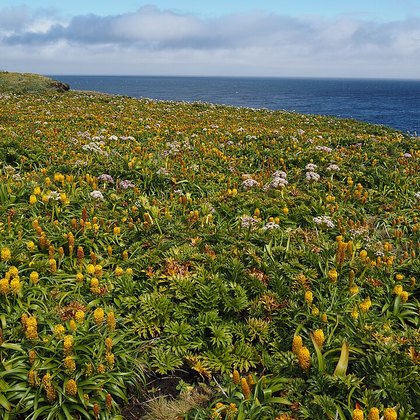
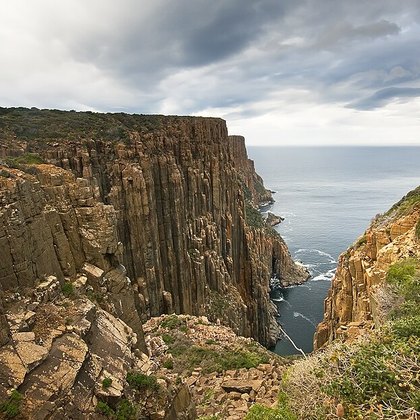
Open sea, from coastal waters to far out over the deep; foraging breeders make trips of about two thousand kilometres to the Polar Front and the cold water around it. It breeds in dense colonies of self-dug burrows in peaty or sandy ground under tussock (grassland of loose, tall clump-forming grasses, especially in New Zealand) grass, ferns and low coastal forest, on islands and on a few steep mainland headlands.
Where the bird is most often found, arranged by main group and formation.


Range and movements
Within this map window it breeds from the Three Kings in the north to Stewart Island in the south, with the large colonies on The Snares, the Auckland Islands, Campbell, the Antipodes and the Chathams, and in Australia on islands off Tasmania and New South Wales and on Macquarie Island. The New Zealand population is estimated at about twenty-one million birds. From October to April it can be seen from the coast all round New Zealand, in large numbers off Kaikoura, in Foveaux Strait and off the Otago coast, and along the southern and eastern coasts of Australia. It then leaves the region for the North Pacific, splitting between three separate zones off Japan, Alaska and California.
- Resident
- Breeding (summer)
- dark = core range, pale = thinly spread
Where and when to look
A seawatch point in an onshore wind produces it anywhere on the New Zealand coast in the southern summer; off Kaikoura and on the pelagics out of Wollongong and Sydney it comes right in behind the boat. On any dark shearwater check the underwing first: the silver panel is the mark that separates it from Short-tailed Shearwater, and in raking sunlight it can still be picked out at several hundred metres.
Conservation
Near Threatened (NT), and classed in New Zealand as Declining despite the enormous numbers. The traditional harvest continues: around Stewart Island, descendants of the Rakiura Maori take some four hundred thousand chicks from the burrows each year in the titi season of April and May, an ancient right now accompanied by monitoring. Heavier pressures are bycatch in longline and trawl fisheries on the northern wintering grounds, introduced predators on colonies not yet free of rats and cats, and shifts in the food supply as the sea warms — numbers in the North Pacific have fallen sharply within a few decades.
Scientific name
Ardenna grisea | (Gmelin, 1789)
Gmelin described the species in 1789 as Procellaria grisea, 'grey', after the sooty plumage; because it was later placed in another genus, author and year go in parentheses. The genus Ardenna was set up by Reichenbach in 1853. The type locality was fixed by Mathews in 1912 as the sea area between thirty-five and fifty degrees south near New Zealand. The Maori name titi is used for several tubenoses and is formed after the call; it is also called hakoakoa, and in New Zealand and Australian English simply muttonbird.