All species › Kiwis › Kiwis › Southern Brown Kiwi
Southern Brown Kiwi | Apteryx australis
Zuidelijke bruine kiwi | Kiwi común
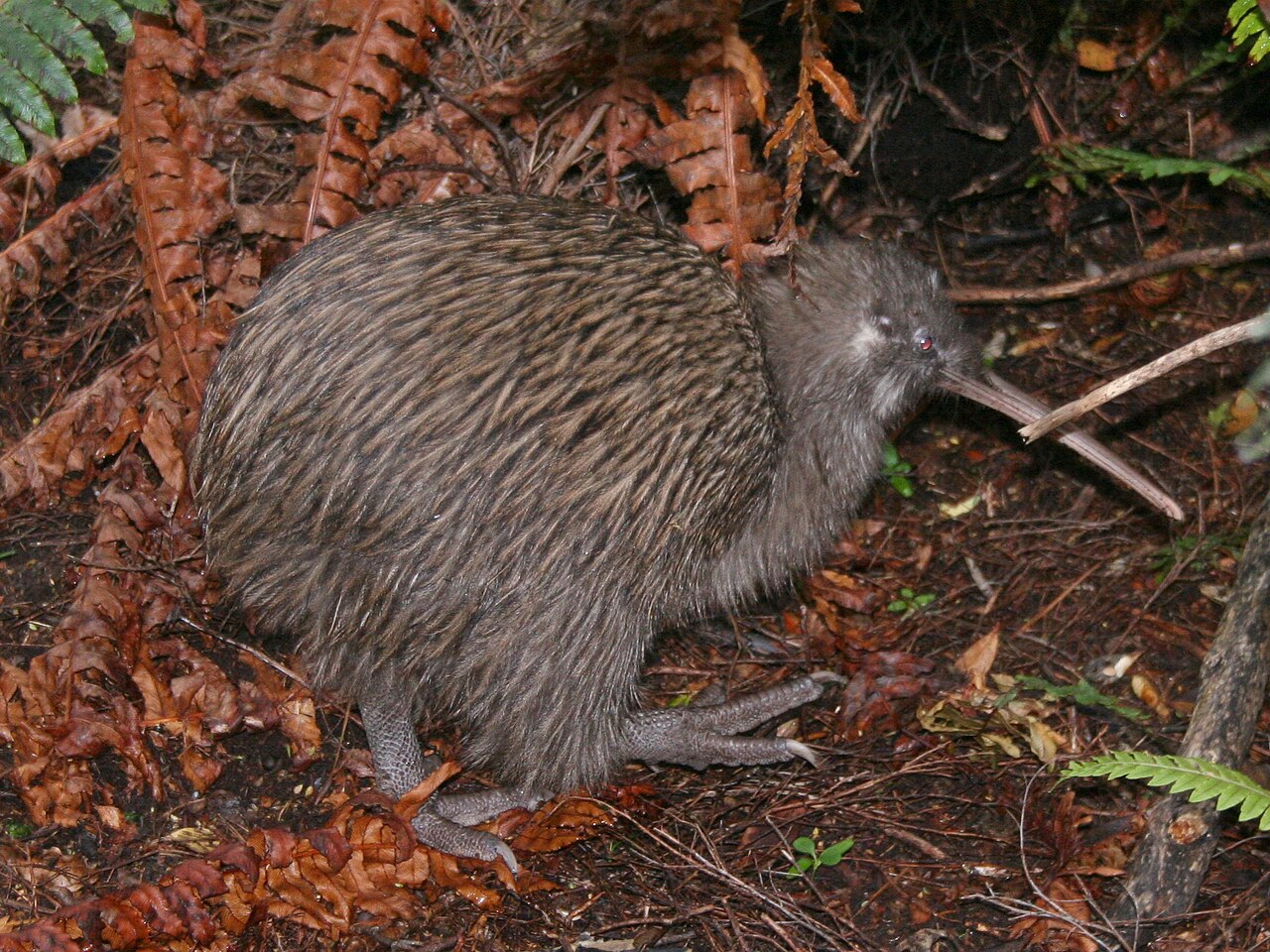
The Southern Brown Kiwi, or tokoeka, is the largest of the brown kiwi and the bird of the deep south: Fiordland, Haast and Stewart Island. Rufous and shaggy, with a long pale bill and heavy short legs — and on Stewart Island it is the only kiwi in the world you have a fair chance of seeing walking in daylight.
Voice
The male gives a high ascending whistle repeated fifteen to twenty-five times; the female answers with a slower, lower, hoarse guttural call given ten to twenty times in a row. Pairs often call in duet, the two voices overlapping — in Fiordland the most frequently heard night sound of the forest. While feeding it blows loudly through the nostrils at the bill tip.
No freely licensed recording has been found for this species yet; what to listen for is described below.
Identification
At about forty-five centimetres, and 2.4 kilograms in the male against 3.1 in the female, the bulkiest kiwi of the south. The plumage is rufous to dark brown, streaked with brown and black so that the feathers look coarse and hair-like; the bill is long, pale and slightly curved, noticeably longer in the female, and the legs and toes are short, pale and heavy. It walks with the head low and the bill probing the litter, sounding for all the world like a snuffling mammal.
Confusion species
Okarito Kiwi (Apteryx rowi) is the nearest species in the field: smaller, paler and with a greyish cast to the plumage, often with white feathering on the face, and confined to one lowland forest at Okarito — a good hundred kilometres north of the nearest tokoeka ground at Haast, so there is no overlap. North Island Brown Kiwi (A. mantelli) is also smaller and occurs only on the North Island. Little Spotted Kiwi (A. owenii) is grey with white bars and half the weight. If something calls in Fiordland or on Stewart Island, A. australis is the only option.
Habitat
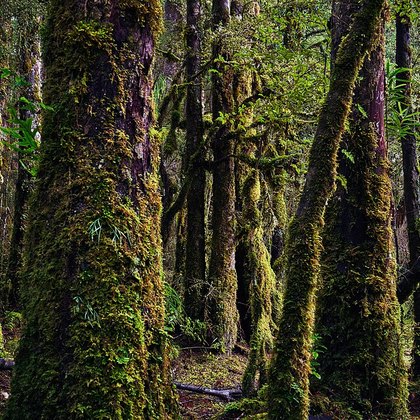
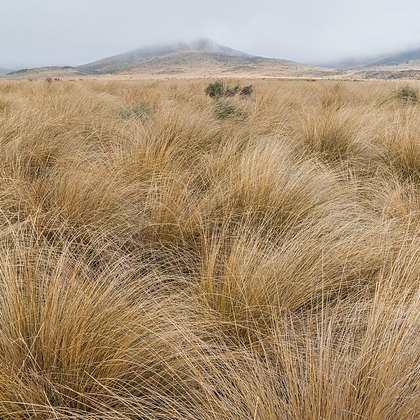
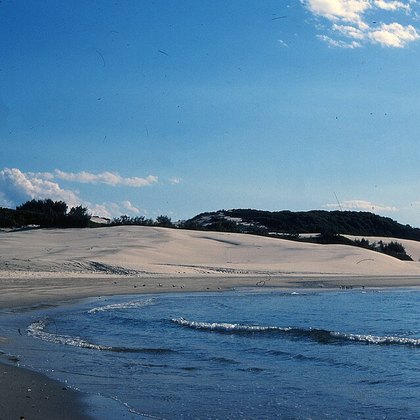
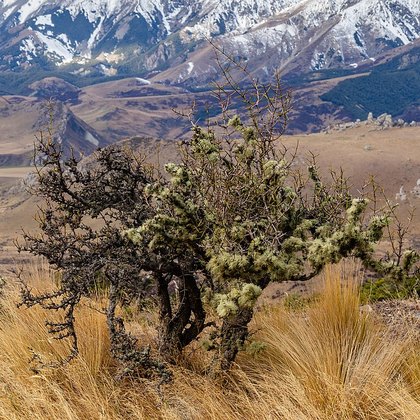
From the tideline to above the treeline: southern beech forest and podocarp-broadleaf forest in Fiordland and at Haast, and on Stewart Island also tussock grassland on the Tin Range, manuka and matagouri scrub, and even the dunes and stranded kelp of Mason Bay. Fiordland birds work up into the alpine herbfields in summer. Territory size tracks the food supply: from about five hectares in tussock to fifty in dune country.
Where the bird is most often found, arranged by main group and formation.


Range and movements
Only the south-west of the South Island and Stewart Island/Rakiura, and nowhere else in the world. Three separate forms: Fiordland with some fifteen thousand birds, Stewart Island with thirteen to fifteen thousand over the southern two-thirds of the island, and a small isolated group around Haast of about three hundred and fifty. It is entirely absent from the North Island and from Australia.
- Resident
- dark = core range, pale = thinly spread
Where and when to look
Mason Bay on Stewart Island is the famous place: walk the dunes and the tideline at dusk, where females often still search for sandhoppers and worms in daylight. In Fiordland it is a matter of listening — sit by a lakeshore or a hut after dark on a still evening and wait for the duet. Take red light, and stand still the moment you hear something rustle: the bird will often walk up to you.
Conservation
Vulnerable (VU). Within New Zealand the Fiordland and Haast forms are ranked nationally vulnerable, and the Haast group of about three hundred and fifty birds is the most worrying of all kiwi populations. Stoats kill chicks before they reach the roughly one-kilogram weight at which they can defend themselves. On Stewart Island, where there are no stoats, feral cats and the scrubbing-over of old farmland at Mason Bay hold numbers down; the population there is declining locally and only a few per cent of it is under active management.
Scientific name
Apteryx australis | Shaw, 1813
Shaw described the bird in 1813 as Apteryx australis, from a skin brought back from the far south of New Zealand; the name still stands in its original genus, so author and year carry no parentheses. Apteryx is from Greek a-, 'without', and pteryx, 'wing'; australis means 'southern'. The type locality reads 'New Zealand', restricted in the New Zealand checklist to Stewart Island/Rakiura. The Maori name tokoeka is usually rendered as 'weka with a walking stick'.