All species › Parrots › Cockatoos › Western Corella
Western Corella | Cacatua pastinator
Oostelijke langsnavelkaketoe | Cacatúa cavadora
This cockatoo, Cacatua pastinator, is the largest of the Australian cockatoos with a bare eye-ring and the only one confined to the south-west. It is pure white with a long pointed bill with which it digs for roots in the stubble of the wheatbelt, and its call has an eerie, quavering tone. In this guide Cacatua tenuirostris carries the same Dutch name, Oostelijke langsnavelkaketoe.
Voice
A wavering falsetto call with a distinctly eerie, almost ghostly quality that carries far over open country. Alongside it runs a series of shrieks and squeaky conversational notes that keep a flock in touch. Males give a deeper alarm call than females — one of the few audible differences between the sexes in this species.
No freely licensed recording has been found for this species yet; what to listen for is described below.
Identification
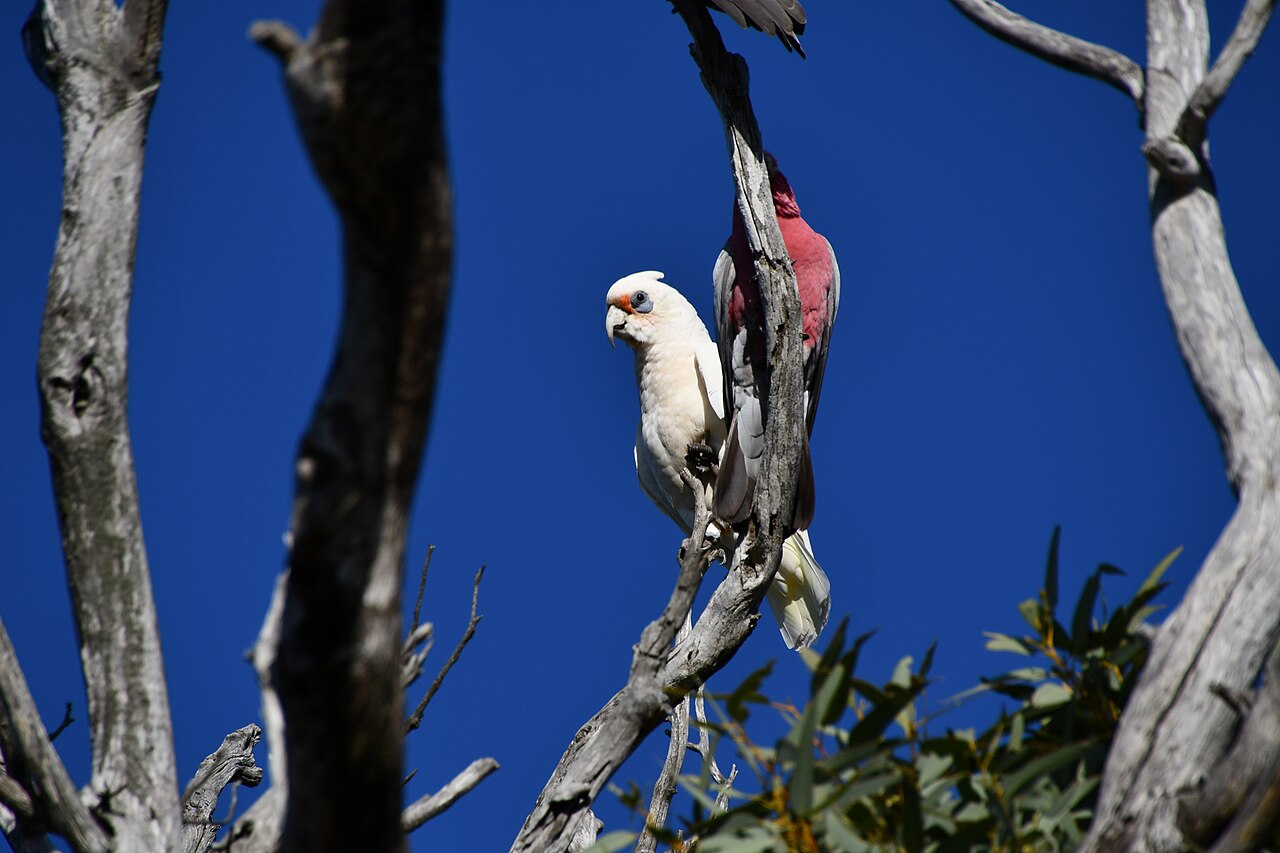
A large, solidly built white cockatoo of 40–48 cm with broad rounded wings and a short tail. The upper wing is entirely white, the under surface pale yellow. The crest is white and short and rises straight up. Bare blue-grey skin surrounds the eye, crimson-pink feathering lies between eye and bill and a small pink patch marks the throat — but there is no broad orange-red breast band. The bill is long and pointed, with a clearly extended upper mandible. The sexes are alike in plumage; the male is larger.
Confusion species
The two other cockatoos with a bare blue eye-ring are the only real candidates. Little Corella (Cacatua sanguinea) is smaller and has a short bill whose mandibles are of equal length; it overlaps in the south-western wheatbelt and goes about in larger flocks. The species sharing its Dutch name in this guide, Cacatua tenuirostris, also has a long bill but is smaller, carries a broad orange-red crescent across the upper breast and belongs naturally to the south-east — though a feral population sits near Perth, and it is exactly there that the breast band is the deciding mark. Pink Cockatoo (Cacatua leadbeateri) has a white-feathered rather than bare surround to the eye, a pink wash and a red-and-yellow crest; Sulphur-crested Cockatoo (Cacatua galerita) has a yellow crest and a short bill.
Habitat
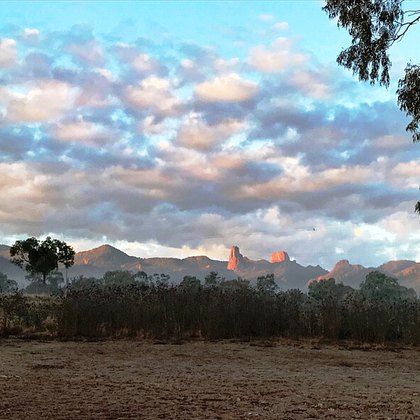
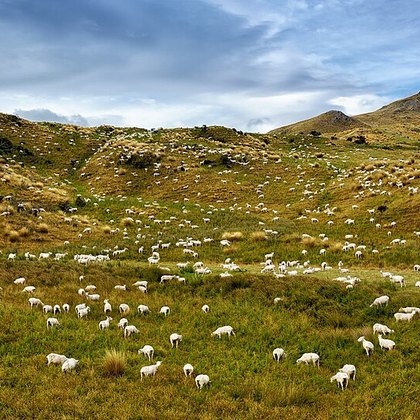
Gently undulating country in the south-west where more than ninety per cent of the original vegetation has been cleared for farming: grain crops, stubble and pasture, with scattered large eucalypts and remnant patches. Those old trees are indispensable, because the nest hollows are in marri, jarrah, wandoo, yate and moonah. It feeds on the ground, digging for roots, tubers and spilt grain with the long bill, and drinks daily at a dam or trough.
Where the bird is most often found, arranged by main group and formation.


Range and movements
South-western Western Australia only, in two separate populations. Butler's Corella (C. p. butleri) holds the northern wheatbelt and is put at five to ten thousand birds; Muir's Corella (C. p. pastinator) holds the far south-west around the Muir swamps and Lake Muir and numbers about a thousand. The species occurs nowhere else in the world.
- Resident
- dark = core range, pale = thinly spread
Where and when to look
Drive the grain roads of the northern wheatbelt early in the morning, between Dalwallinu, Coorow and Moora, and look for flocks on stubble. If you are near Perth, do not go on the long bill alone: check the breast, because the feral Cacatua tenuirostris has an orange-red crescent there and this species has not.
Conservation
Not threatened on the global list (LC), but that applies to the species as a whole rather than to both subspecies. Muir's Corella is listed as endangered in Western Australia and as vulnerable nationally; that form was reduced to an estimated hundred birds by about 1921 after a century of persecution, when grain farmers paid bounties for every cockatoo killed. Since the 1940s both populations have recovered steadily, as persecution eased and the bird adapted to the farmed landscape. Butler's Corella is no longer regarded as of conservation concern. The remaining risks are the loss of the last old hollow-bearing trees and, near Perth, hybridisation with feral Cacatua tenuirostris.
Scientific name
Cacatua pastinator | (Gould, 1841)
John Gould described the species in 1841 as Licmetis pastinator, so author and year stand in parentheses. The epithet is Latin for 'digger' or 'one who delves', after the habit of working the ground with the long bill. The type locality is Western Australia. The English name is Western Corella, and much Dutch-language literature likewise calls it the western long-billed corella; in this guide, however, it stands under the same Dutch name as Cacatua tenuirostris, so it is wise to add the scientific name.