All species › Waders, gulls and terns › Sandpipers and allies › American Woodcock
American Woodcock | Scolopax minor
Amerikaanse houtsnip | Chocha Americana
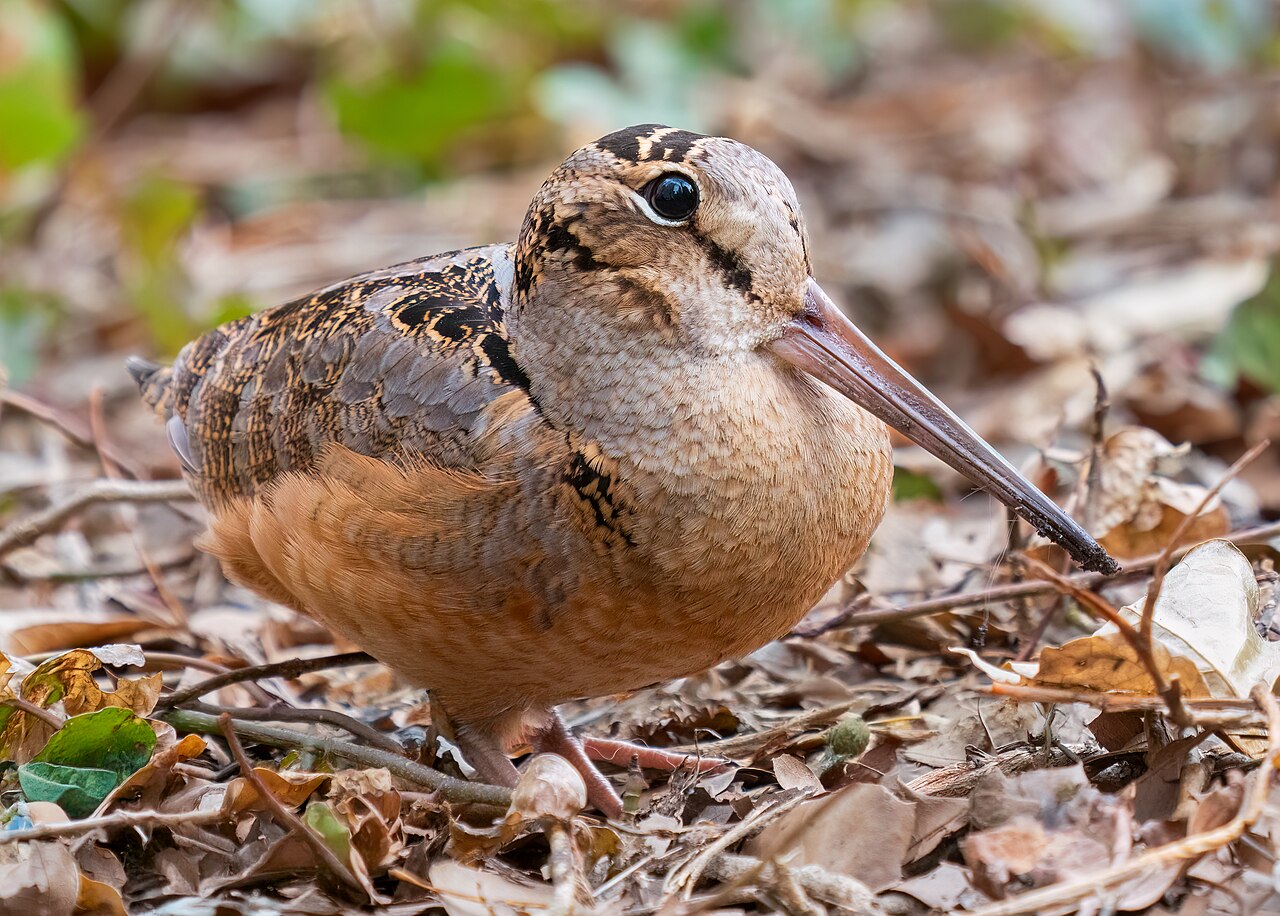
A wader that lives in the woods: round, short-legged, with a long straight bill and a plumage that has the colour and the pattern of dead leaves. At dusk in March and April the male rises from an open patch in a wide spiral, with a twittering sound that comes not from the throat but from the wings. The eyes sit so high and so far back in the head that it sees what happens behind it while its bill is in the ground.
Voice
From an open patch in the wood at dusk comes a nasal, buzzing peent, repeated every few seconds, preceded at close range by a soft swallowed tu-koh. Then he falls quiet and goes up: on the climb a high twitter runs through the three narrow outer primaries, no voice but the air streaming past them. At the top of the spiral, fifty to a hundred metres up, that turns into a warbling, hiccuping song, after which he drops back zigzagging and silent to where he started. For the rest of the year he is not heard; a flushed bird makes at most a clattering wing sound.
Recording: Kai Frueh — CC BY-NC-SA 4.0 · Wintergarden (near Bowling Green), Wood County, Ohio, United States · xeno-canto
Identification
A squat bird with a big head, a short neck, a short tail and short legs, and a straight bill of seven centimetres or more. The upperparts are a fine mosaic of grey, black and rufous that is invisible on the dead leaf litter, with three or four pale bars across the black crown and a plain orange-buff underside. The eye sits high and far back in the head. Male and female look the same, though the female is a little larger and longer-billed, and after the first weeks juveniles cannot be told from adults. In flight the wings are broad and rounded and the take-off goes with a fluttering, owl-like beat, usually over a short distance and then back into cover. Walking, it rocks its body rhythmically back and forth while the head stays still.
Confusion species
Wilson's Snipe (Gallinago delicata) is slimmer, longer in tail and wing, has cream stripes along head and back and a streaked and barred underside; it sits in open marsh and not in wood, and flies off in a fast zigzag with a rasping call. Eurasian Woodcock (Scolopax rusticola) is a rare visitor in the northeast, larger and barred across the whole underside instead of plain. The buzzing peent resembles the call of Common Nighthawk (Chordeiles minor), but that one sounds from the air and not from the ground. If a brown, round bird flushes ahead of you in the wood and drops again after twenty metres, little else is possible.
Compare sandpipers, snipes and allies: bill, legs, wing bar and rump
Habitat
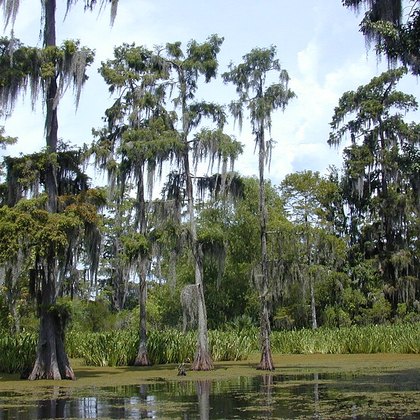
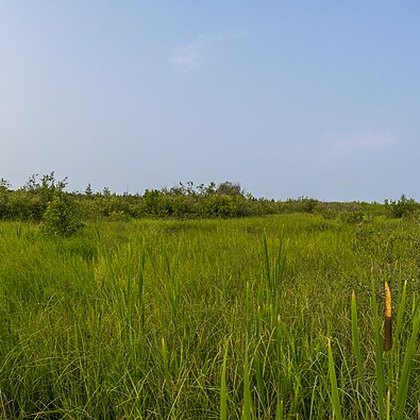
Young, moist deciduous wood and thicket: alder and willow growth along streams, young aspen and birch after a cut, and abandoned fields growing shut. It needs three things at once — a soft, moist soil with earthworms to probe, dense cover to sit out the day in, and an open patch of a few hundred square metres to display over. At night in summer it flies out to open fields to roost. It avoids old, closed high forest without a shrub layer and dry sandy ground; as the eastern forest has aged, much of its habitat has gone.
Where the bird is most often found, arranged by the USNVC — the vegetation classification of the United States and Canada — and CMECS for sea and coast.


Range and movements
It breeds from the Maritime provinces and Newfoundland west to southeastern Manitoba and south to eastern Texas and northern Florida. The core of the wintering range lies in Louisiana, Mississippi, Alabama and Georgia; in a broad band above that, from Virginia and Kentucky to Missouri and Oklahoma, it stays all year. It migrates at night and early: in warm years the first males move north as soon as January, and autumn migration falls in October and early November. Through the twentieth century its range first rose with the abandonment of farmland in the east, which produced young scrub everywhere; now that the scrub has become forest, it is falling again.
- Resident
- Breeding (summer)
- Winter
- Passage
- dark = core range, pale = thinly spread
Where and when to look
The half hour after sunset in March or April, at the edge of an open field beside a young, moist wood. Wait for the peent; when it stops, look up — he goes into the air in a wide spiral and comes down zigzagging almost on the same spot. Walk to that spot while he is up: the male returns to it and will then often let you stand within a few metres.
Conservation
The Red List holds the species as Least Concern (LC), and the breeding population is put at about 3.5 million birds. The yearly count of displaying males shows a fall averaging 1.1 per cent a year over four decades. The main cause is the ageing of the young forest and the loss of scrub to building; hunting has dropped sharply, from about a million and a half birds a year in the 1970s to around 170,000 in 2020. Because it lives on earthworms, it takes up lead, cadmium and pesticides from the soil into its body.
Scientific name
Scolopax minor | Gmelin, 1789
Gmelin described the species in 1789 as Scolopax minor, and that name has not changed since; author and year therefore stand without parentheses. Scolopax is the Latin word for a snipe, taken from the Greek skolopax; the genus was introduced by Linnaeus in 1758. minor means 'smaller', after the Eurasian Woodcock, Scolopax rusticola, beside which this is the smaller species. The described specimen came from New York, and Gmelin drew on the description by Pennant.