All species › Passerines › Crows, jays and magpies › Black-billed Magpie
Black-billed Magpie | Pica hudsonia
Amerikaanse ekster | Urraca de Hudson
The Black-billed Magpie is the black-and-white magpie of the west of the continent, with a tail longer than the rest of the bird. It belongs to open country with groups of trees: creek valleys, cattle pasture and the edges of towns between the Rocky Mountains and the prairie.
Voice
The commonest sound is a fast, harsh rattle, ka-ka-ka-ka, often introduced by a rising skah-skah. There is also a questioning, upward mag? between partners and a soft twittering at the nest. A cat, an owl or a raptor draws a group that keeps rattling for minutes. A song in the sense of a fixed phrase is absent; the bird does sing soft, mixed series to itself. Captive birds have learned to imitate human speech.
Recording: Jonathon Jongsma — CC BY-SA 4.0 · Oak Draw Rd, Custer State Park, South Dakota, United States · xeno-canto
Identification
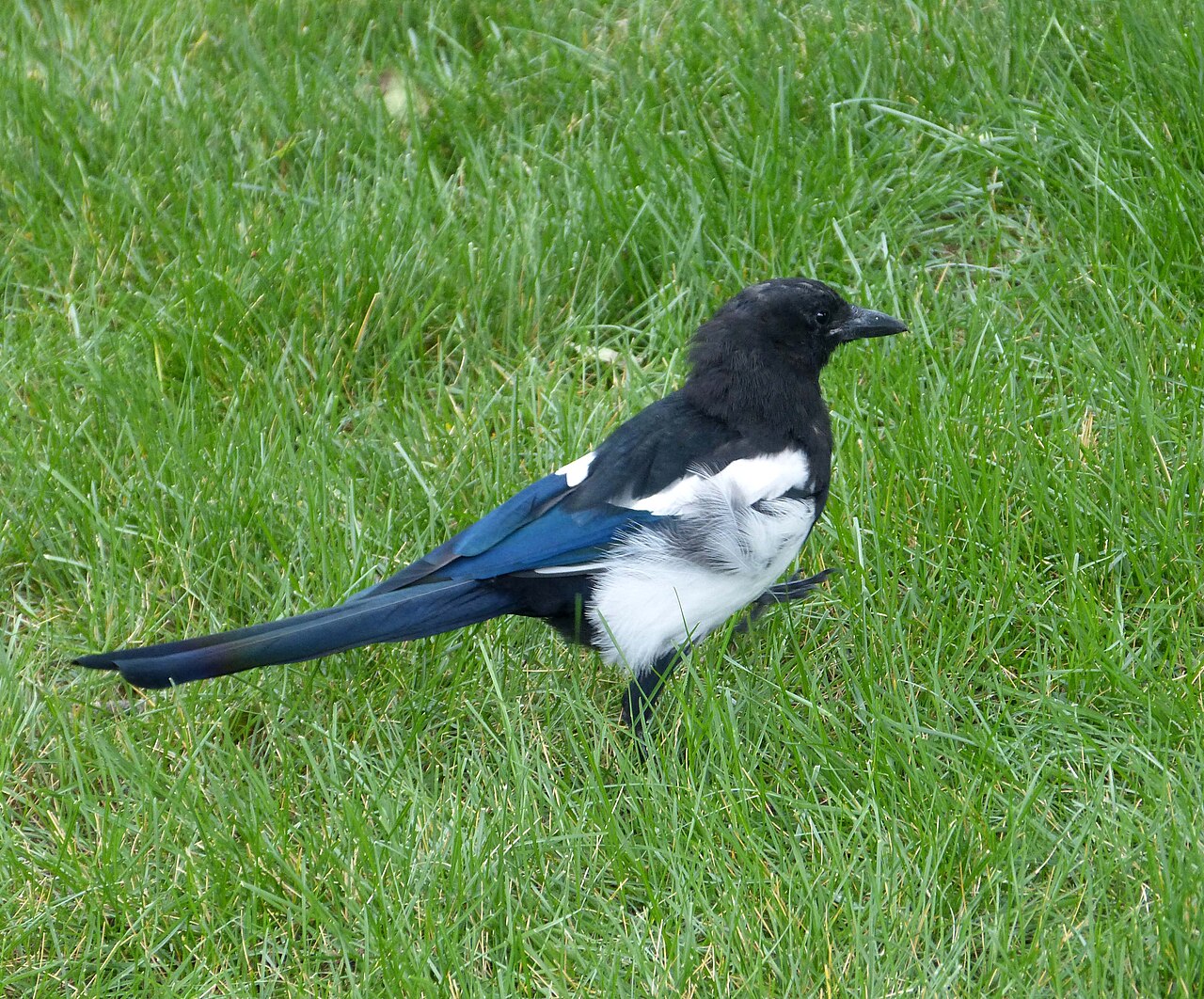
Black and white, with a long tail glossed green to blue-purple that makes up more than half the length of a bird in flight. Head, breast and back are black, belly and shoulders white; the primaries are white, so two white panels flash as the bird takes off. Bill, legs and eye-ring are black. Males are 6 to 9 per cent larger and 16 to 24 per cent heavier than females, but in the field the sexes look alike. Young birds have less gloss and a shorter tail. The flight is slow, with shallow beats, the tail visibly trailing and swinging.
Confusion species
The Yellow-billed Magpie of central California is the only real risk: it has a yellow bill and a yellow bare patch below the eye, and averages slightly smaller with a shorter tail. Range overlap is essentially nil — Black-billed Magpie is absent from California west of the Sierra Nevada and the Cascades. Eurasian Magpie, which does not occur wild in North America, looks nearly identical but has a shorter tail and longer wings; the two differ in voice and in social behaviour and are genetically well separated. A crow or raven shows no white and a far shorter tail.
Habitat
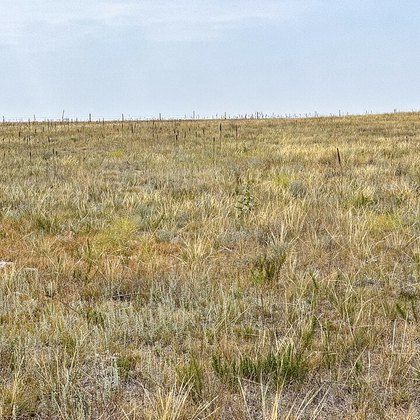
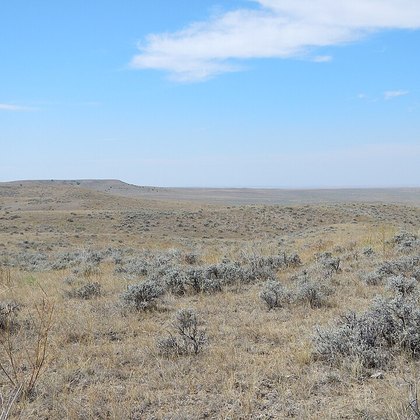
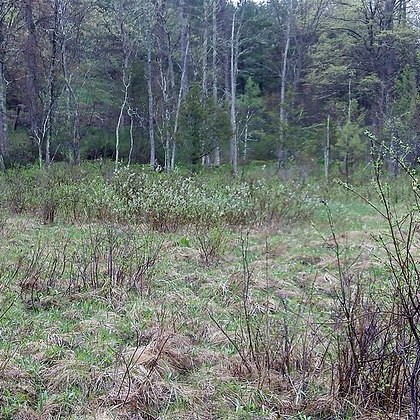
Open country with scattered trees and shrubs: creek bottoms with willow and cottonwood, sagebrush steppe with juniper, shortgrass prairie, hayfields and cattle pasture. It breeds in thorn bushes and low trees, in a domed stick nest built by both sexes over forty to fifty days, from February onward. Outside the breeding season flocks gather at feedlots, grain elevators, barns, landfills and houses. Closed forest and treeless desert do not enter the picture.
Where the bird is most often found, arranged by the USNVC — the vegetation classification of the United States and Canada — and CMECS for sea and coast.



Range and movements
A resident of western North America: from coastal southern Alaska, southwestern Yukon and central British Columbia south through the Rocky Mountains to northern New Mexico and northern Arizona, and east to the Dakotas, western Nebraska and western Kansas, with an arm into northwestern Minnesota. In California it is confined to the northeast and the eastern foot of the mountains. Most birds stay in the same area all year; in winter birds from the highest valleys move to lower ground and to places with livestock.
- Resident
- Winter
- Passage
- dark = core range, pale = thinly spread
Where and when to look
In winter, drive past cattle pasture and feedlots in Montana, Wyoming or Idaho: there the magpies stand on the ground among the stock. Watch the white primaries as a bird takes off — that panel shows at distance and against a grey sky, while the gloss on the tail only comes out close up in sunlight.
Conservation
The IUCN places the species in the least concern category; the number of mature birds was put at about six million in 2025. The species is susceptible to West Nile virus, which caused heavy local mortality after 2002. A second pressure is the antiparasitic treatment applied to the backs of cattle: magpies that take those hairs can die from it. Historically the species was treated as vermin in parts of the west and controlled with poison.
Scientific name
Pica hudsonia | (Sabine, 1823)
Sabine described the species in 1823 as Corvus hudsonius, from a specimen from Cumberland House on Hudson Bay, now in Saskatchewan; because it was later moved to another genus, author and year stand in parentheses. Pica is the Latin word for magpie, and hudsonia refers to Hudson Bay, where the bird was first distinguished as a separate form. For a long time it was treated as a subspecies of Eurasian Magpie; since 2000 it has been carried as a full species on the North American list.