All species › Tubenoses › Northern storm petrels › Black Storm-Petrel
Black Storm-Petrel | Hydrobates melania
Zwart stormvogeltje | Paíño negro
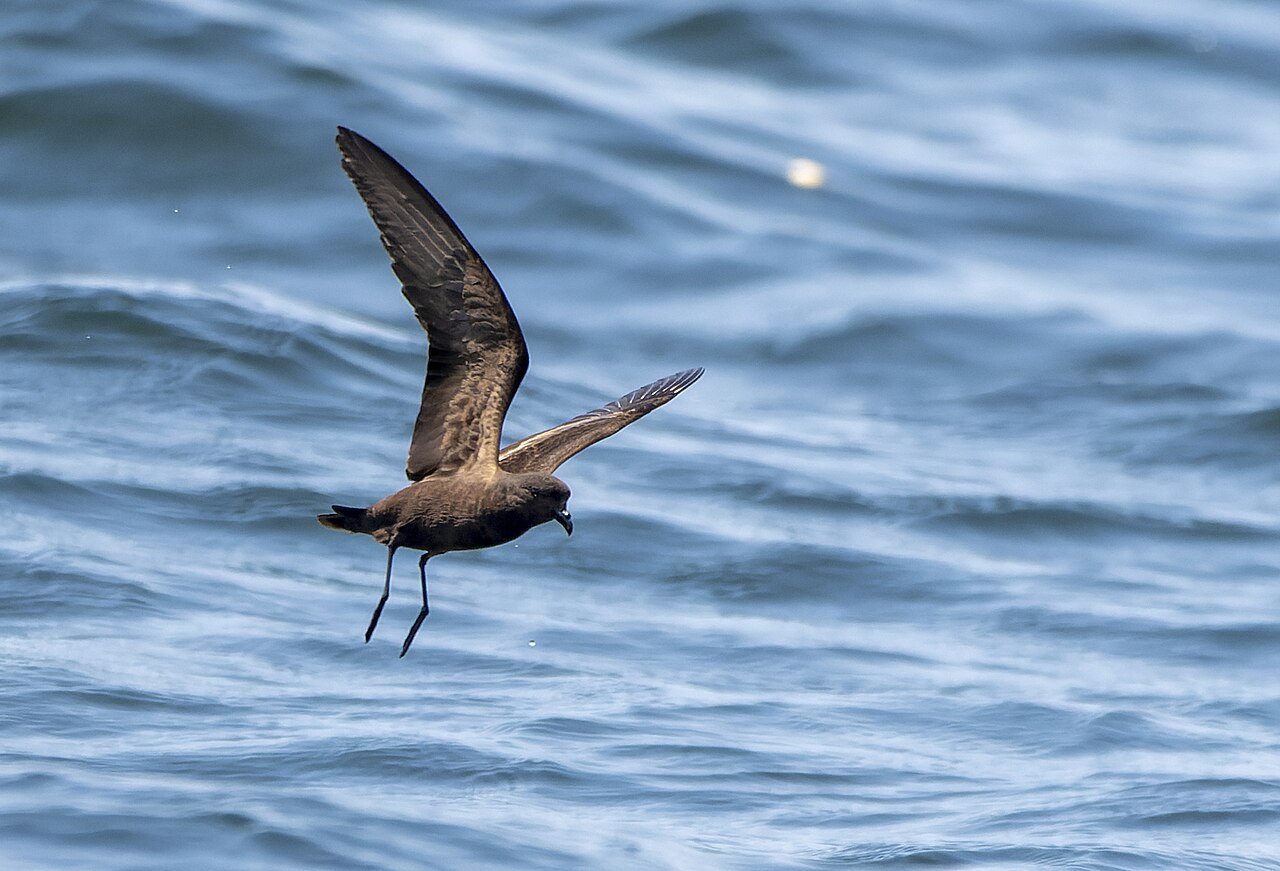
The Black Storm-Petrel is the largest of the dark storm-petrels found off California and Mexico: entirely sooty black, with a long, deeply forked tail. It breeds in rock crevices on islands off Baja California and, in small numbers, on Santa Barbara Island off southern California. In late summer and autumn it moves north into warmer water, reaching as far as Monterey Bay.
Voice
At the colony, which it visits only at night, it gives a loud, repeated tuck-a-roo from its burrow or crevice. At sea it is essentially silent. The call carries far across the colony surface and is often the only evidence researchers have of a colony, since the birds themselves nest deep inside crevices and burrows. By day nothing is seen or heard of it on the breeding islands.
No recording with a suitable Creative Commons licence has been found for this species yet; what to listen for is described below.
Identification
A medium-sized, entirely blackish-brown storm-petrel without any pale markings on rump or wing. The tail is long and deeply forked, more deeply so than in the related dark species it occurs alongside. In flight the slow, deep wingbeat stands out, low over the waves, quite unlike the fluttering of smaller species. Male and female look alike, and juveniles differ little from adults.
Confusion species
Ashy Storm-Petrel is smaller, with a less deeply forked tail and a lighter, more fluttering flight with shallower wingbeats. Least Storm-Petrel is considerably smaller still, with a short, wedge-shaped tail and a fast, low, bat-like flight skimming the water. Both are, like Black Storm-Petrel, entirely dark; Leach's Storm-Petrel, by contrast, shows a white rump patch and a bounding, erratic flight that sets it apart at once.
Habitat
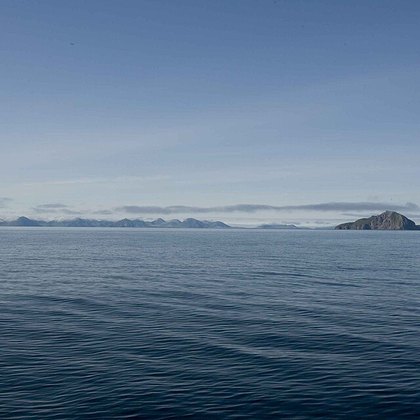
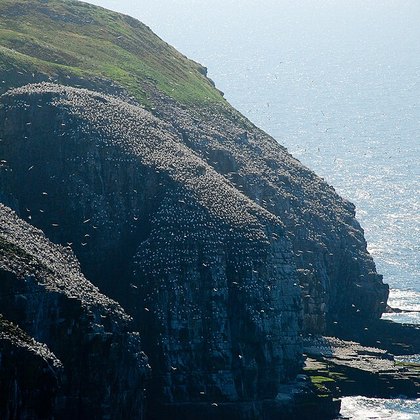
Outside the breeding season it spends its life on the open ocean, mostly over the productive waters of the California Current, where planktonic crustaceans and spiny lobster larvae concentrate. It comes closer inshore than most storm-petrels and in southern California and Mexico can sometimes even be seen from the beach. For breeding it seeks predator-free, uninhabited islands with rock crevices or loose boulder piles to hide in; it avoids soft, vegetated ground.
Where the bird is most often found, arranged by the USNVC — the vegetation classification of the United States and Canada — and CMECS for sea and coast.

Range and movements
It breeds on islands off the Pacific coast of Mexico and in the Gulf of California, with a small number of pairs on Santa Barbara Island — the only known United States breeding site since it was first found there in 1976. After breeding it disperses north; in warm-water years it becomes numerous in Monterey Bay, in cooler years far scarcer. Most birds leave after October for wintering grounds off Central America and northwestern South America.
- Resident
- Breeding (summer)
- Winter
- Passage
- dark = core range, pale = thinly spread
Where and when to look
Join a pelagic boat trip out of Monterey or San Diego in August or September, when the odds of finding Black Storm-Petrel are highest, especially in warm-water years. Watch for the slow, deep wingbeat low over the waves, which sets it apart at a distance from the smaller, fluttering species it often accompanies.
Conservation
The IUCN lists Black Storm-Petrel as Least Concern (LC). Some of its Mexican breeding islands were until recently burdened with introduced rats and cats that preyed on eggs and chicks; on the most important islands these have since been removed. Disturbance from fishing-boat lights and oil pollution at sea remain concerns.
Scientific name
Hydrobates melania | (Bonaparte, 1854)
Bonaparte described the species in 1854 as Procellaria melania; it has since been moved to another genus, hence the parentheses around author and year. The genus Hydrobates has, since a revision of the storm-petrels, come to include the species long known as Oceanodroma. melania comes from the Greek word for 'black', after the entirely dark plumage. The type locality is the coast of California.