All species › Tubenoses › Northern storm petrels › Least Storm-Petrel
Least Storm-Petrel | Hydrobates microsoma
Dwergstormvogeltje | Paíño menudo
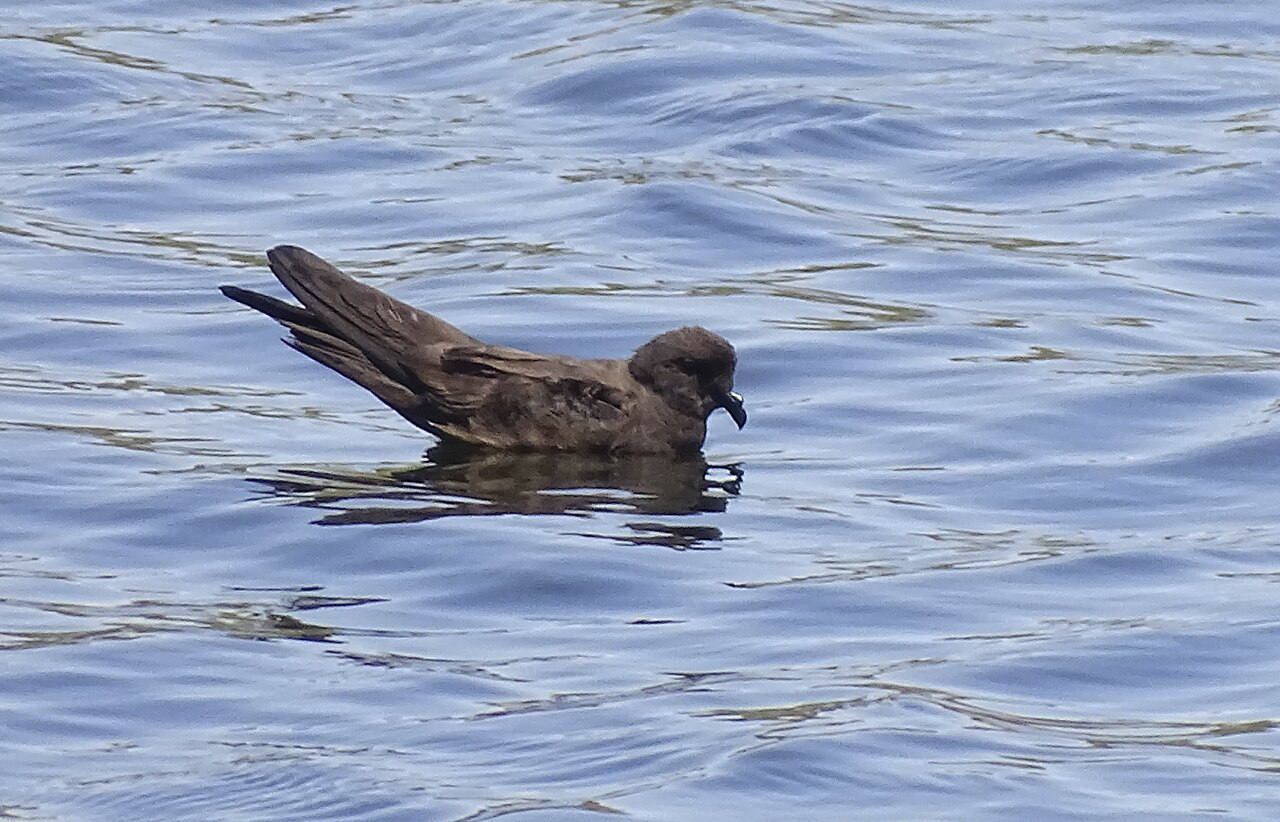
The Least Storm-Petrel is the smallest storm-petrel — indeed the smallest of all tubenoses — no bigger than a sparrow, with a short wedge-shaped tail rather than the forked tail of most relatives. It breeds on islands off western Mexico and in the Gulf of California, and turns up irregularly off southern California in late summer.
Voice
At the colony, which like its relatives it visits only at night, it can be heard giving short, high-pitched squeaks and gurgling notes from its nesting burrow. At sea it is silent. Its presence then betrays itself only through its fast, low, skimming flight with the deep, hurried wingbeats that give it a bat-like appearance.
No recording with a suitable Creative Commons licence has been found for this species yet; what to listen for is described below.
Identification
The smallest member of the tubenose order: entirely sooty black, without pale rump or wing markings, with a short, wedge-shaped rather than forked tail. The wings are short and the flight fast and low, with deep, hurried beats quite unlike the calmer fluttering of most other storm-petrels. Male and female look alike, and the egg is white with a wreath of fine black speckles around one or both ends.
Confusion species
Black Storm-Petrel is considerably larger, with a long, deeply forked tail and a slow, deep wingbeat, quite unlike the Least Storm-Petrel's fast bat-like flight. Ashy Storm-Petrel is likewise larger and has a forked tail and a lighter, more fluttering flight. With its small size and wedge-shaped tail, the Least Storm-Petrel is rarely confused for long with any other species within its range.
Habitat
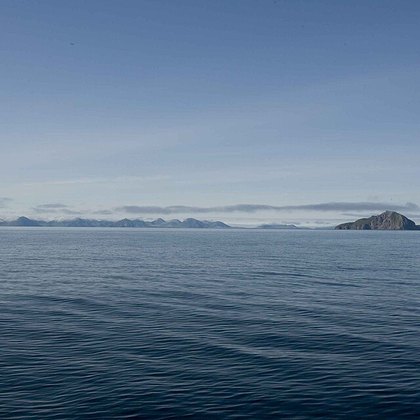
It spends almost its entire life over open, warm ocean water, picking small planktonic crustaceans and spiny lobster larvae off the surface while flying just above it. For breeding it uses rock crevices and short self-dug burrows on uninhabited islands. It avoids colder water, so its appearances off California are tied to warm years and warm seasons.
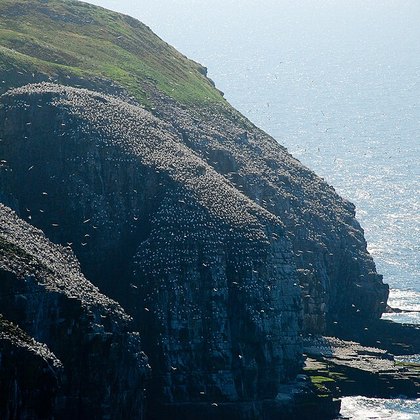
Where the bird is most often found, arranged by the USNVC — the vegetation classification of the United States and Canada — and CMECS for sea and coast.
Range and movements
It breeds on Isla San Benito and other islands off the Pacific coast of Baja California and in the Gulf of California. After breeding, part of the population moves north; especially in August and September it turns up irregularly off southern California, in some years with hundreds of birds, in others almost absent. Severe tropical storms can carry it far inland: after Hurricane Kathleen in 1976, hundreds of Least Storm-Petrels were grounded at the Salton Sea. After autumn it moves south along the Central American coast, usually as far as Panama, occasionally to Peru.
- Resident
- Breeding (summer)
- Winter
- Passage
- dark = core range, pale = thinly spread
Where and when to look
Look for it in August or September on a pelagic boat trip out of southern California, best in warm-water years; its small size and fast, low flight with deep wingbeats make it recognisable among the larger storm-petrels once you know to watch for it.
Conservation
The IUCN lists Least Storm-Petrel as Least Concern (LC). Its main breeding islands are uninhabited and largely free of introduced predators, which limits its vulnerability; the precise size and trend of the world population are not well known.
Scientific name
Hydrobates microsoma | (Coues, 1864)
Coues described the species in 1864 as Halocyptena microsoma, in a genus created for it alone; it has since been placed elsewhere, hence the parentheses around author and year. It now belongs to Hydrobates, together with the species long known as Oceanodroma. microsoma is Greek for 'small body', after its size as the smallest storm-petrel. The type locality is San José del Cabo, Baja California.