All species › Passerines › Treecreepers › Brown Creeper
Brown Creeper | Certhia americana
Amerikaanse boomkruiper | Trepadorcito americano
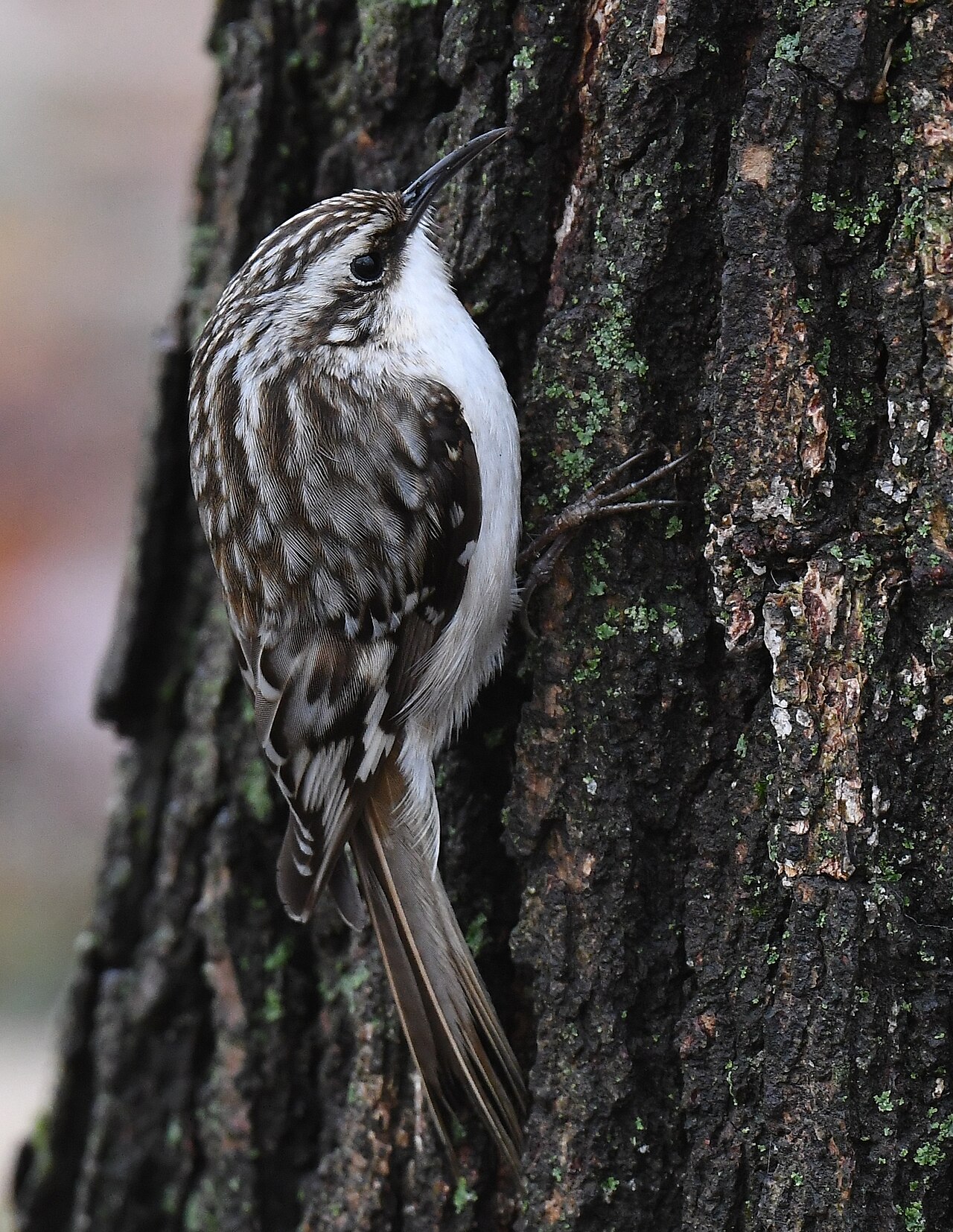
The only treecreeper of the Americas, and a bird you either hear or never find at all. It becomes visible only when it drops from high in one tree to the foot of the next: a small brown leaf that suddenly flies across the wood and then disappears again.
Voice
The song is a thin, high, slightly wiry phrase of four to nine notes in the coastal states, rising to as many as thirteen in the mountains of southern California; the regions differ so much that a western song is not immediately placeable by an eastern ear. It sings from January into July, usually from a trunk and rarely from a branch. The call is a single, very long and very high seee, which in winter comes continually out of mixed flocks. Learn in the field which of those thin notes belong to a creeper and which to a kinglet, and you will find the bird ten times as often.
Recording: Jonathon Jongsma — CC BY-SA 3.0 · Minnesota Valley NWR, Bass Ponds, Hennepin, Minnesota, United States · xeno-canto
Identification
Twelve to fourteen centimetres, five to ten grams, with a wingspan of seventeen to twenty centimetres. The underparts are clean white on throat and breast and pass into warm buff on the flanks; the rump is rusty and shows as the bird flies off. A faint pale line runs over the eye, and the tail is long and often worn at the tip. Western birds are darker and greyer below than eastern ones, which stay white out to the flanks. Male and female are alike; juveniles are more finely spotted on the back.
Confusion species
White-breasted Nuthatch (Sitta carolinensis) is in the same trees but larger, blue-grey above, climbs head-down and in any direction, and has a straight bill and a short tail. Ruby-crowned Kinglet calls almost the same thin note but is olive-green, has white wingbars and hovers at the tips of branches instead of climbing. Black-and-white Warbler (Mniotilta varia) creeps along trunks and limbs in the east in much the same way, but is boldly striped black and white and also works downward. A bird that only climbs upward and starts again at the bottom each time is the creeper.
Habitat
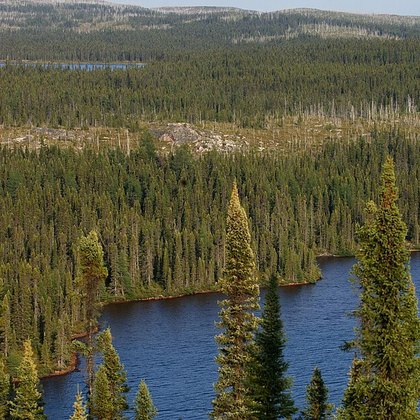
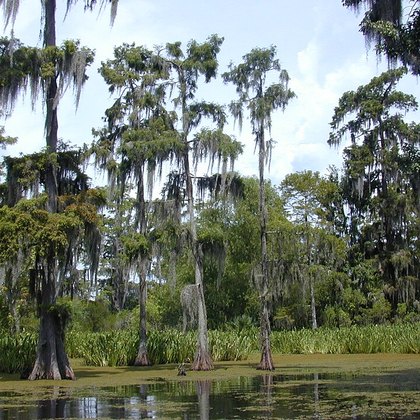
Old forest with heavy trees and standing dead wood: spruce and hemlock in the north and the mountains, Douglas fir and redwood on the west coast, mixed hardwoods and old swamp forest in the east, and pine-oak in the highlands of Mexico and Central America. What counts is thick, loose bark; young even-aged stands do not carry it. It does best where dead and dying trees are left standing. In winter it also uses parks and gardens with large trees.
Where the bird is most often found, arranged by the USNVC — the vegetation classification of the United States and Canada — and CMECS for sea and coast.


Range and movements
Breeds from Alaska right across the boreal forest of Canada to Newfoundland, south in the west through the mountains to Arizona and New Mexico, in the east into the Appalachians, and further south in the highlands of Mexico, Guatemala, Honduras, El Salvador and Nicaragua, where it reaches its southern limit on that country's highest massif. The northernmost birds leave in autumn and spread over almost the whole of the United States; across most of the range it stays all year. Thirteen subspecies are recognised, differing in tone and in the length of the song phrase.
- Resident
- Breeding (summer)
- Winter
- Passage
- dark = core range, pale = thinly spread
Where and when to look
In winter do not look for it on its own but inside a mixed tit flock: the creeper hangs at the back and passes the same trunk half a minute later. Watch the lowest two metres of a heavy trunk and wait for movement — as long as the bird sits still it is not there. When it reaches the branches it drops; follow that flight and you know which tree to watch next.
Conservation
Not threatened (LC), with an estimated breeding population of eleven million and a stable to slightly rising trend since 1966. What tells on it is logging: the loss of large living trees to forage on and of dead trees to nest behind, and above all the clearing of dead wood after fire or storm. In parts of the east it has actually gained from trees killed by Dutch elm disease and by moth outbreaks.
Scientific name
Certhia americana | Bonaparte, 1838
Bonaparte named the species in 1838, in a list setting the birds of Europe and North America side by side; the point of the name was that the American bird was not the same as the Eurasian treecreeper. Author and year do not stand in parentheses, because Certhia americana is still in the genus in which it was described. Certhia was introduced by Linnaeus in 1758 and goes back to Greek kerthios, a small tree-climbing bird named by Aristotle. americana means 'of America'. Bonaparte gives the type locality as 'the eastern and northern parts of North America' — a whole continent wide.